My Retreat From a Retreat

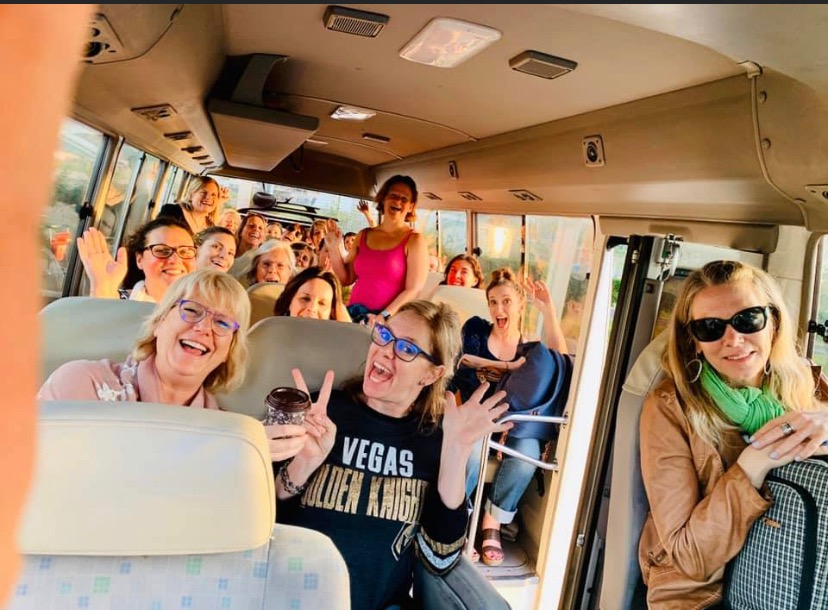
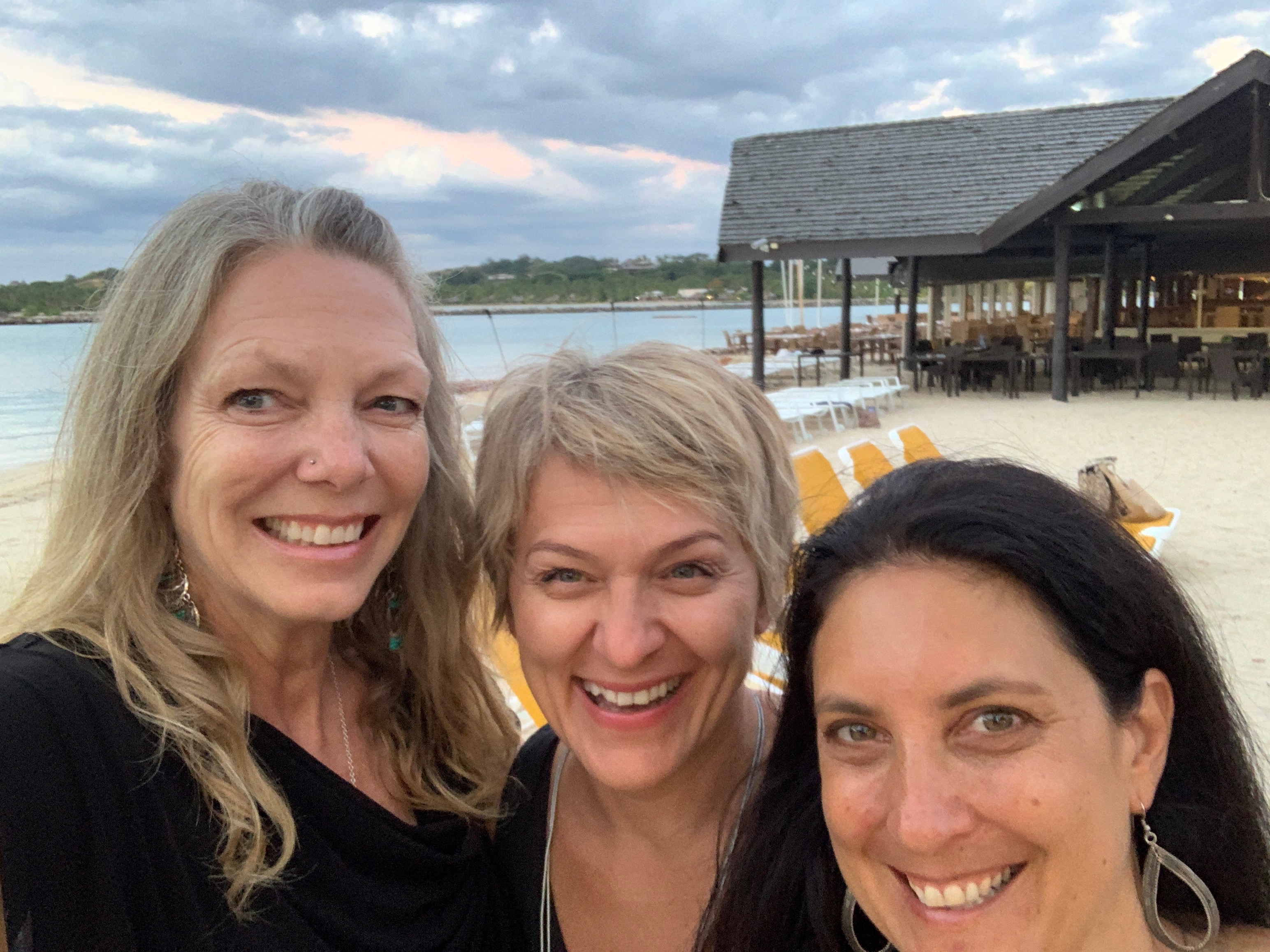
A shuttle full of excited women on the way to the ferry that would deliver me to my first retreat on a beautiful island in Fiji.

Two weeks ago, I was surrounded by 200 souls at a retreat in Fiji who were basking in the magic that comes when women gather together and offer unconditional support, permission, and love. At least, I think that’s what was happening.

For my part, I found I could gamely smile with encouragement and felicity, but my smile generally didn’t go much past my lips as I struggled to feel a connection to this process. I felt, quite frankly, like an utter and complete retreat failure and, worse, a heretic who was crashing something sacred, like a clown at a funeral.

Instead of the joy and wisdom that I saw others find, I ended up with an annoying ball of anxiety that was taking hold in my gut, threatening the hard-fought inner peace that I’ve come to count on. And that scared the shit out of me — until I had a retreat revelation or two of my own.


Retreats simply aren’t my thing

When I signed on to the week-long retreat, my motivations were threefold:

  1. To find inspiration in the workshops led by Elizabeth Gilbert, an author I admire
  2. To make new connections
  3. The retreat was in Fiji — enough said

If I’m being honest, however, I also signed on full well knowing that the “retreat” part might be problematic for me. I’m largely a doer, a person of action, and I struggle with the abstract and conceptual. I can only take so much instruction before I need to dive headlong into the thing to experience it for myself, to flex the necessary muscles to see how (and if) it works. In short, I don’t really retreat much.

Thanks to this love of stepping out of my comfort zone and getting messy, I’ve long shied away from self-improvement books, TED talks, support groups, and any other process where there’s more theory than practice. The theory is lovely and, oh, how I wish it were all that simple, but reality often has very different plans. For me, it’s only by jumping in that I can overcome the hurdles — or figure out whether the hurdles are even worth leaping over.

Still, I gave the retreat a shot, only to quickly find myself rejecting much of it — not what we were discussing, but the static nature of it all. Besides, the lure of a new place to explore was far too great for me to resist. By the second day, I was grabbing some muffins at breakfast and heading out to explore, meet locals, and commune with fish. When I would come back and attend a workshop, I found that my heart just wasn’t in it and I didn’t understand how circling numbers on a piece of paper would help me realize my vision. Yet everyone else who circled those same numbers seemed to understand the significance.
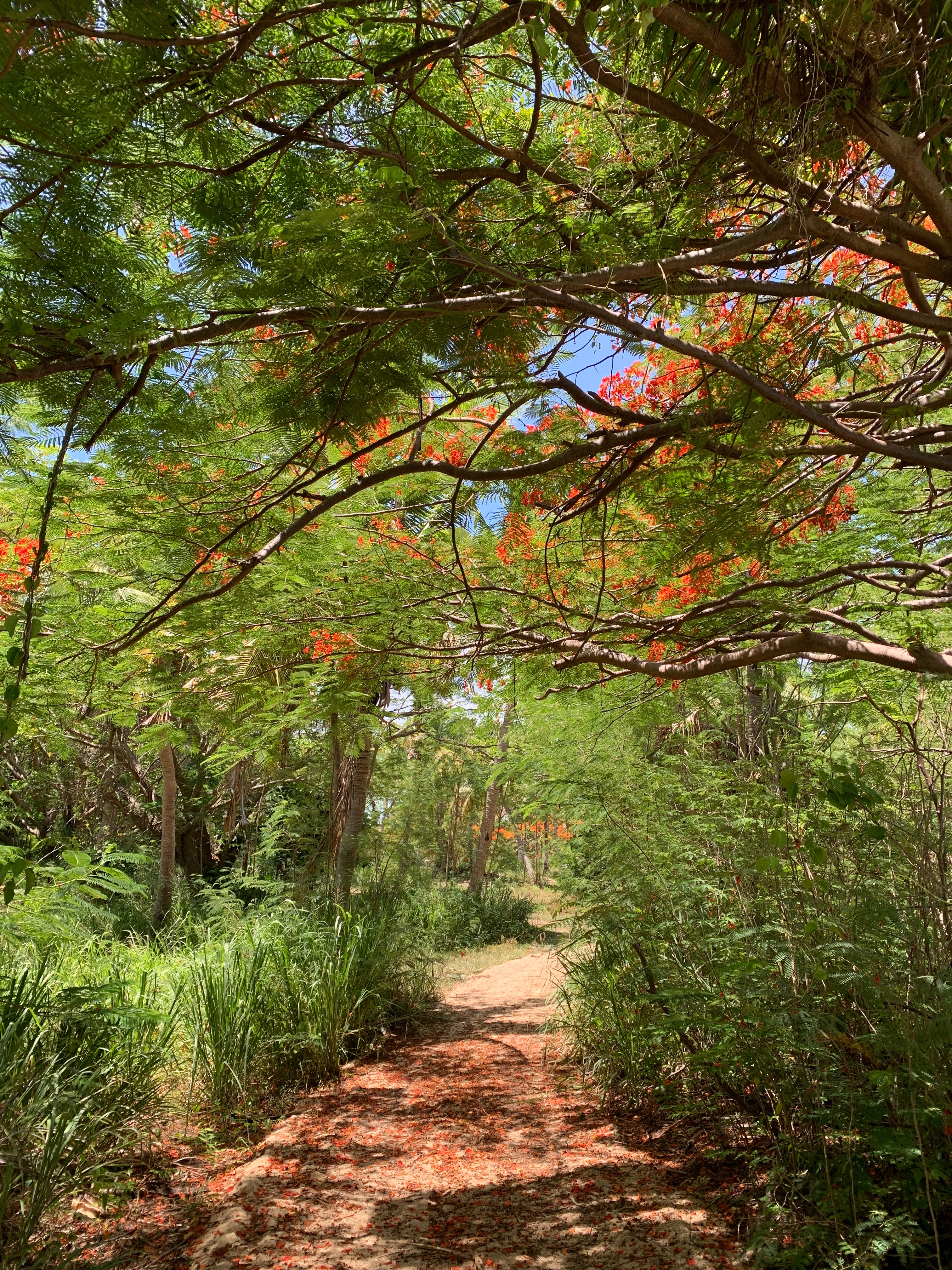
Island paths provided me with ample exploring opportunities.
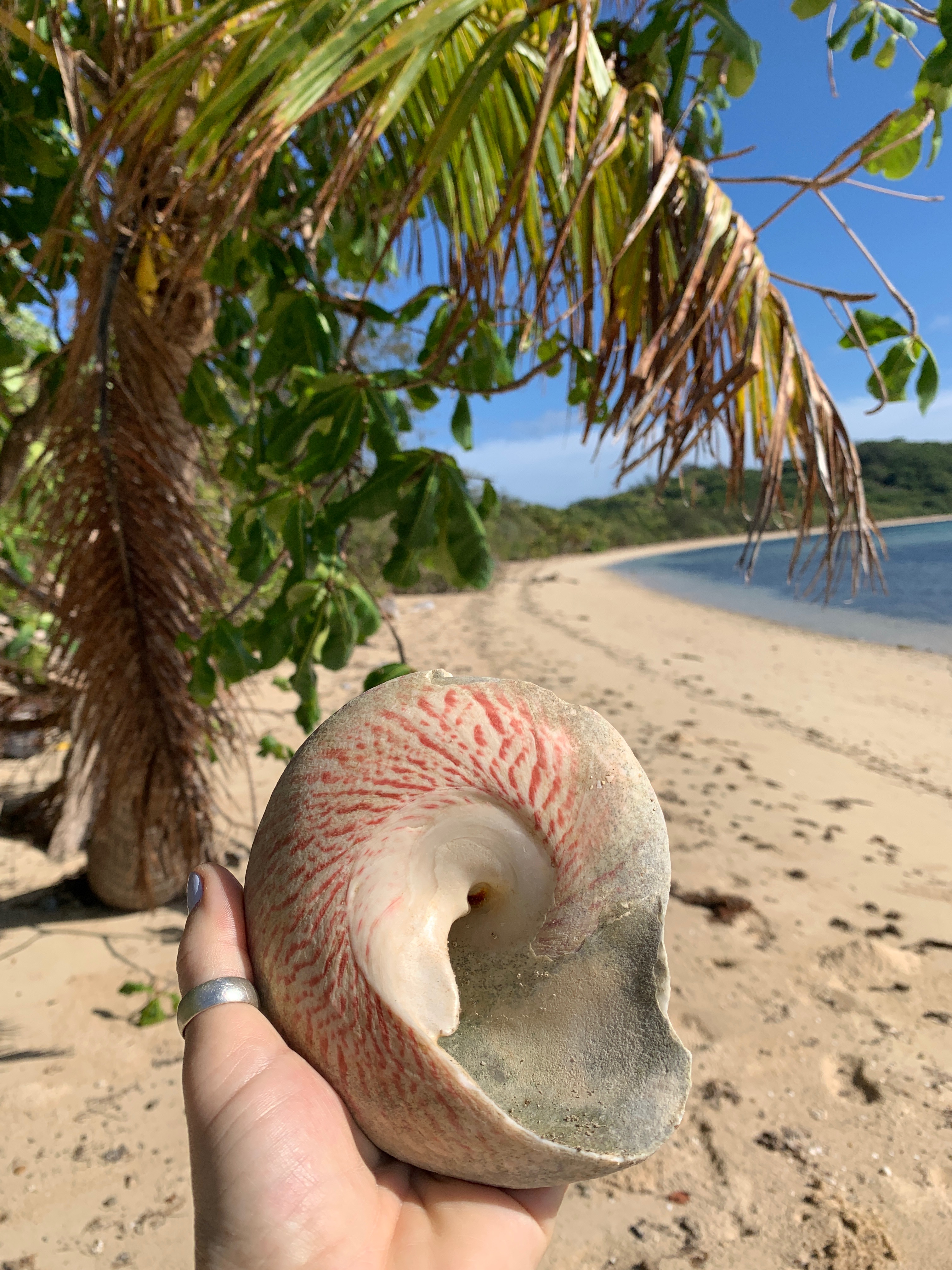
My wanderings delivered up plenty of rewards.

By the end of the week, my anxiety levels had increased exponentially and I was chastising myself for my inability to get this retreat thing right. Was I being unnecessarily closed-minded? Why couldn’t I just sink in and go with it? Why was I not feeling the pull?

When I boarded the ferry to catch my flight to New Zealand, I did so with my tail between my legs — a decidedly unretreat-like result. And that feeling stuck with me until I picked up my rental car in New Zealand, slid behind the righthand-drive wheel, and set off on a new adventure. With each day, my anxiety ebbed and I regained my swagger as I made my way through this magical country, delighting in my solo explorations. There’s immense satisfaction to be had in figuring shit out, whether it’s driving on the wrong side of the road or finding the secret hot springs that no tour bus can access.

What I’ve learned in all of this is that everyone has their own path toward discovery, enlightenment, and empowerment. For some, a retreat is just the ticket and I’m so very happy for them. For me, I accept that my path is generally less theoretical and more literal — one that comes with tears, mud on my face, colossal screw-ups, and a fair amount of hilarity.


It’s all good

I think my second problem at the retreat was this notion that I had to somehow improve myself while I was there. I honestly believe that there’s real danger in self-improvement practices largely because of their implication that there’s something that needs to be fixed.

During the workshops and panels I attended, we were routinely asked to dig deep to unearth a hurdle, a fear, a vulnerability — something that was holding us back. And, try as I might, I couldn’t really find anything too significant. Now indulge me here as I underscore the absurdity of my situation — I was feeling like something was wrong because nothing was wrong.

This absence of demons and shortcomings is largely because of where I am at in my personal growth. Five years ago, my world was becoming a bit of a train wreck, which led me to the decision to jettison the whole thing and start over. This leap afforded me the rare opportunity to sift through everything in my life, like a massive spring cleaning, to get rid of what wasn’t serving me and preserve the things that did.

It would be hard for me to put into words how this process changed me, but I can tell you that I’m happy, extraordinarily so. I have now built a life that caters to this happiness, without apology or permission. So, I think I’ll just relax here for a while and soak it all in — no improvement needed at the moment.

I’m not sure what my point is in spelling this all out, but I’m a writer and that’s how I process. These days, I endeavor to live with as few regrets as possible and my participation in this retreat certainly doesn’t qualify. It was a wonderful week in which I met some fascinating people, I learned a little bit more about myself, and I can clear Fiji from my bucket list, which is not a bad leg in My Whatever Journey.

The headliner for the week-long retreat — Elizabeth Gilbert of Eat, Pray, Love fame.
As I suspected I would, I met some fascinating people at the retreat.
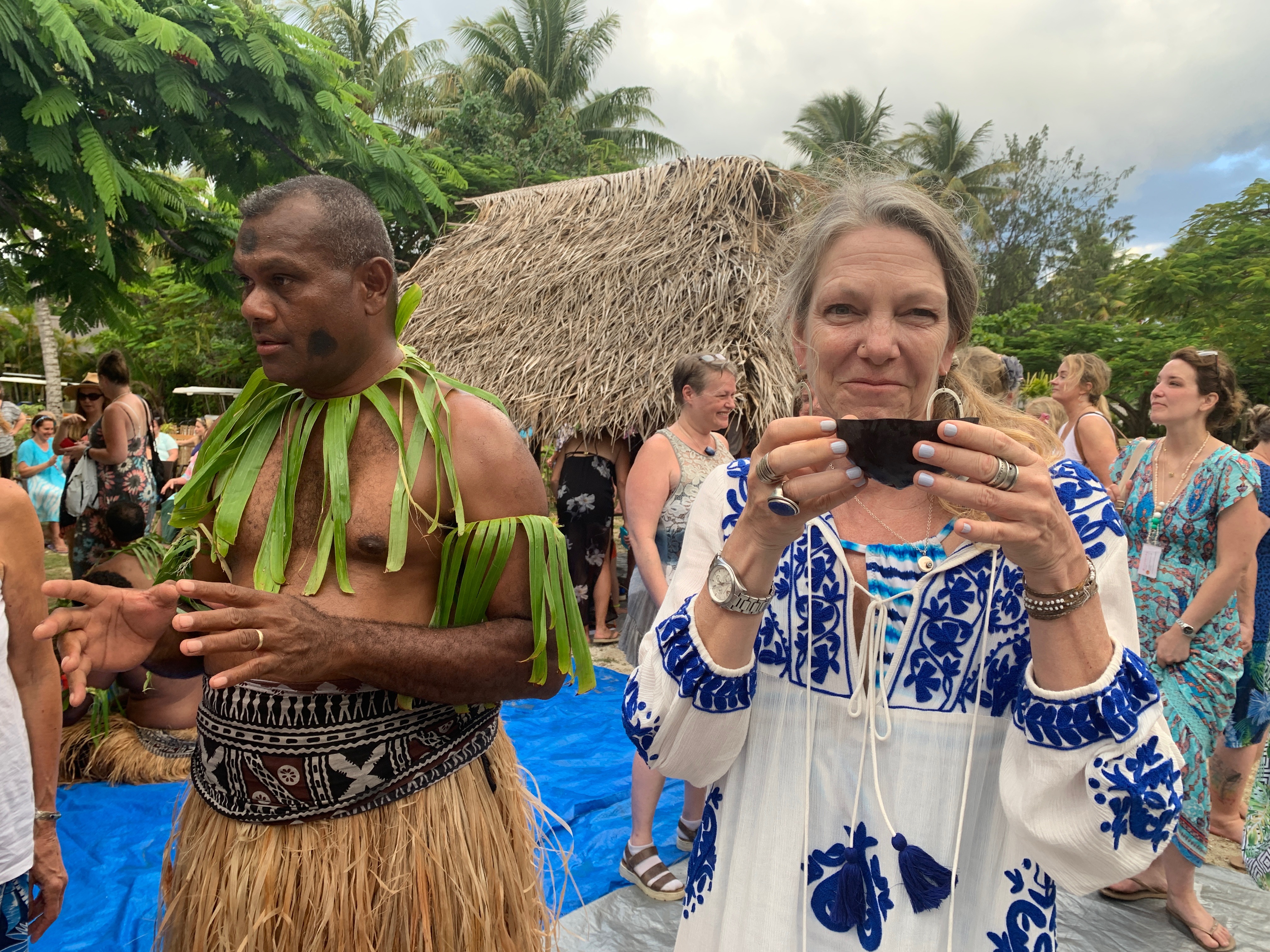
And I partook in some island customs, like the Kava ceremony.
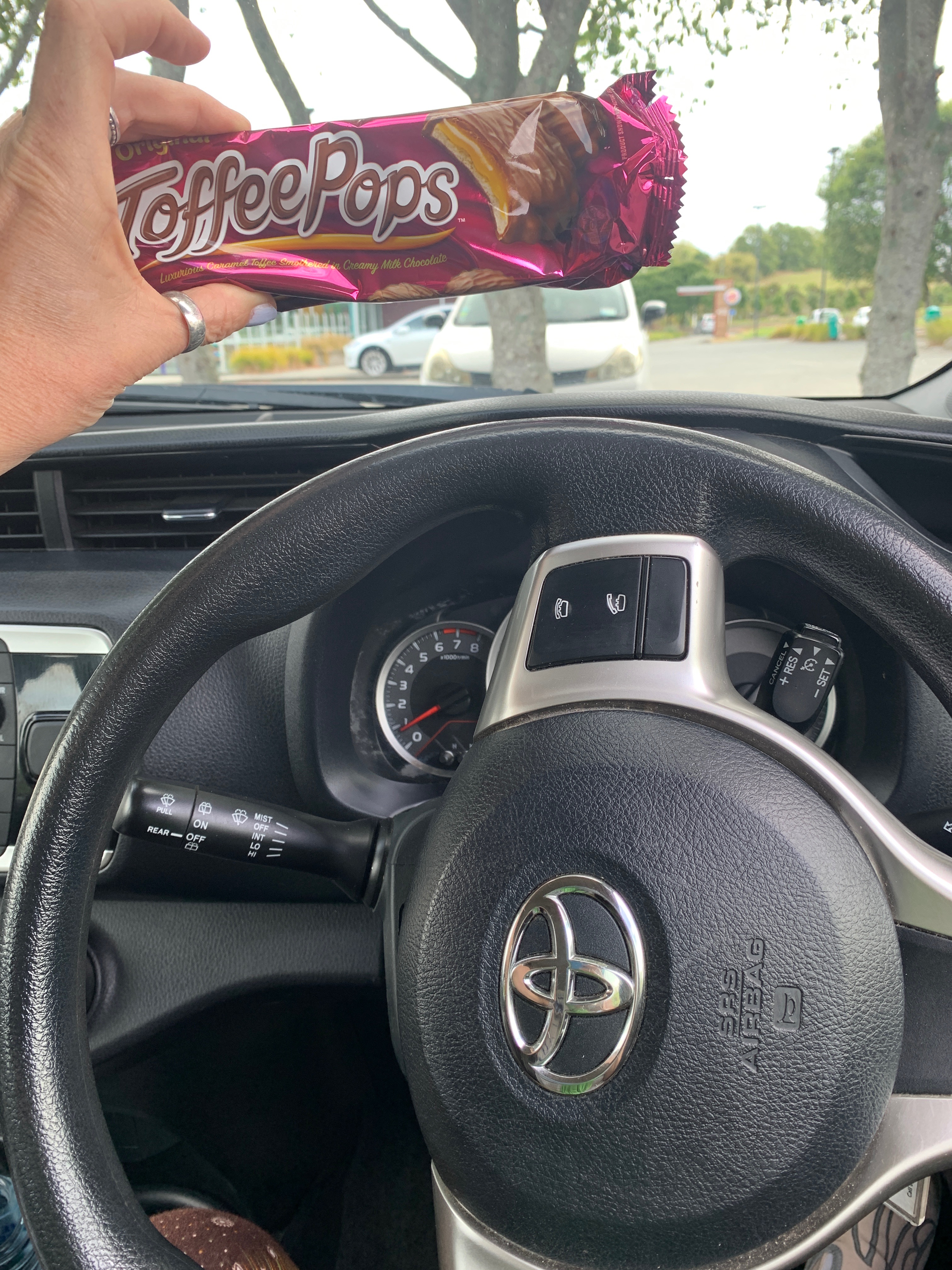
Arriving in New Zealand, I armed myself with the proper fuel to figure out driving on the wrong side of the road.
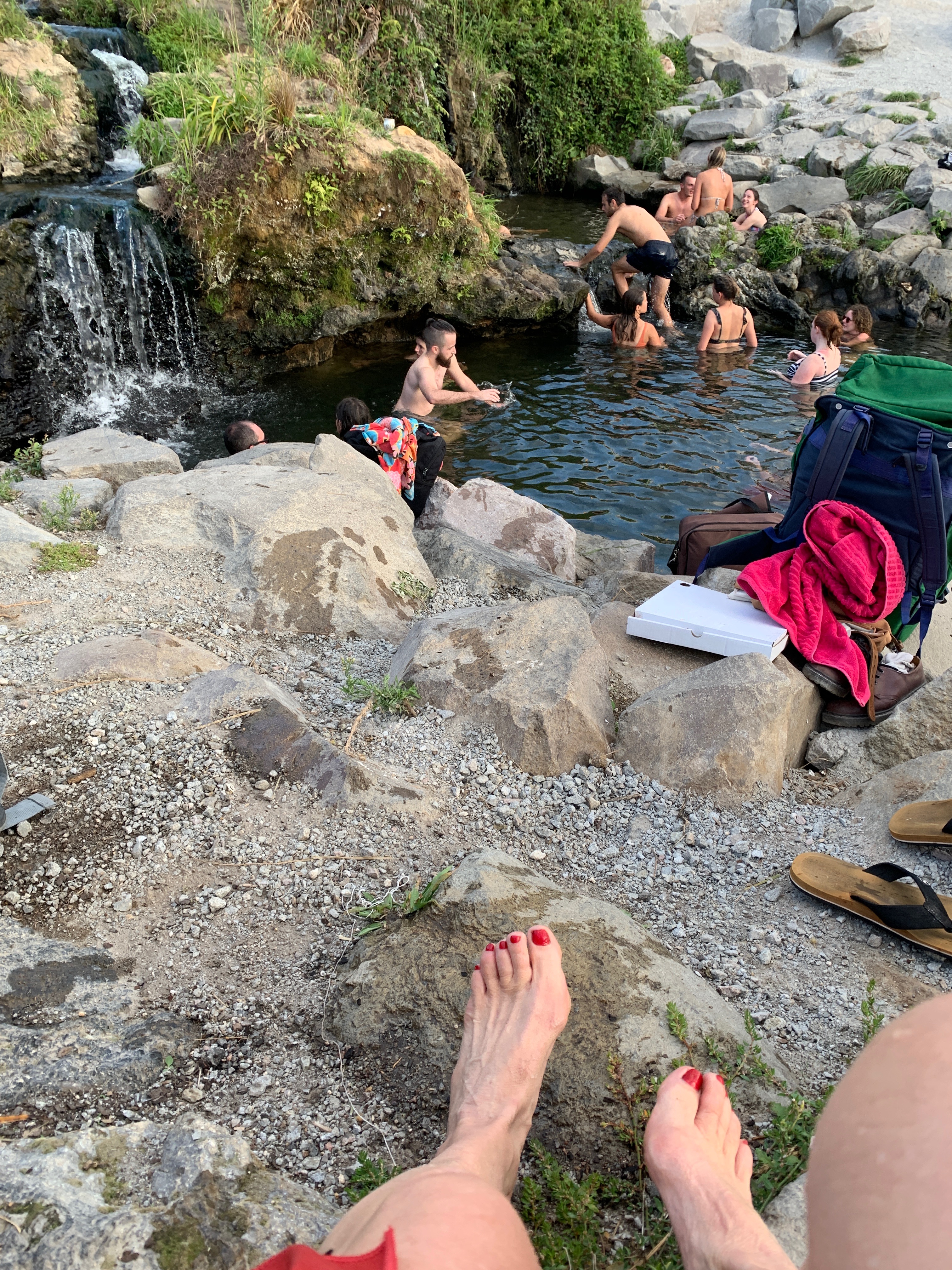
New Zealand hot springs.
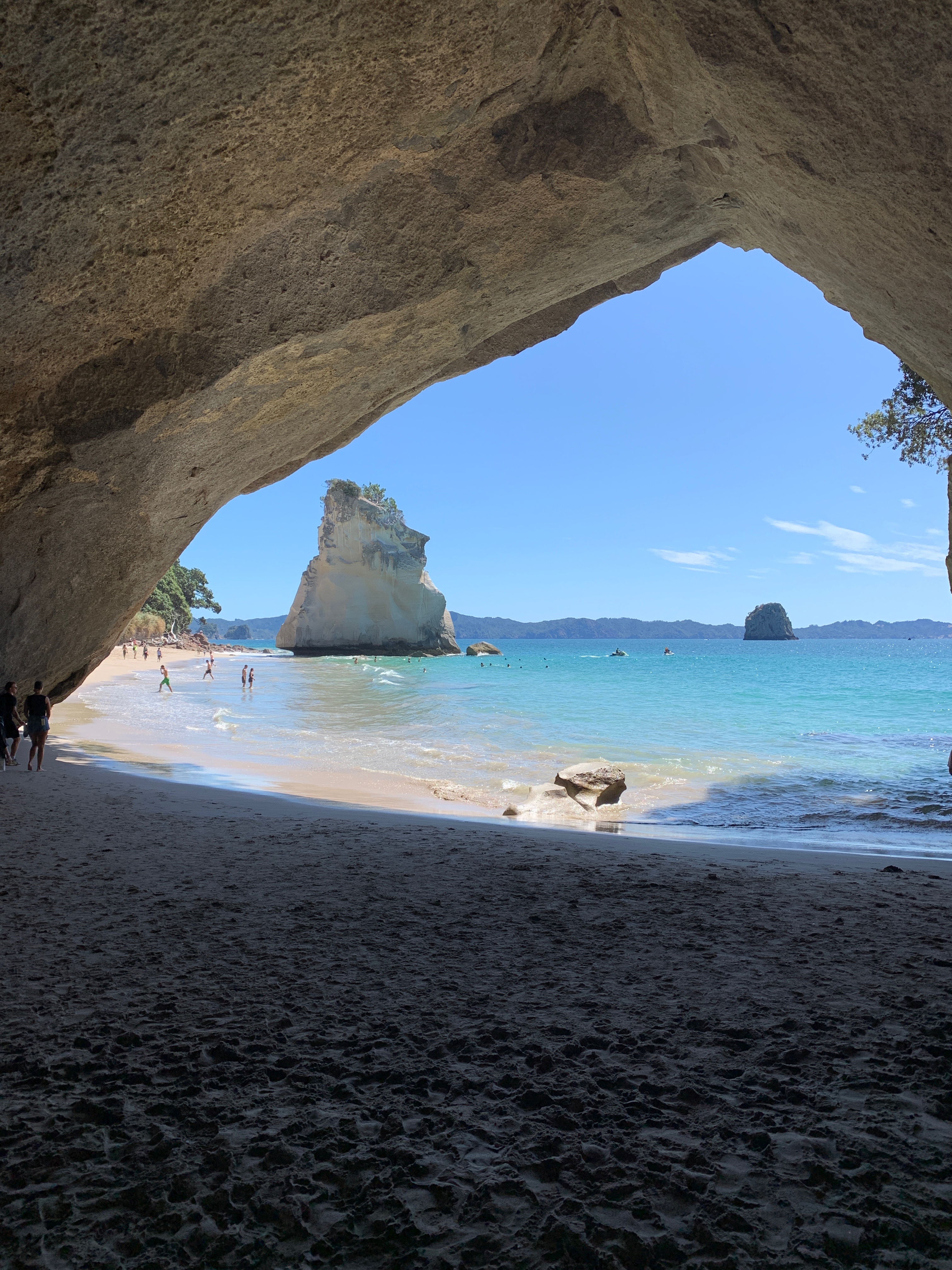
New Zealand coast on the Coromandel peninsula.
Simply stunning.
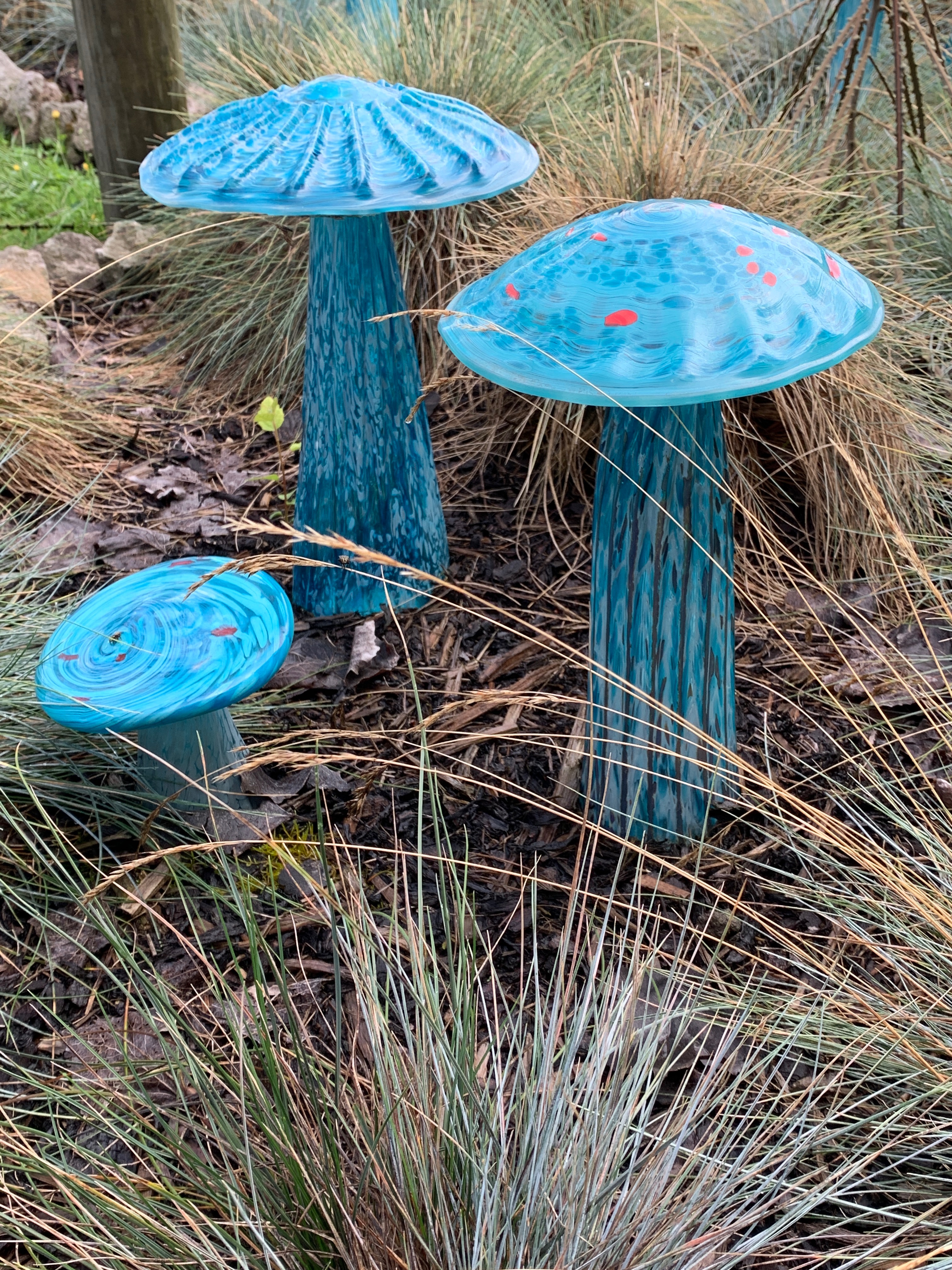
Shrooms wherever I go.
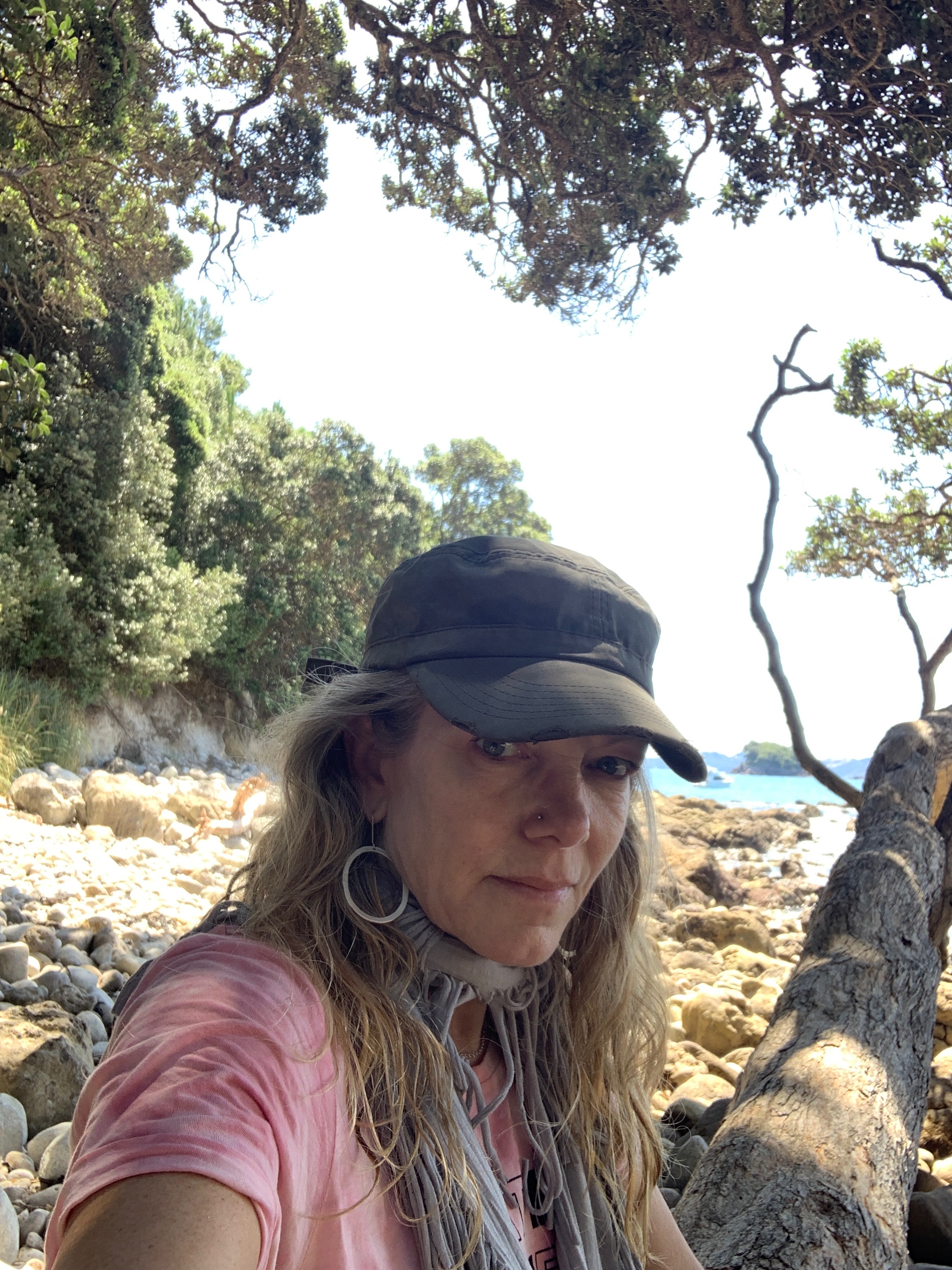
A quiet moment on Gem Stone Beach.
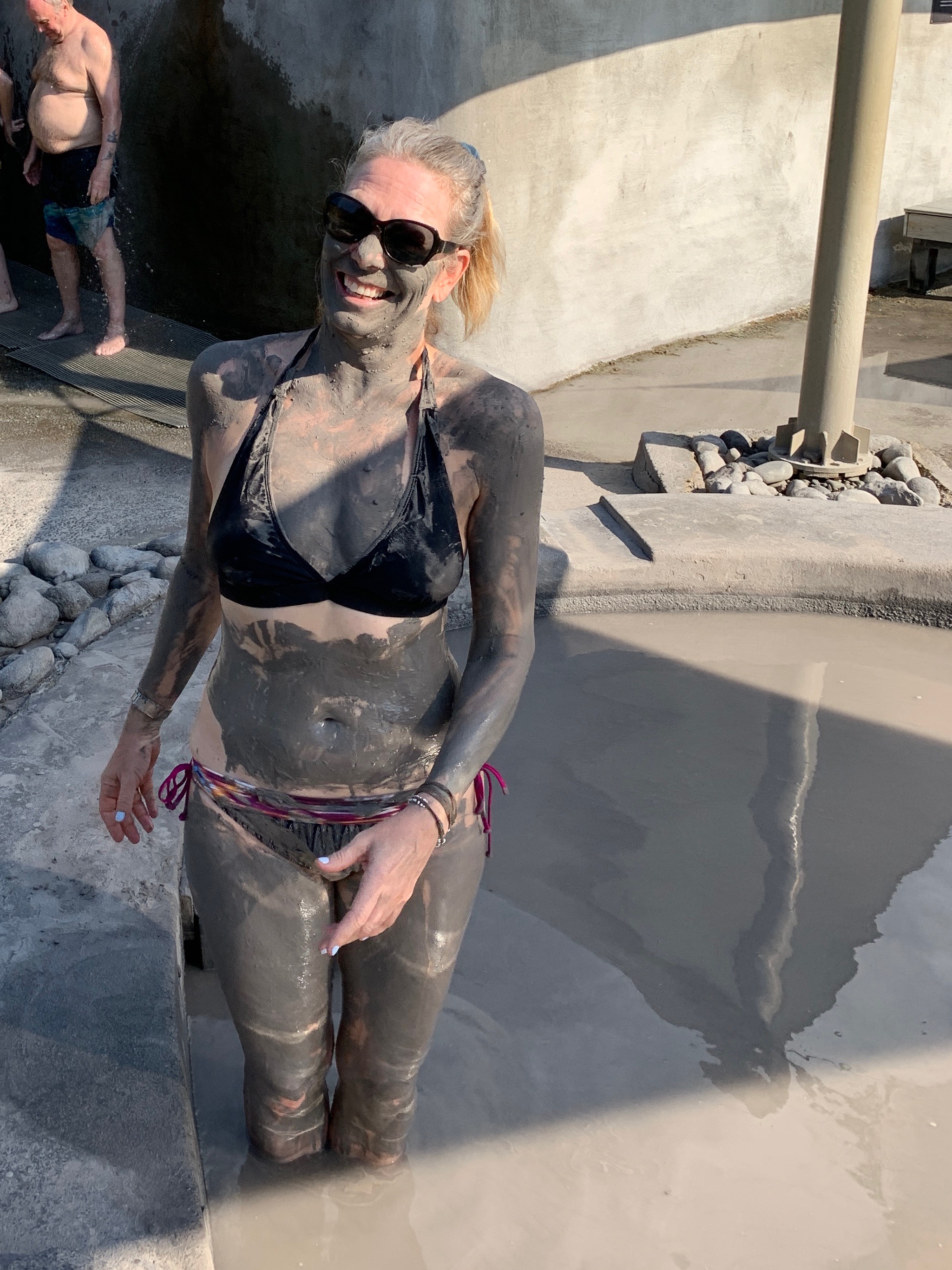
Everything always somehow ends with mud on my face.

When #vanlife Overtakes Life

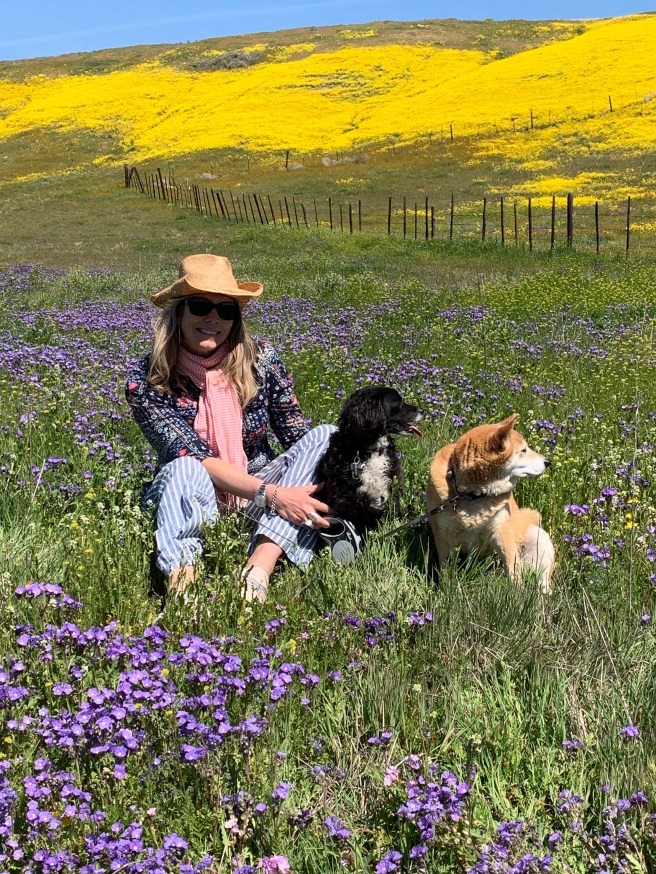
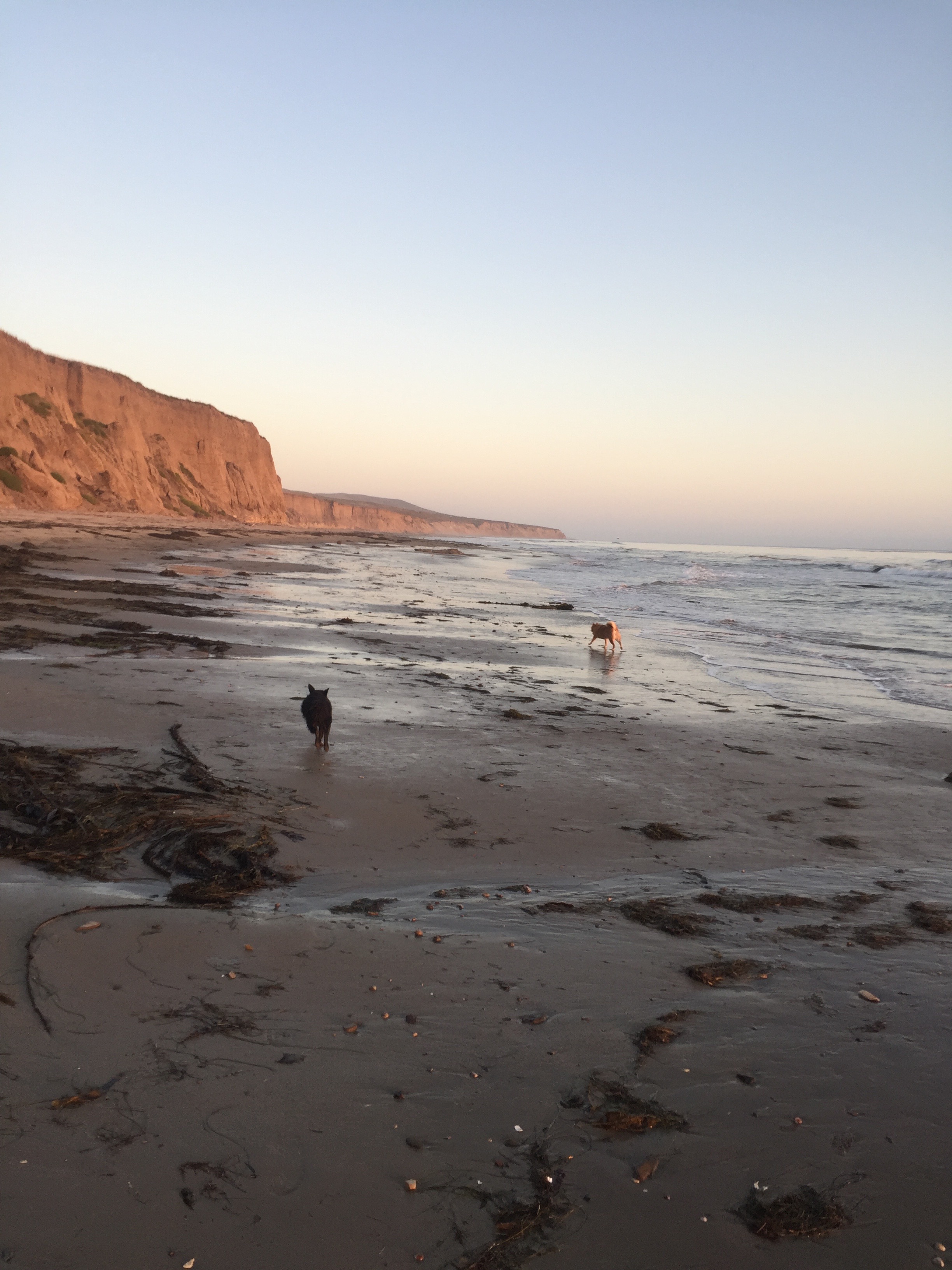
Meanddogsinfield

When I woke this morning, I lunged for the phone to check the time, as I do most mornings when I wake unbidden by an alarm. Satisfied that I logged enough hours of sleep, I stared at my blank screen and wondered, “Now what?”

You see, I’m at a campground that’s bereft of those tiny little bars that link me to the rest of the world. When I’m fully connected, I typically start the day lounging in bed, wandering through my different social media accounts to catch up with friends and family, or so I tell myself. And this is partly true, as I dutifully fire off birthday greetings, cheer on accomplishments, and praise a friend’s dog/cat/child/meal/sunset picture.

But, truth be told, I also spend a considerable amount of time ogling pictures of those hashtags that interest me, which, these days, largely involve exotic travels and campervans (all the better when they’re combined). As I fall down endless rabbit holes, Googling places I’ve never heard of, 30 to 45 minutes have gone by and I’m still propped up in bed, in my pajamas, looking at other people lead super awesome lives.

I am certainly not the first to question the time I spend on social media and my goal here is to hold up my own usage and take a beady-eyed look.

On the one hand, there’s the invaluable connection that I mentioned above, which for someone who’s moved far away, is amazing. I can let my friends and family back home know what I’m up to in one fell swoop (or post) and I can track their lives from afar.

I understand that we’re really only following each other’s crowning, made-for-social-media moments and that I really don’t have a handle on their lives, nor they mine. Still, I’d rather have the connection than not, even if there’s very little reality involved.

It’s the other side of social media that concerns me more—the one where I’m identifying, and trying to keep pace, with a tribe of people with whom I share an interest, but no real personal connection. At the moment, this means #vanlife.

While this seven-letter hashtag played no small role in pushing me to purchase my van, its continued hold on me is disconcerting, as if I’m obligated to participate. Every time I pull into a campsite or drive along a vista-laden road, I find myself staging that winning van shot that’ll garner tons of likes and, may the gods be kind, go viral.

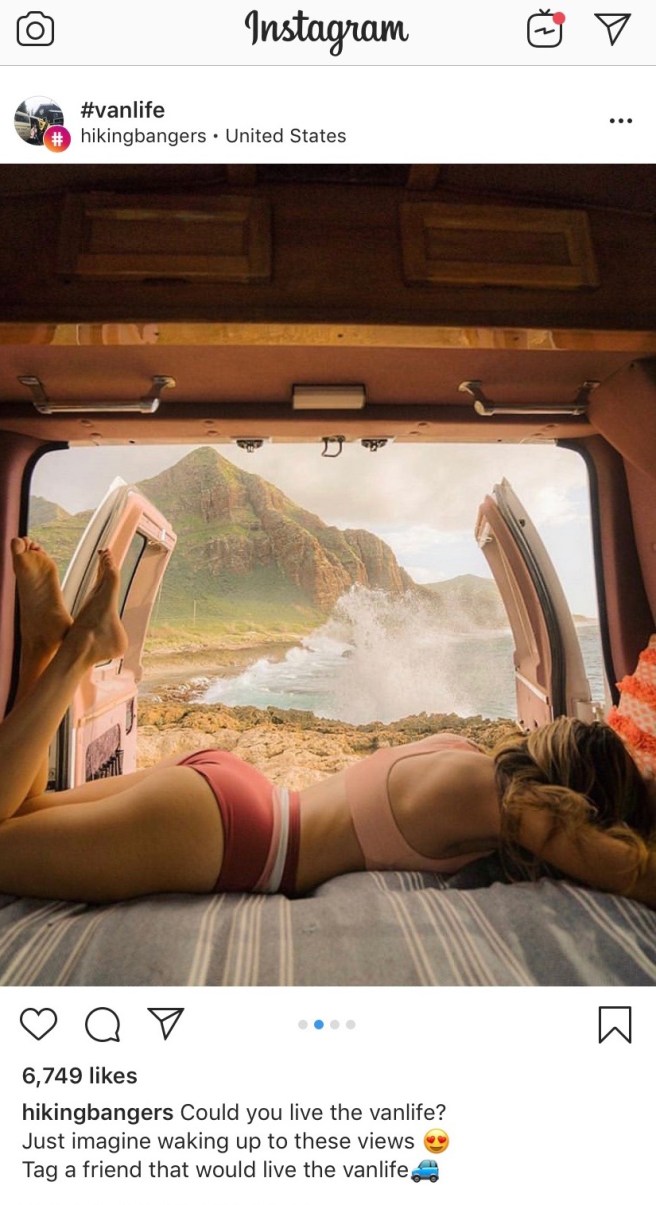
And I’m up against some serious competition—everyone else who’s in a van is doing thoroughly inspirational things in jaw-droppingly beautiful places (while wearing a bathing suit, practicing yoga, and eating THE most healthy foods). And they’re all so young and attractive and they look great in a thong.

And. I. Just. Can’t. Keep. Up.

What I’m starting to realize is that my vanlife is slowly being co-opted by #vanlife. And these are two very different things. Vanlife is crazy, disorganized, not always photogenic, but also incredibly rewarding. The opportunity to fully immerse myself into some of the most spectacular sights, sounds, and smells is what feeds my soul and gets me behind the wheel.

But not when I’m chasing #vanlife. That endeavor is frustrating and, quite frankly, I just don’t have the goods. I don’t really understand social media promotion, my van is more lived-in, less stage set, and I haven’t looked good in a thong in years, if ever.

So why do I feel compelled to try? Am I doing this for the next person in pajamas, scrolling through their social media in bed? Am I creating my own scrapbook of sorts? Am I trying to claim my place among this amazing subculture of vanlifers? Am I attempting to gain some notoriety and, maybe, just maybe, earn a living as a vanlifer like the elite few?

Well, the answer is Yes — to all of it.

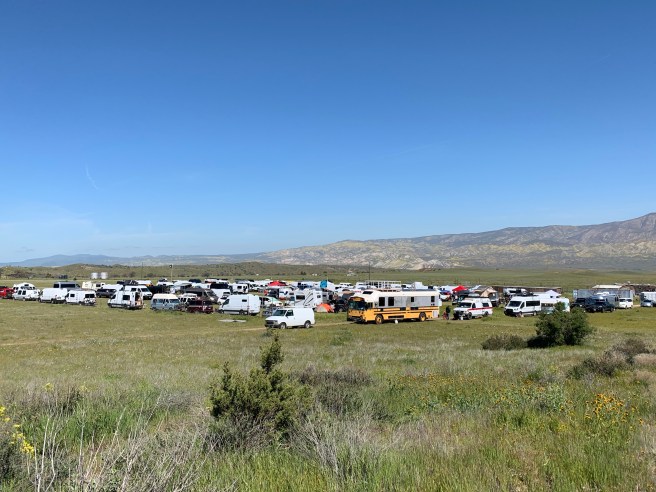
Thankfully, my addled intentions got a bit of a wake-up call over the last weekend of March, when I attended a gathering of vanlifers. There, in one large field, were 75 vans that I could see and touch — giving me a chance to peek behind the social media curtain. And what I found there were, yes, some spectacular rigs that lived up the hype, but also a passionate group of authentic, kind, quirky, creative, and endlessly funny vanlifers.

Sure, some of them are rocking the social media world, through a Herculean effort I’ve come to learn, and it’s by necessity in order to sustain their lifestyles. Most, however, are just trying to find their little slices of paradise and inhabit the world on their own terms, as digital nomads. I met graphic artists, software designers, photographers, writers, and even a traveling piano teacher — and, against all odds, they’re not only making the lifestyle work, they’re enjoying the hell out of themselves in the process.

This experience was just the eye-opener I needed to find my way back to my vanlife lane and remember what I am, which is adventurer first, writer second, and a bunch of other things in a distant third. What I am not is a social media influencer, so why spin my wheels in this direction?

As with everything in life, I decided a compromise was best. I’ll continue to post gorgeous shots in the hopes that they may inspire someone else or add to a vanlifer’s travel agenda — and I’ll continue to follow others for the same reasons. But I’ll also put the hashtag aside more often and plug into what’s around me. And then turn to my words, because that’s where my rubber really meets the road.

Thong1
How am I supposed to compete with this?!
Vangathering
A meeting of the minds, and vans.
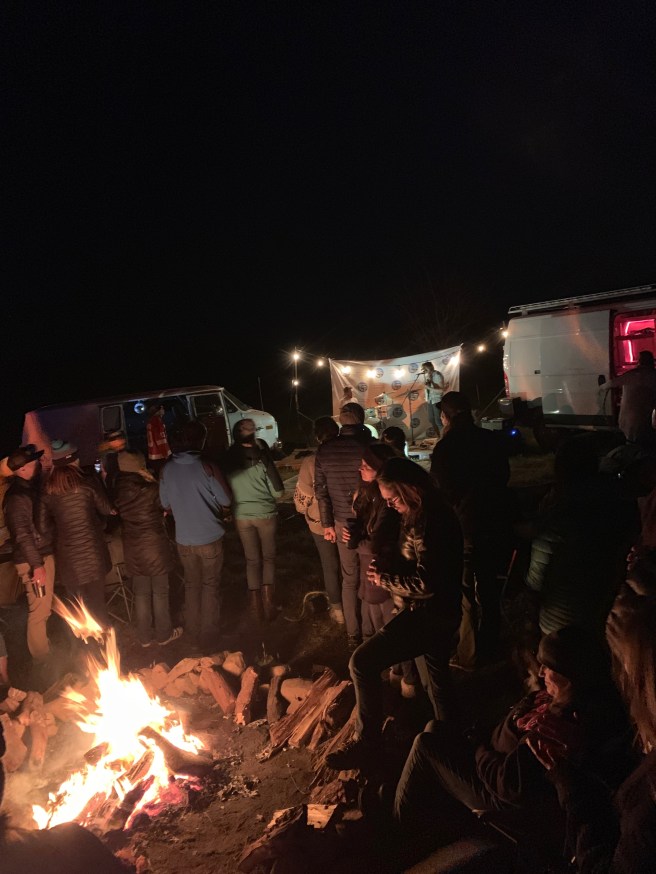
VanBonfire
The van gathering not only featured vans, but live music, and not a thong in (plain) sight.
VanShot
Though I’m not doing too badly on the gorgeous van scenes.
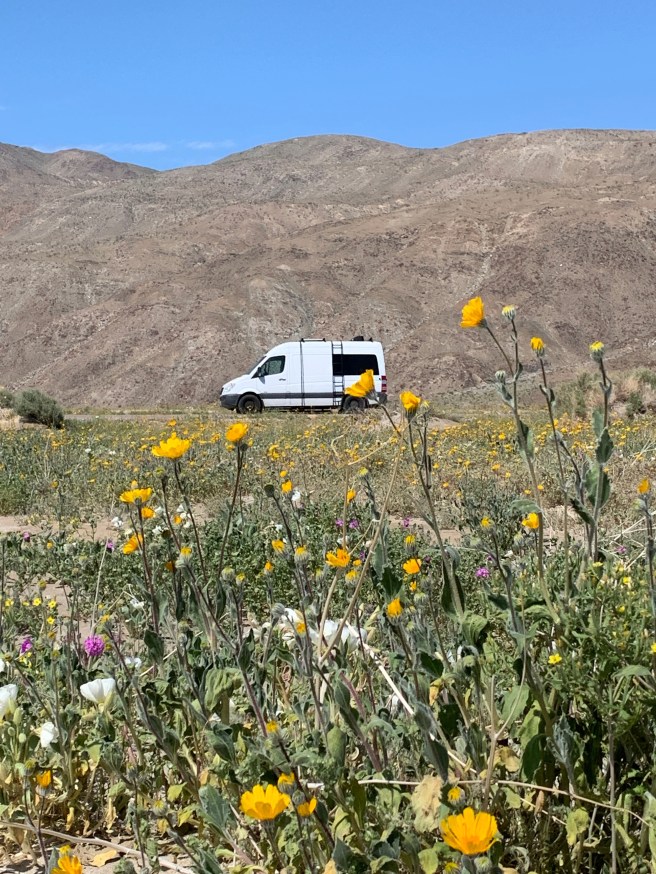
Anza bloom
Oh, the places we’ve been.
WillyVan
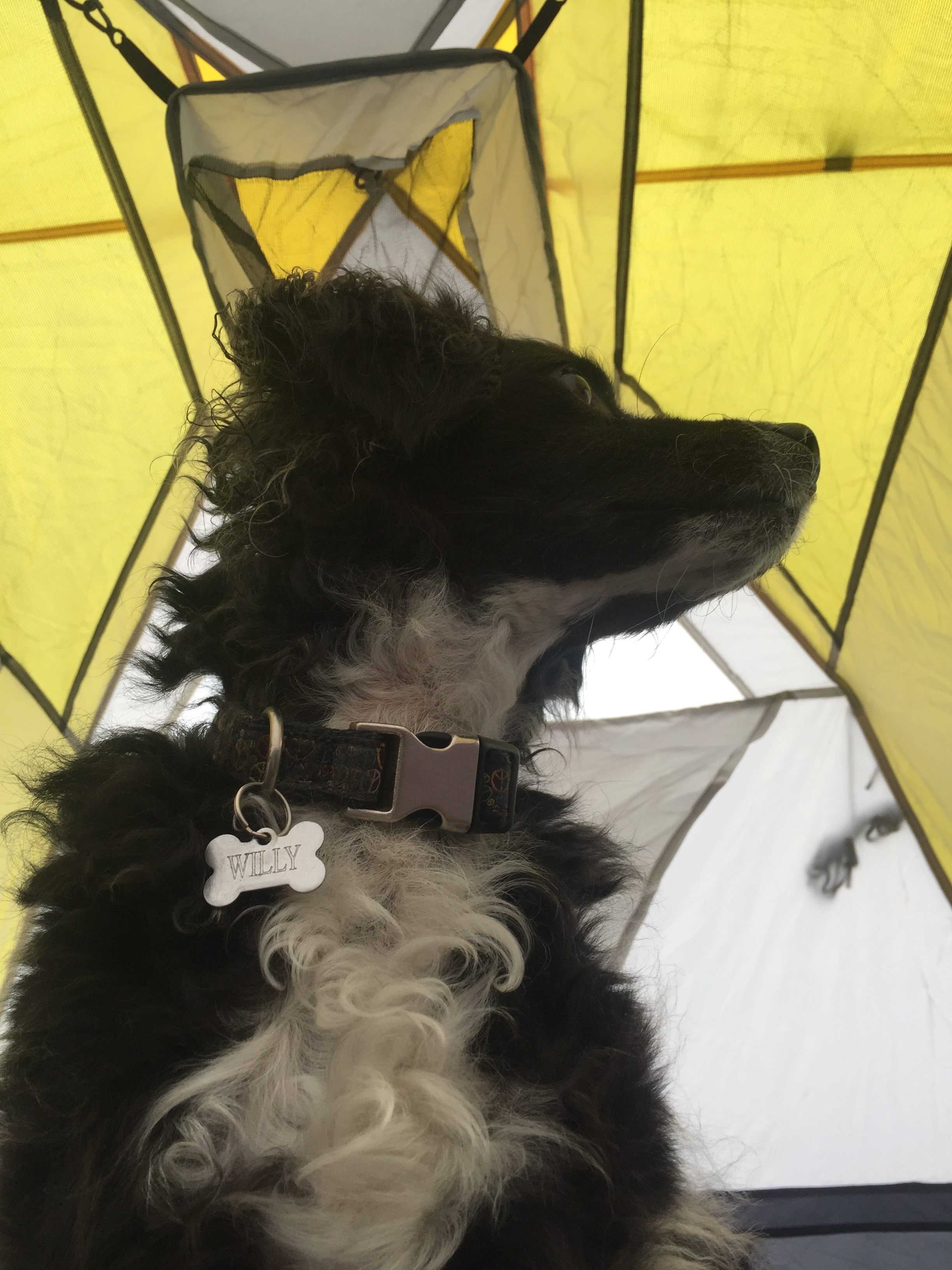
Willy’s thoughts on media of any kind are quite clear as he stares out the back doors.


The Sins of #Vanlife

Vieww:foot
Ahhhh, that’s better.

What is it about the human need to constantly want more, to never be satisfied, to seek an upgrade for just about everything in life? While I understand that this compulsion can be used for great good — movies with sound, car seats with heaters, and phones that practically do our taxes (maybe someday) —it can also prevent us from enjoying what’s right in front of us.

Allow me to explain my line of thought here. After I purchased my dream van, I promptly began following my tribe more closely through every avenue possible: Social media, parking lots, gas stations, campgrounds, wherever. And every time I spotted a fellow Sprinter #vanlifer, I immediately took inventory to see where my van bested theirs or where theirs outclassed mine, and it was usually the latter.

To make matters worse, if you follow #vanlife, every freakin’ van is better than yours. We’re talking custom woodworking, high-tech lighting, cuter dogs, prettier bed linens. There’s even an adventure rig with a goddamn piano in it. I mean, COME ON!

And then there are all those wonderful friends who send me links to the latest camper vans hitting the market, which come complete with AC, heating, full bathrooms, skylights, and beds that float down from the ceiling. As I wipe the drool from my chin, I find myself trying to figure out whether such a marvel is financially feasible.

The absurdity of this was finally made clear to me when I checked into my campground this afternoon and drove to my reserved spot. When I pulled up, I found I really didn’t like the way the site was situated. So I walked back to the ranger and had her switch it to one across the way with a prettier view. Then I grabbed the dogs and went down to the beach, passing about seven other campsites that were even better, so I figured I’d switch again when I got back.

And that’s when I gave myself a very stern lecture, which went something like this: “Listen up, [edited], you’re going to go back to your wonderful campsite, get into your wonderful van, eat some wonderful food, and enjoy every last [edited] second of it.”

Honestly, I’m absolutely stunned at how greedy my thinking can be on occasion. Yes, in its gentler form, this thinking got me out of a tent and into a van, as well as into a campsite with a capital view, but there needs to be a pause in between theses leaps to revel in each new stage of my journey.
I’d like to place the blame at social media’s feet, and I do believe that everything about it is designed to feed the covetous beast, but it doesn’t explain my rubbernecking around the campgrounds. I really don’t have any great notions about why we are like this, but it’s clearly something that’s part and parcel of the human condition, considering I just used a biblical, commandment-type word to describe social media.

The bottom line is that I’d do well to remember that I have a great van, a dream van, a van that is perfect for me, right here, right now. Whether or not it’s a warm-up act, I don’t know, and I don’t want to know. At this very moment, The Whatever Van is more than enough, my dogs are plenty cute, and my bed linens have at least a couple hundred threads in them. Who could ask for anything more?

Author’s note: I’m hatching what I think will be an hysterical glimpse into #vanlife. It will tease, in an oh-so-loving way, the ridiculousness of the pictures of perfection. #vanlife is messy — I’m messy, my dogs are messy, and the van’s a wreck most of the time. This parody project even has a name — #VANities — and I’m looking forward to getting started.

BedWithAView
Seriously, how can anyone complain about this?!
CampgroundMirror
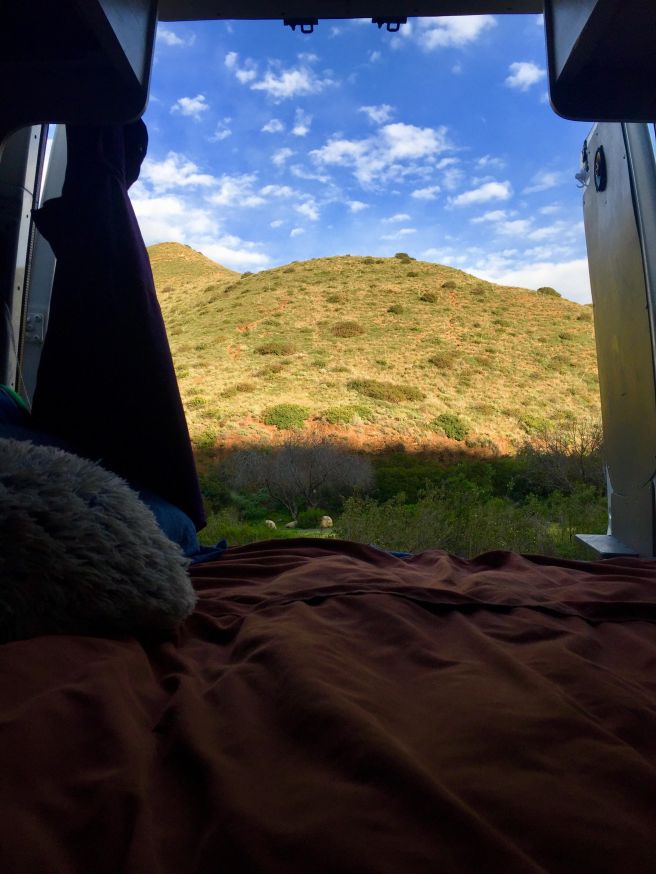
Using the campground mirror for, what I thought was, a clever sunset shot.
Sunset
In case it wasn’t clever, here it is again.
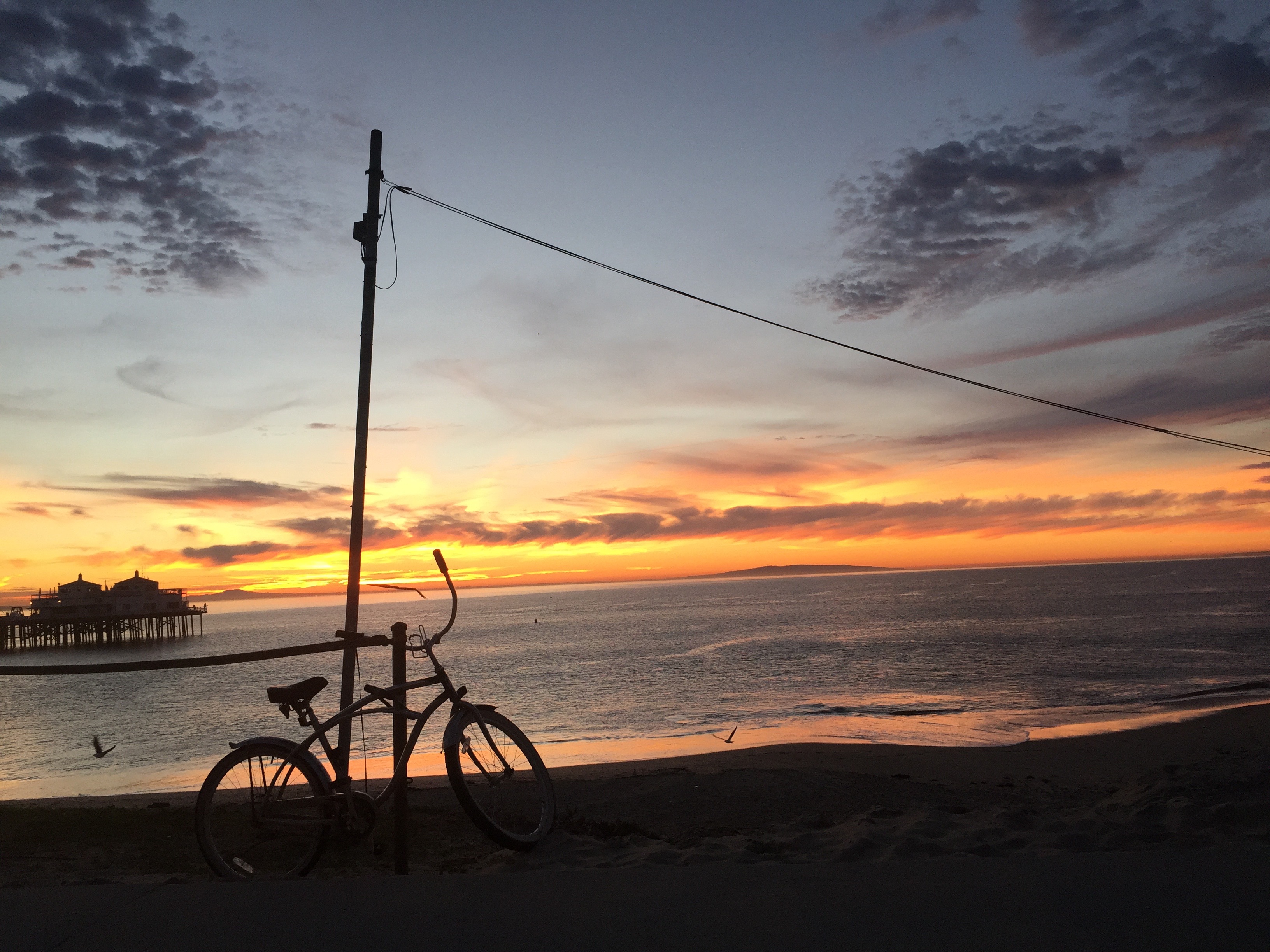
OldPier
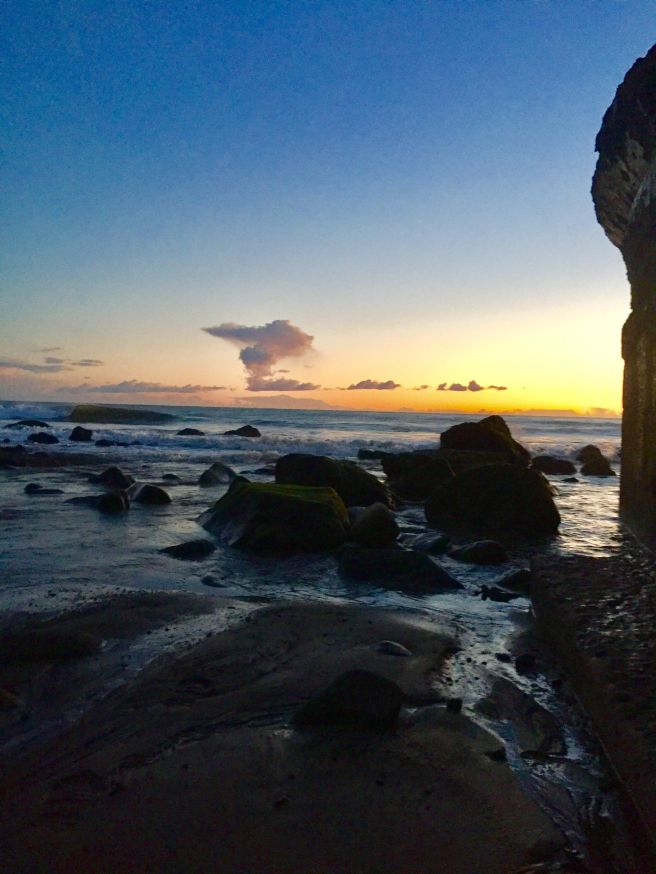
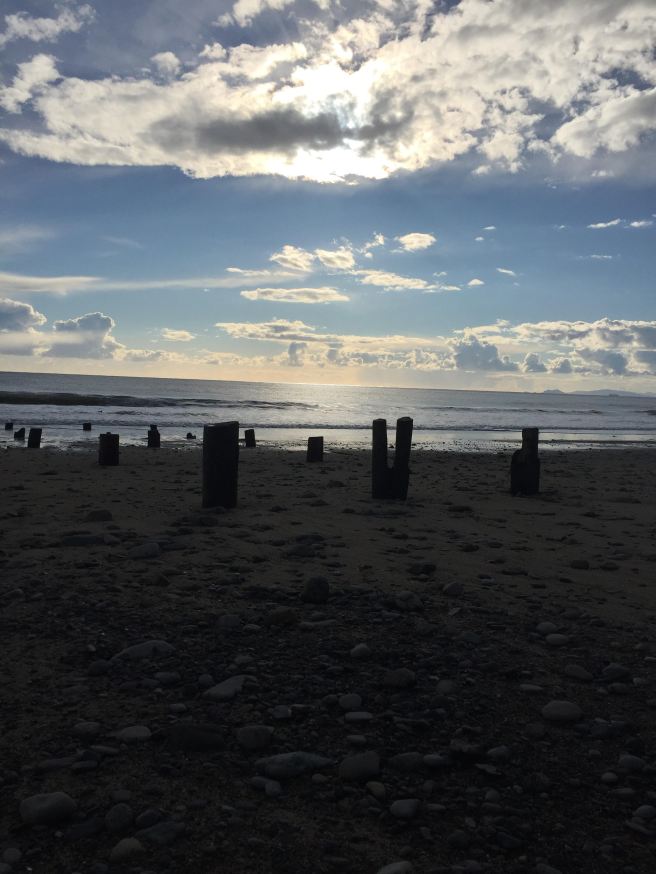
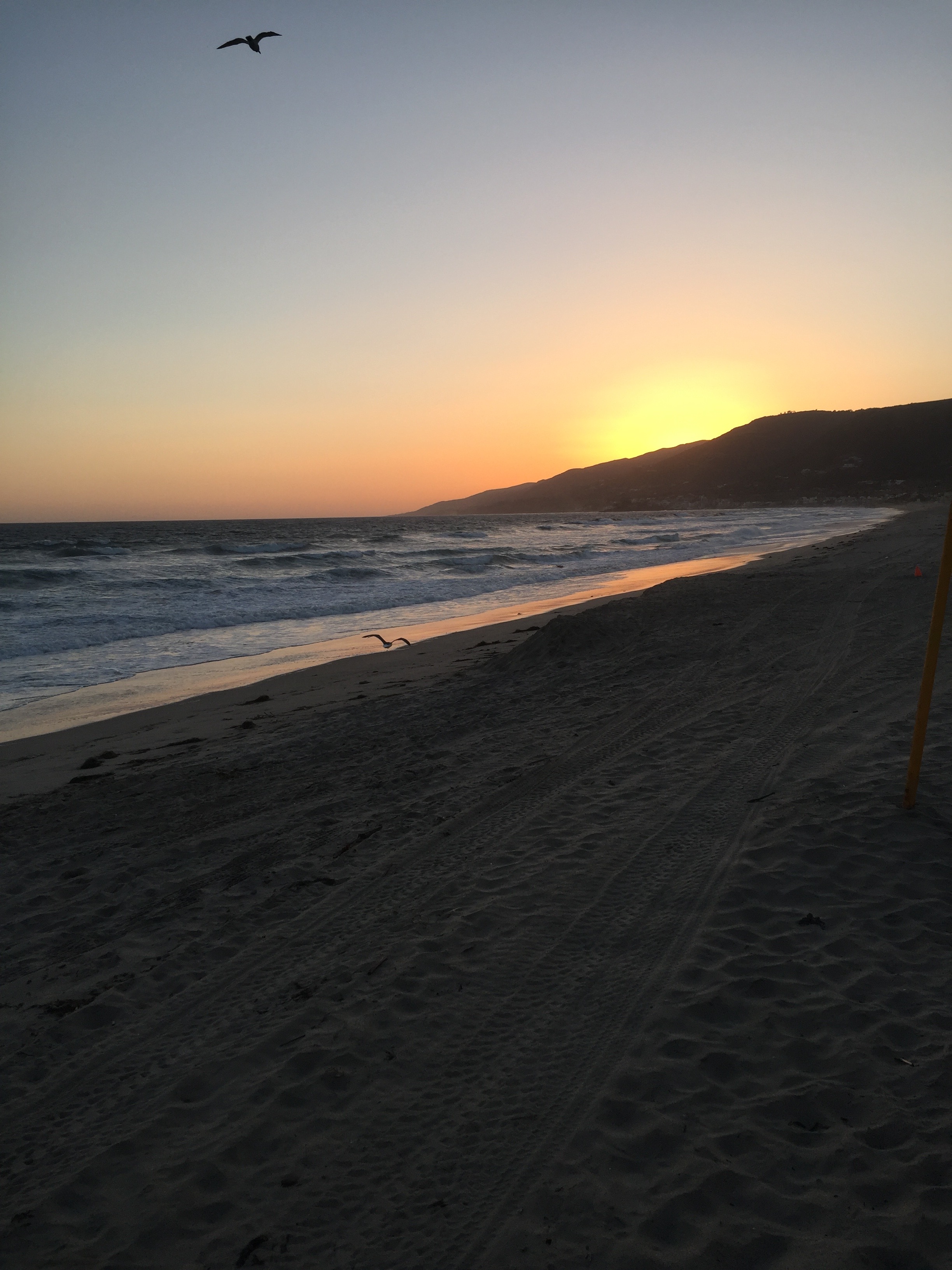
Sycamore Beach north of Malibu for a quick 24-hour break.
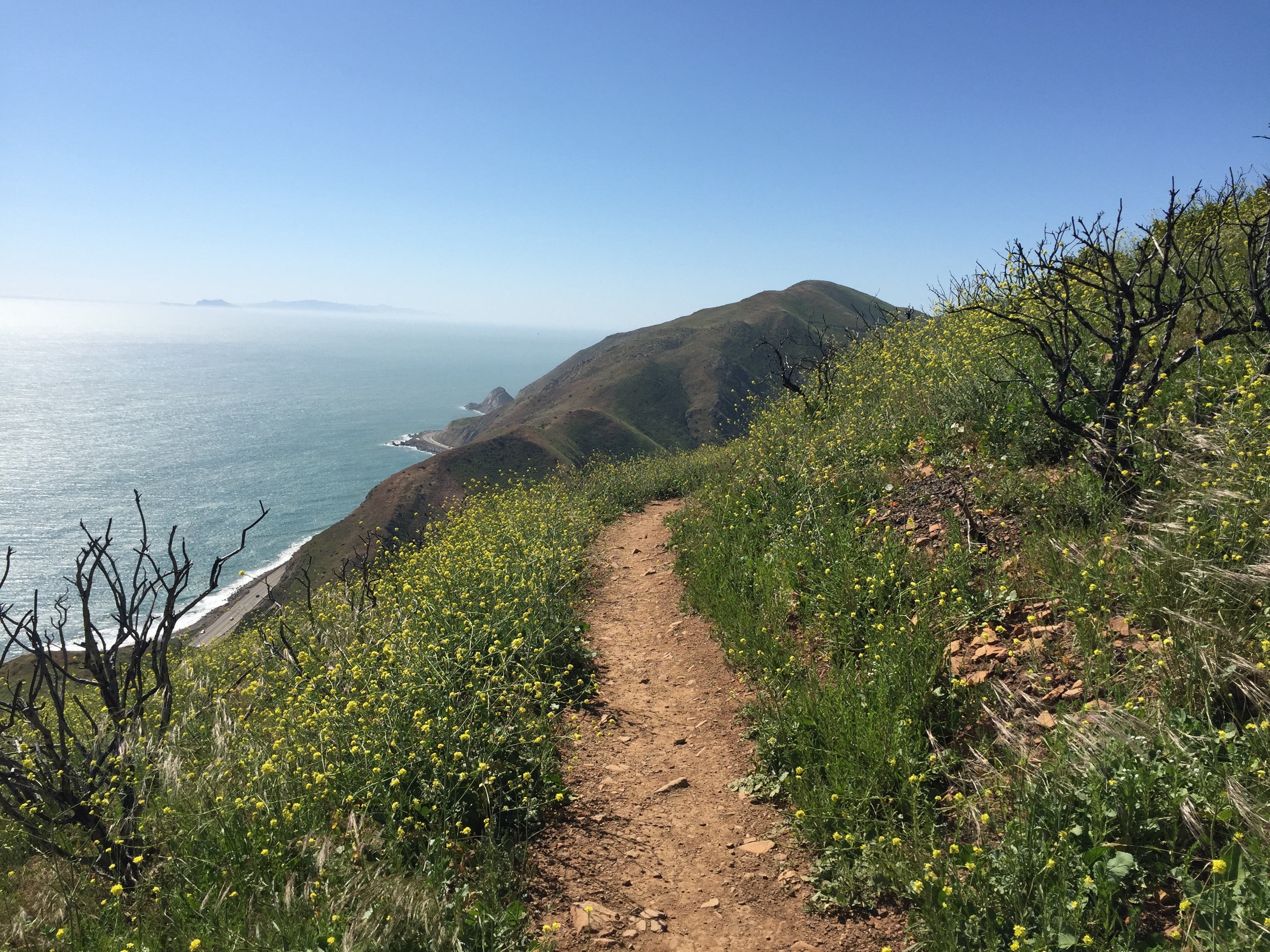
Burn2
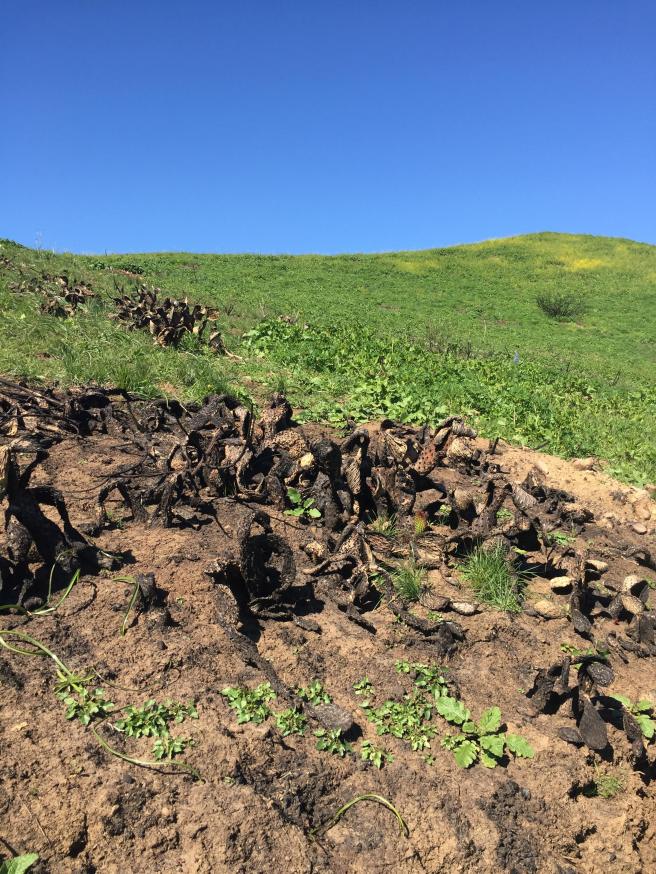
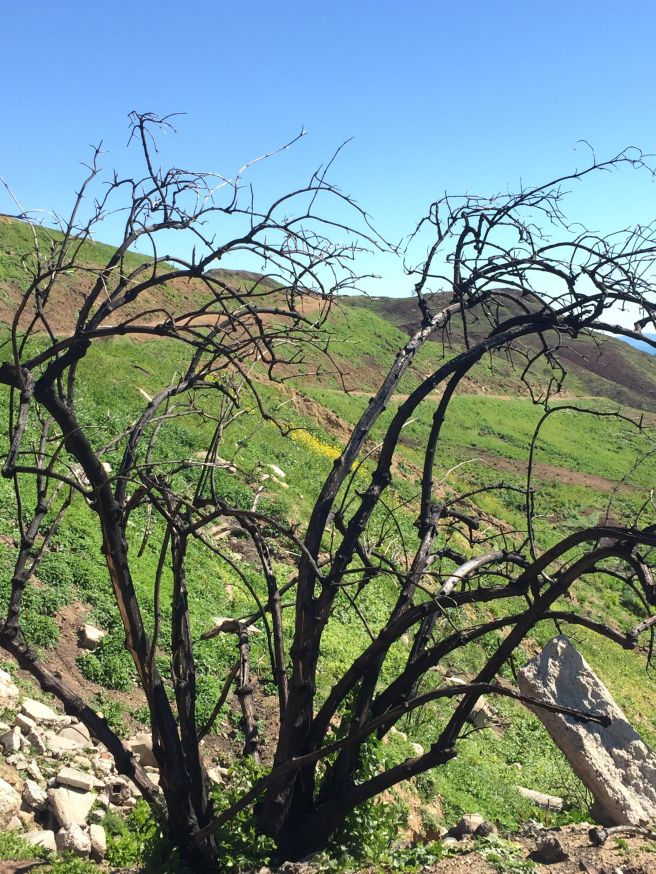
I took a hike in some of Malibu’s burn areas, which are bouncing back nicely. Here, burned prickly pear is surrounded by carpets of greenery.
SignsofLife
The first signs of beauty following a fire.
Brun1
The contrast of burned wood against burgeoning green and yellow.

Putting the Adventure Cart Before the Horse

JRVan

When I last left this blog, I was gamely giving tent camping a whirl in the absence of a van, mustering enthusiasm where, truth be told, I had very little. My optimistic accounts of #tentlife were largely designed to convince myself, not you, that adventuring under a nylon dome was going to be a wholly adequate substitute for my longed-for van.

Not so. Sure, tent camping is OK, but I’m a person who still enjoys creature comforts and I honestly don’t feel the need to torture myself in the name of adventure. I’ve spent the last three years hungrily peeking through my flaps at everyone else’s adventure rigs and I realized that there was no putting the van genie back in the bottle. Once you’ve gone van, there’s no going back.

So, I got one of my very own. And not just any old van — I went from looking at a $6,000 beater to a full-blown Mercedes Sprinter van conversion in about five minutes. And there were no smarmy, yet highly effective, sales people involved — just an epiphany.

As I stood in some nondescript driveway in Los Angeles, trying to outbid a fellow adventurer on a European couple’s 1990-something, American-made, funky blue camper van, I thought, “This will be a great step toward the dream van.”

As the bidding went from $6,000 to $6,700, which included the sweet IKEA mattress toppers for the old banquette/bed, I bowed out, thinking that it was getting too rich for my blood.

Returning home in defeat, I Googled “camper vans for sale” for the 1,000th time and prepared to scroll past all of the newer, turnkey vans to the under $10k offerings. And that’s when my foul-mouthed epiphany struck: “What the fuck are you doing?!”

After getting my attention, my inner voice went on to make some fairly compelling arguments, like:

  • You’re 50 years old, not 20. When, exactly, do you make your dream van come true? When Medicare kicks in?!
  • You’ve worked hard for almost 30 years, you have an IRA, your bills are paid — you’ve been a (mostly) responsible adult.
  • Yes, you’re a freelancer and there’s no job security, but you’re killing it at the moment and this moment is all you have.
  • You want the #vanlife? Then get the right van, right now, and figure the rest out later.
  • And, should everything go to hell in a handbasket, do you want to be living out of a stinky old van with more than 200,000 miles on it or one that’s just a bit more civilized?

And so my inner Whatever Journey voice prevailed and I began searching for Sprinter conversions. I drew the line at going completely new with a custom-build, only because it would be a year, or more, before it would be ready. I am many things in life, but patient is NOT one of them. Once I make a decision, I look for the nearest trigger and pull it. For the most part, this propensity has served me well, but it’s also landed me in some regrettable spots wishing I had done more due diligence. Whatever. I hate shopping.

Within a week, I located a Sprinter conversion with only 50,000 miles on the diesel engine, which is practically brand new, and jumped on it. (These vans are snatched up surprisingly quickly as more people succumb to #vanlife.) So, I wired the money, had it shipped from Florida, and took possession on October 12, 2018.

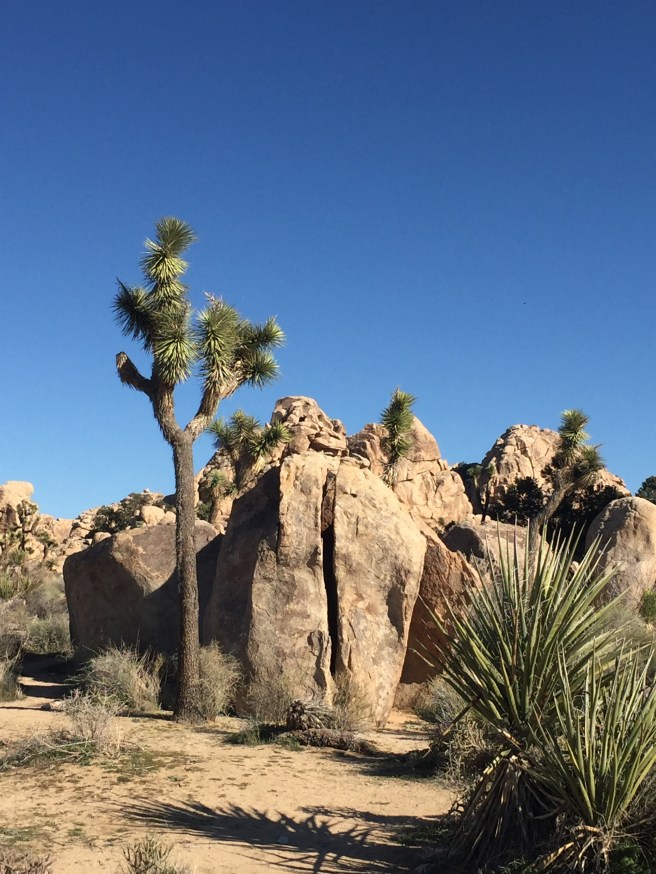
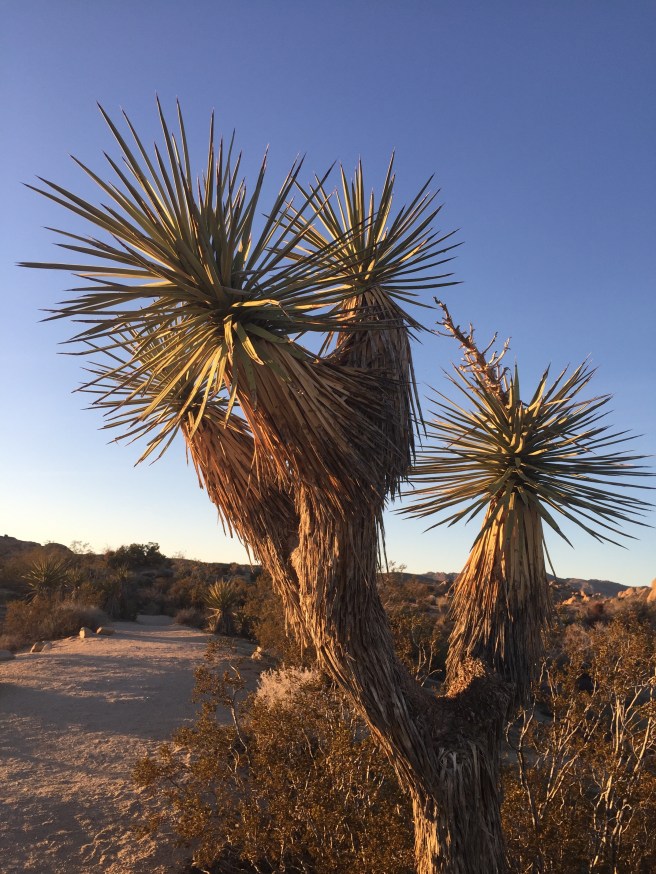
Now, here I sit, four months later, in the Whatever Van, in Joshua Tree National Park, writing my first personal blog in almost a year and a half, which is really the point of this van.

Desk

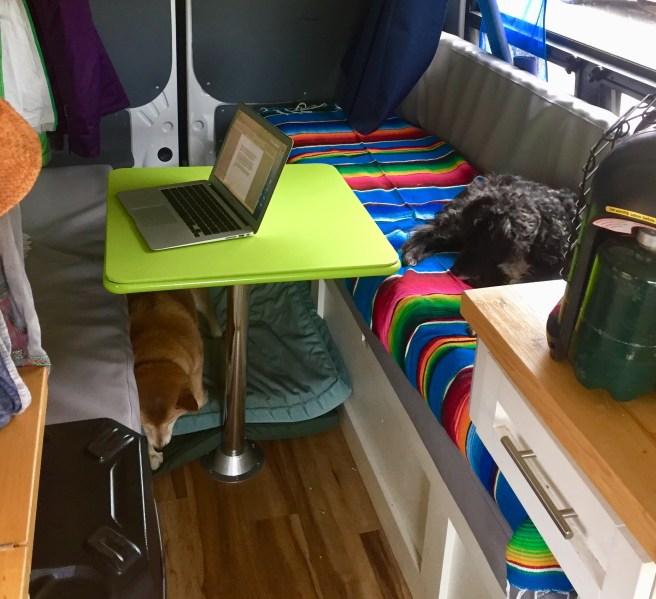
I built this little table myself and broke it in with this blog.

My absence from this blog doesn’t stem from a lack of blogging — my bread and butter is writing up conversational 650-word pieces for other companies. But, as the cobbler’s children have no shoes, so, too, does My Whatever Journey have no entries.

And that’s where this hefty expenditure comes into play. I’m not only investing in My Whatever Journey, I’m investing in my future as a writer and rebooting this dormant blog, because writing here is where I find my greatest joy. And nothing provides incentive like shoveling over an appreciable chunk of your hard-earned money.
It’s going to be tricky to figure it all out — working got me into this van and will continue to fund my adventure efforts. But rather than spending hours in front of a computer holed up at home, I’d like to take my work on the road. The problem is, where I prefer to go, Internet and cell service doesn’t usually follow, which is critical to my writing.

Through experimenting, and some, doubtless considerable, compromising, it’ll get sorted. It is, after all, My Whatever Journey, which means there are no rules, no timelines, but there is a direction, and it’s forward.

License plate

It’s all about presentation.


Bird's eye view

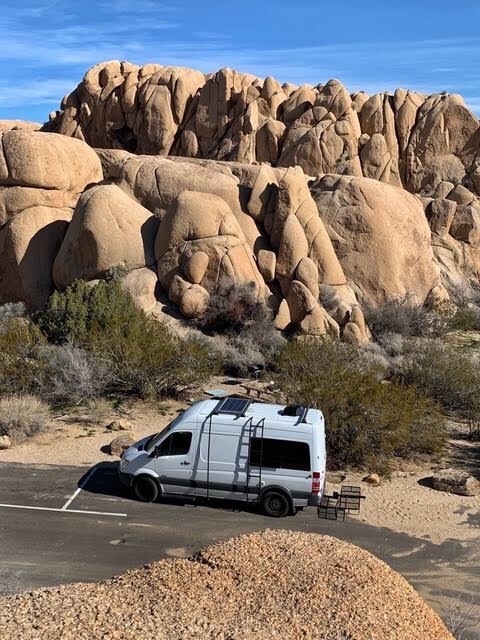
The Whatever Van looking like a boss.

Sunset

Beautiful Joshua Tree sunset as seen in the windshield.

Dogs

They both insist on riding up front, despite buying swanky, van-specific dog beds.

Joshua 2

The inimitable Joshua Tree National Park.

Joshua 1

Stay tuned…this adventure is only just beginning.

Earning My Circus Tent Stripes

September 15 marks the one-year anniversary of my move to southern California and what an incredibly fulfilling year it’s been! As is my habit, I set out to explore every inch of my new home, but this time, I cleverly disguised my wandering as “work.” One month after I landed in Malibu, I met with the local newspaper owner and came away armed with a batch of assignments to highlight the many recreational opportunities in Los Angeles and Ventura counties. So off I went, prowling the shoreline for sea mammals, hiking miles of trails in the Santa Monica Mountains, going sideways to learn to skate and surf, and chasing the Super Bloom in surrounding deserts.

I loved every minute of it. I gained a good handle on my surroundings and, before I knew it, I had developed regular stomping grounds for my hiking, biking, and swimming adventures. And while my breath still catches at the views from the trails or a dolphin playing in the surf, it wasn’t long before I began to wonder what lay beyond a day trip.

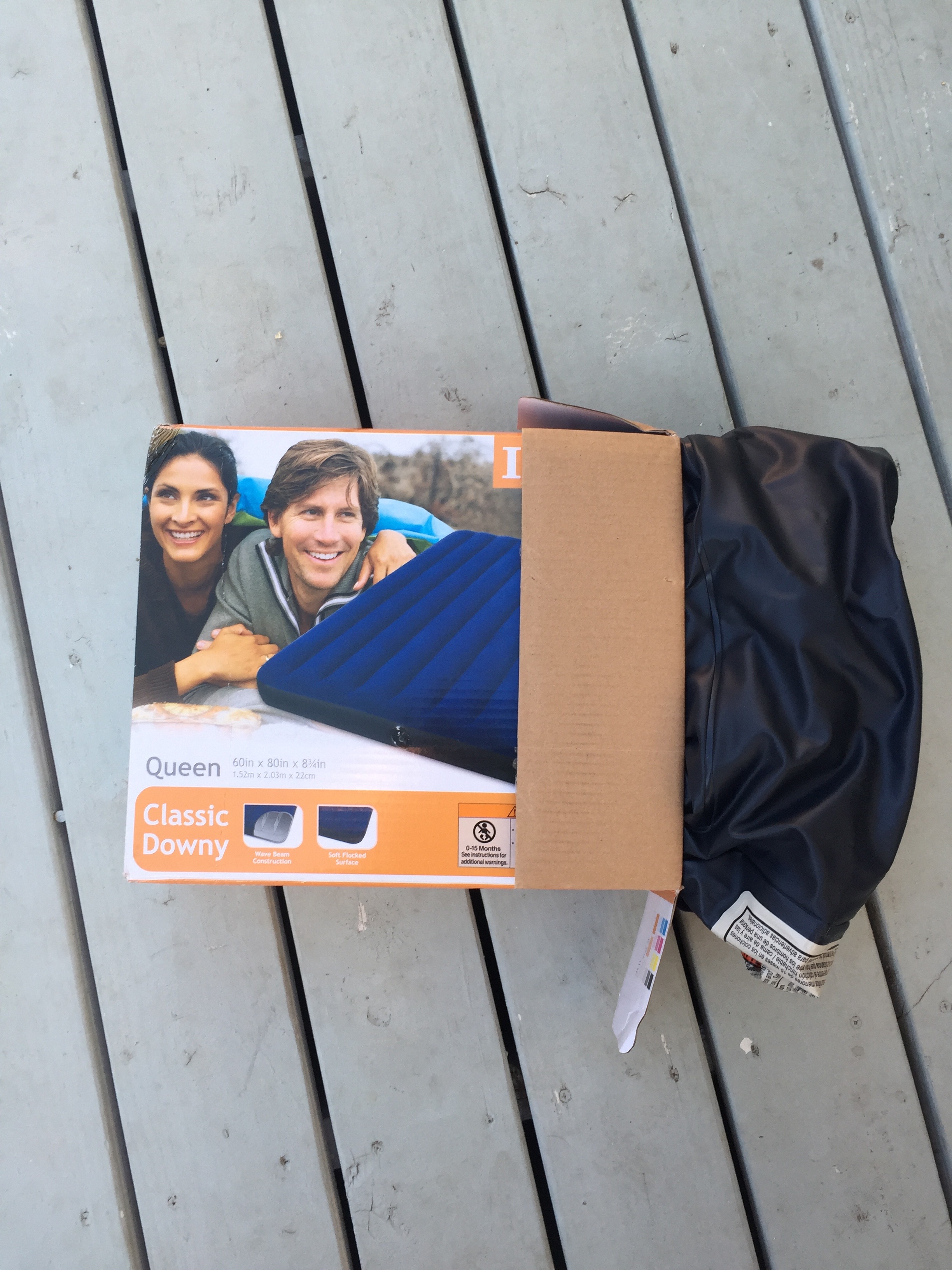
So it was that I found myself at Walmart purchasing a tent, an air mattress, a cooler, and the latest marshmallow-roasting fork, while texting a friend who has some camping experience to set up a date and destination.

You see, for all my van camping experience, I had never before pitched, never mind slept in, a tent, and this seemingly small detail loomed large for me. I couldn’t imagine pulling into a campground without the safety net of my van, its metal walls and small kitchen providing the last divide between me and full-on nature.

But I don’t have a van anymore. What I do have is a car, that can carry a tent, and that’s it. If I wanted to venture farther afield, I knew I had to clear this last hurdle and get up close and personal with my surroundings.

My friend and I settled on an ideal oceanside spot that’s three and a half hours away, but it was still August and high season wasn’t over, yet. The campground operates on a first-come, first-served basis, so I was advised by the website that my best chance for obtaining a much-sought-after weekend spot was to arrive at the campground at 6 a.m. on Friday, when the office opens up, to be at the head of the line.

The day before departure, I busied myself shopping for food, packing up the car, all while envisioning a beautifully-pitched tent and dogs lounging around the campfire where we sat roasting marshmallows. In the middle of this vision, my friend texted and said he was sick and couldn’t make it. I knew right away that there was no way my aircraft carrier was turning around—it was full steam ahead.

So, the dogs and I got up at 3 a.m. and struck out on our own, arriving at the remote campground promptly at 6 a.m., just as the sun began to rise. I was smugly pleased to note that I was, indeed, the first person there. In fact, I was the only person there for the next hour and a half. No ranger, and certainly no other resourceful campers waiting in line. I sat there in my car like Clark Griswold in the Wally World parking lot, looking longingly at the RVs, tents, and vans with their still-sleeping occupants.

Finally, at 7:30, a park ranger who happened to be driving through asked if I needed help. I explained that I was following the website instructions to the letter and he shook his head and said that the ranger station didn’t open until 9. Furthermore, he wondered why I was sitting there waiting when there were a couple of unoccupied spots around the corner that I could just go grab. I almost kissed him. I was in.

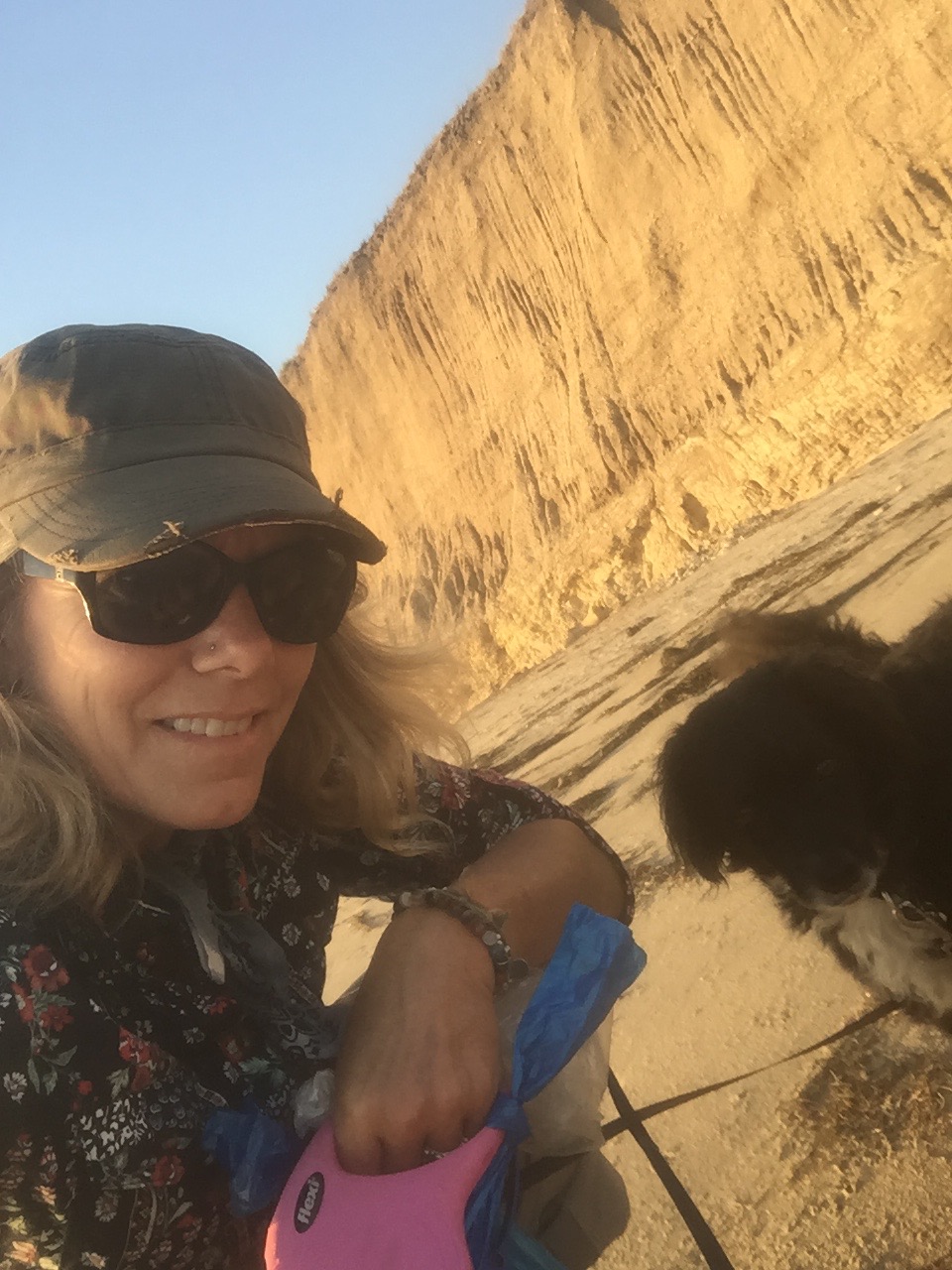
After pulling into a site situated about 100 yards from the beach, I grabbed the dogs from the backseat and went for a walk. With an empty beach that stretched as far as the eye could see in both directions, we spent the next hour reveling in our good fortune and logged a few miles of off-leash fun. Exhausted, we returned to the campsite and that’s when the reality of tent camping hit me. I had miles to go before I could sleep.

I cracked open a caffeinated beverage and unpacked my still-in-boxes equipment hoping that the set-up would be as quick and painless as the instructions implied. Starting with the tent, which touted a one-person set-up time of less than two minutes, I started the clock. Twenty minutes later, I had it figured out.

Next up was the air mattress. I unpacked the blower, unfurled the mattress and plugged in my handy car-to-electric converter. The little machine coughed periodically, like a dying animal, and in no way was capable of blowing up a queen-sized mattress. I took the blower and the air mattress over to the restrooms and found an outlet outside the men’s bathroom. Mercifully, it worked. Once blown up, I threw the cumbersome thing on my head and labored back to the campsite battling a prevailing on-shore breeze—my arms nearly ripping off as I tried to keep the mattress from flying away.
At the site, things weren’t getting any easier. I discovered that air mattresses are best blown up inside the tent since the opening isn’t large enough to accommodate an inflated one. At this point, I was in no mood for funny business and I angrily bent, shoved, and wrangled the thing through. After regaining my composure, I made up the bed with sheets, pillow, and comforter; I put batteries in my lights and hung them; I organized the dog bed and my clothes; and then I sat and admired my work. This tent thing wasn’t going to be so bad, I thought, as I fell asleep. It was 10 a.m.
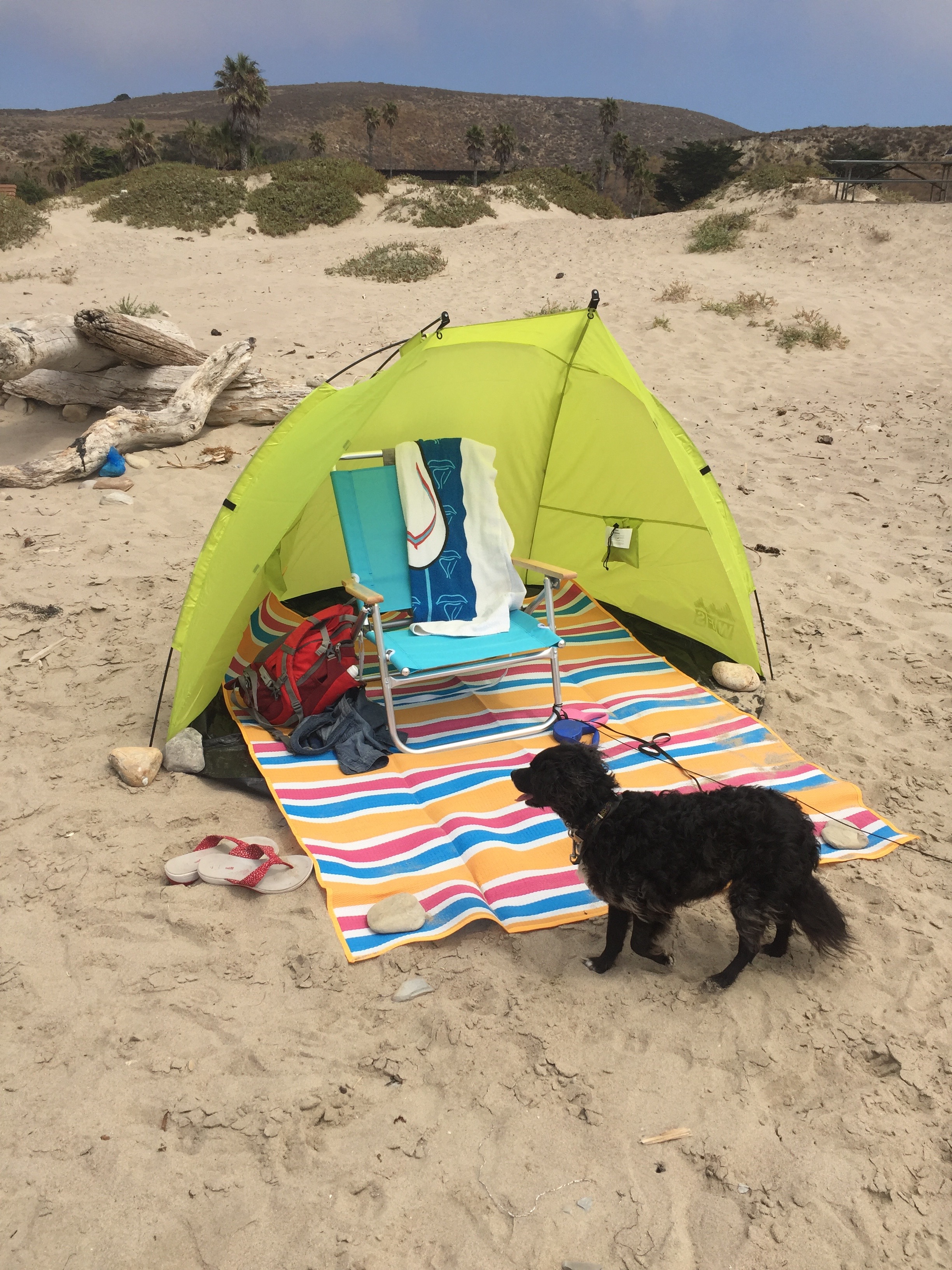
I woke an hour and a half later and the dogs and I spent a wonderful day wandering the beaches, reading, meeting the neighbors, and eating dry goods. As evening approached, I knew I had to get down to nighttime ops and went off in search of firewood at the local camp store. Once lit, the resulting mass of smoke from my fire ring sent my neighbor over with some good kindling and accelerant and I was in business. Having already decided that I wasn’t going to attempt cooking, I ate some cheese and crackers, leaving room for the main event—s’mores. The new marshmallow fork performed admirably and I was covered in sticky goo in no time.

It’s at this point that camping reveals its true allure—the nighttime sky teeming with stars, the sound of the waves, little campfires dotting the grounds, and the laughter piercing the darkness. I was dismayed to once again be experiencing it alone—after having camped for three months by myself two years ago I was ready to have some company—but it was hard not to be seduced by the simple magic of it all.

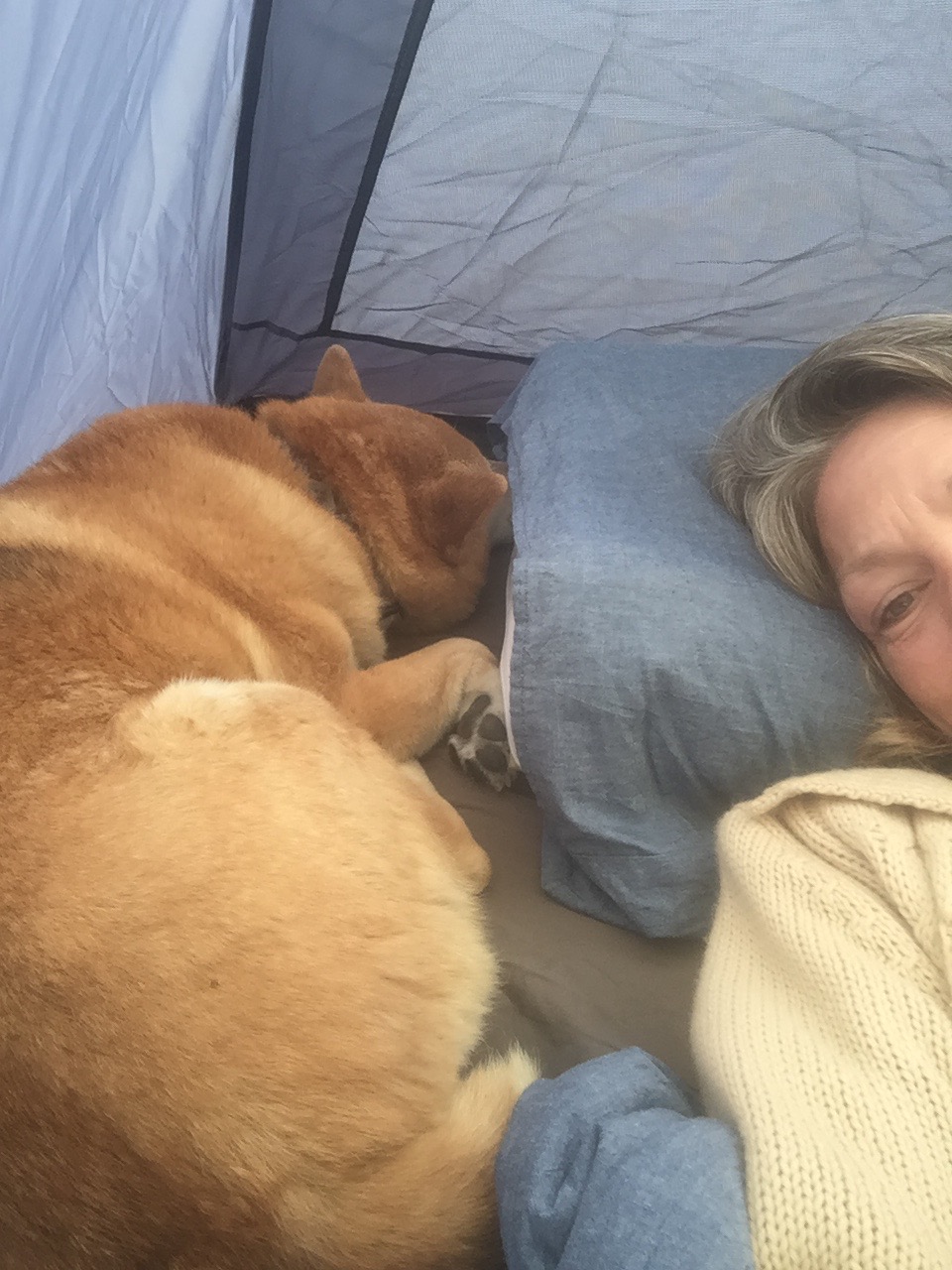
After soaking it in, the dogs and I crawled back into the tent and went to sleep.

Feeling mostly refreshed, I faced the next day determined to sort through the myriad issues that come with tent camping, such as:

  • Keeping a tent clean, which I’ve deemed impossible
  • Minimizing air loss in the mattress, especially new ones that are expanding
  • Getting in and out of the tent with some dignity intact—I mostly dove in and flopped out
  • Figuring out how to put everything back in their thoughtfully-provided carrying cases after striking camp (I didn’t even come close to solving this one)

Undaunted, I’m declaring the outing a huge success. I’m not prepared to say it measures up to van camping, but camping in a tent isn’t bad. Just knowing that I’ve now cut my teeth has opened up a world of possibilities and I’m eager for the next adventure.

Going from a van to a tent is a big leap. Note the thoughtful flower my neighbor placed outside my “door” in a water bottle, which softened the landing somewhat.
Willy was on high alert in the new surroundings.
While Mika and I wisely relaxed.
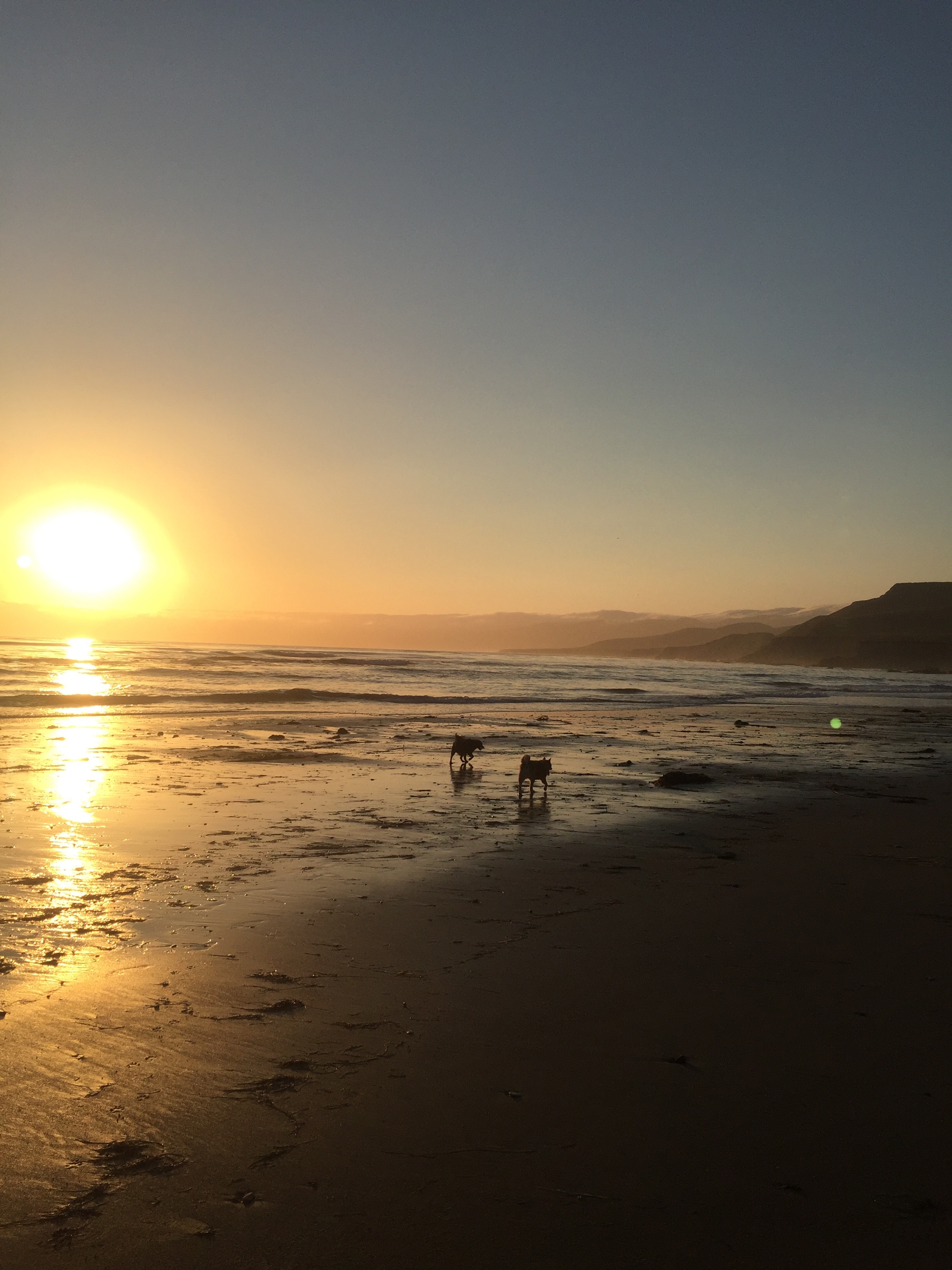
The dogs loved the off-leash fun.
Because the tent wasn’t enough, I also bought this thing and spent 15 minutes setting it up–facing the wind.
None of the equipment fit back into the boxes and carriers properly.
But when tent camping gets me this, I’ll be back.


Toppling the Past

As the public debate over flags and statues flares up again, I am embroiled in my own thoughts about the role that history should play and wonder at what point should history give way to the future and how much of a role it should have going forward. This all comes about after a trip back “home” to Connecticut, which is steeped in my history. During my visit, I experienced two sides of the argument: On the one hand, while I was there, an ex-boyfriend tried to erase me from existence—from photographs and cell phone plans to the ultimate in today’s social media world: a Facebook block. It’s disconcerting to be a part of someone’s life for 10 years and, at the request of the new “occupier,” be exorcised from that person’s history. My statue was, in effect, being toppled.

On the other hand, I spent some time at both my house and my family’s beach house, where history was on plain view, almost enshrined. In light of being eradicated from someone else’s history, I reacted to these places with, what I hope was, respect, acceptance, and closure. When it came to my house, I grabbed a bunch of contractor bags and began shoving the contents of my closets and shelves in with abandon. I checked myself from time to time,  pulling a book or a keepsake from the bag and putting it aside into a small, but significant, pile of remembrances. I was brutal in my efforts to clean out my history, relying on the fact that my history largely resides inside me—the trinkets I chose to keep are simply there to jog those memories.

And it felt good. I waded my way through my past, fondly acknowledging it, with the understanding that everything else was just stuff and stuff should be updated to reflect the present. I no longer live in my house—I can lower the flag and move on, knowing that my time there will live in my memories and exist in the beautiful gardens. It’s time for others to build their own history in my absence.

Moving on to the beach house was trickier because it represents three generations of our family—my parents being the first—and there are reminders of their legacy on every wall, in every closet, and on every tabletop. I found it a bit stifling and about as musty as the 50-year-old wool blankets. To my way of thinking, there are ways to honor and celebrate this legacy while still airing out the present and building a new future.

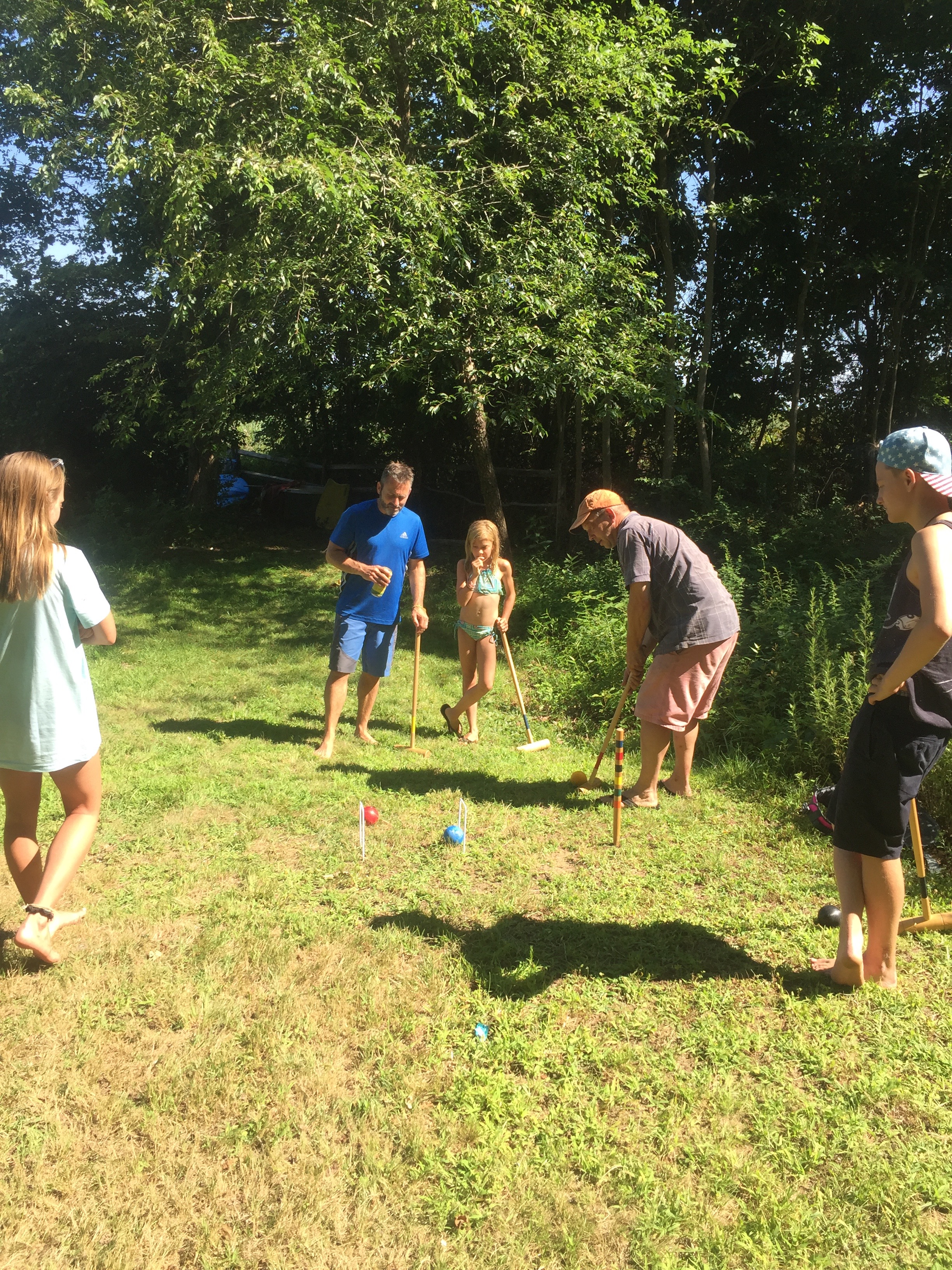
The most remarkable leaders in our history understand that true strength lies in the ability to acknowledge the past—to learn from history’s mistakes and successes—in order to bring about a better future. In other words, the traditional evening croquet match at the beach brings the family together, but the English beds built for 19th century Hobbits do little more than make people grumpy in the morning.

Ultimately, as with most things in life, I find the middle ground to be the wisest choice. A scorched-earth policy is for the insecure, those that choose ignorance over a history that can’t, no matter how hard you try, be erased. And nor should it be—there’s good stuff there and acknowledging that is a healthy way to move forward.

Nor do I want to live in a shrine, choking on the dust of the past. There’s no need for history to leave a bumpy wake when it should, rather, pave the way forward. Living in the past bespeaks an inability to find comfort and confidence in one’s own identity.

As people scramble to plant and burn flags, erect and tumble statues, re-label one thing patriotism and another sedition, they forget that they are dabbling in semantics. History cannot be changed, but how we regard it going forward tells us a lot about who we will be—those who accept, respect, and grow from history are the ones I want to emulate. Their identities are hewn from the past, exist in the present, and are reshaped with every step going forward. And no statue can be made of that.

Nostalgia in the form of a family croquet game has an honorable place in the present.
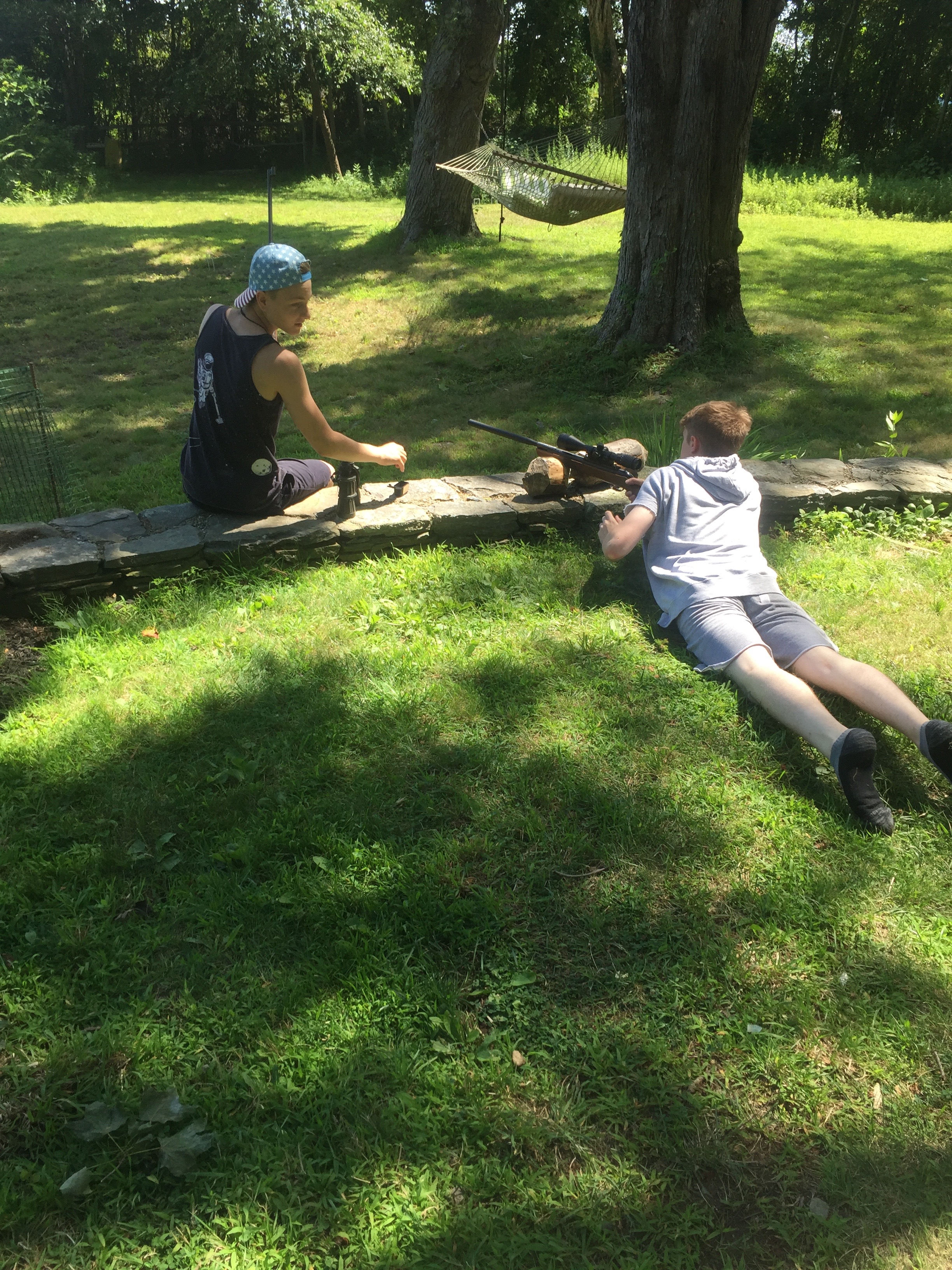
As do new endeavors, like redneck target shooting in the backyard.
I look forward to see how this next generation will make its history.
Especially from the comfort of the old family hammock.


Choose Your Friends, and Your Scarves, Wisely


“You need to prepare to evacuate,” said the handsome fireman, turning my flirtatious smile into what I’m sure was a really sexy look of dumbfounded incomprehension. I heard what he said, but I couldn’t really wrap my head around it, despite the ash falling around me. I did, however, register one important thing—shit just got real.


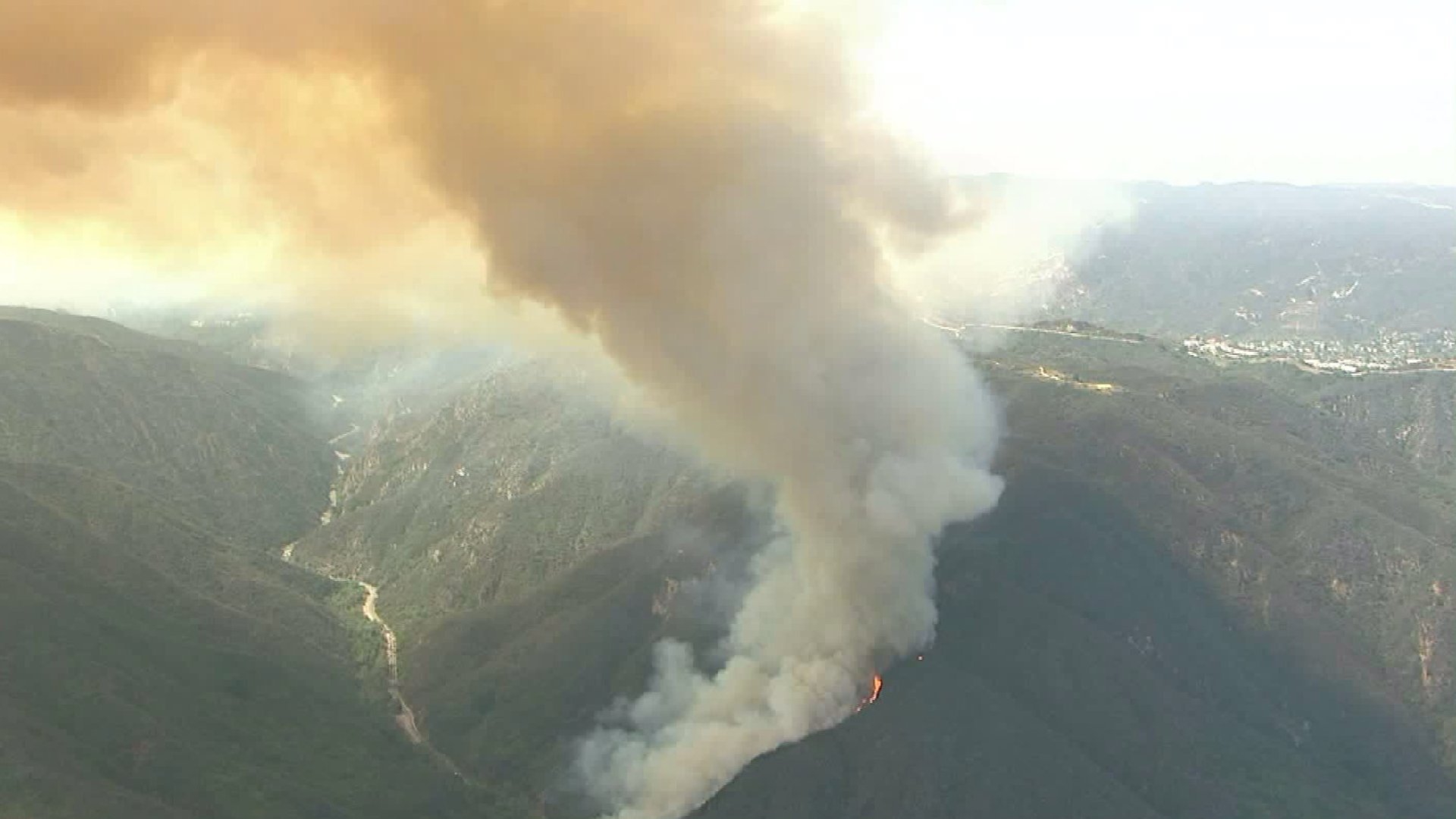
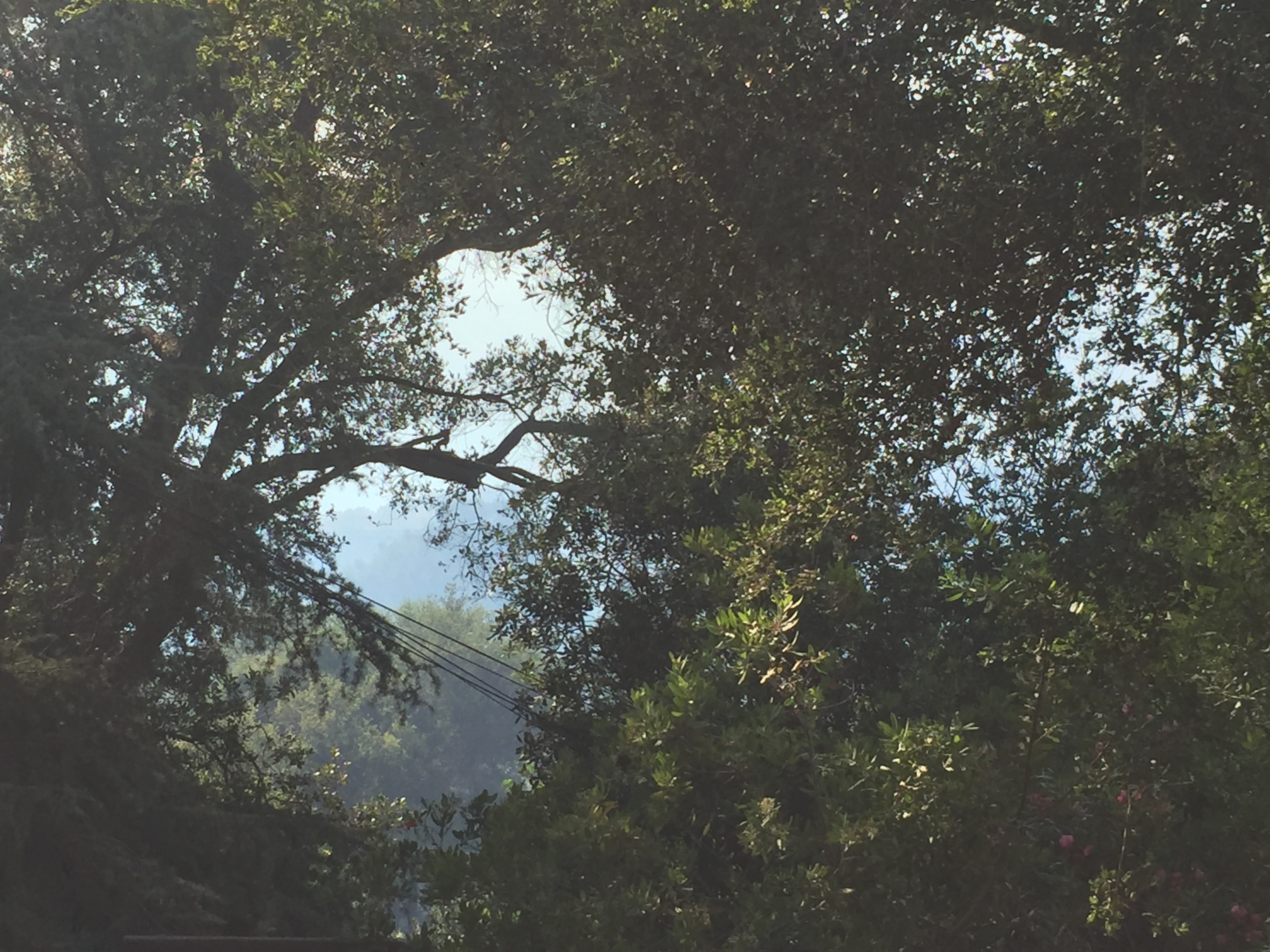
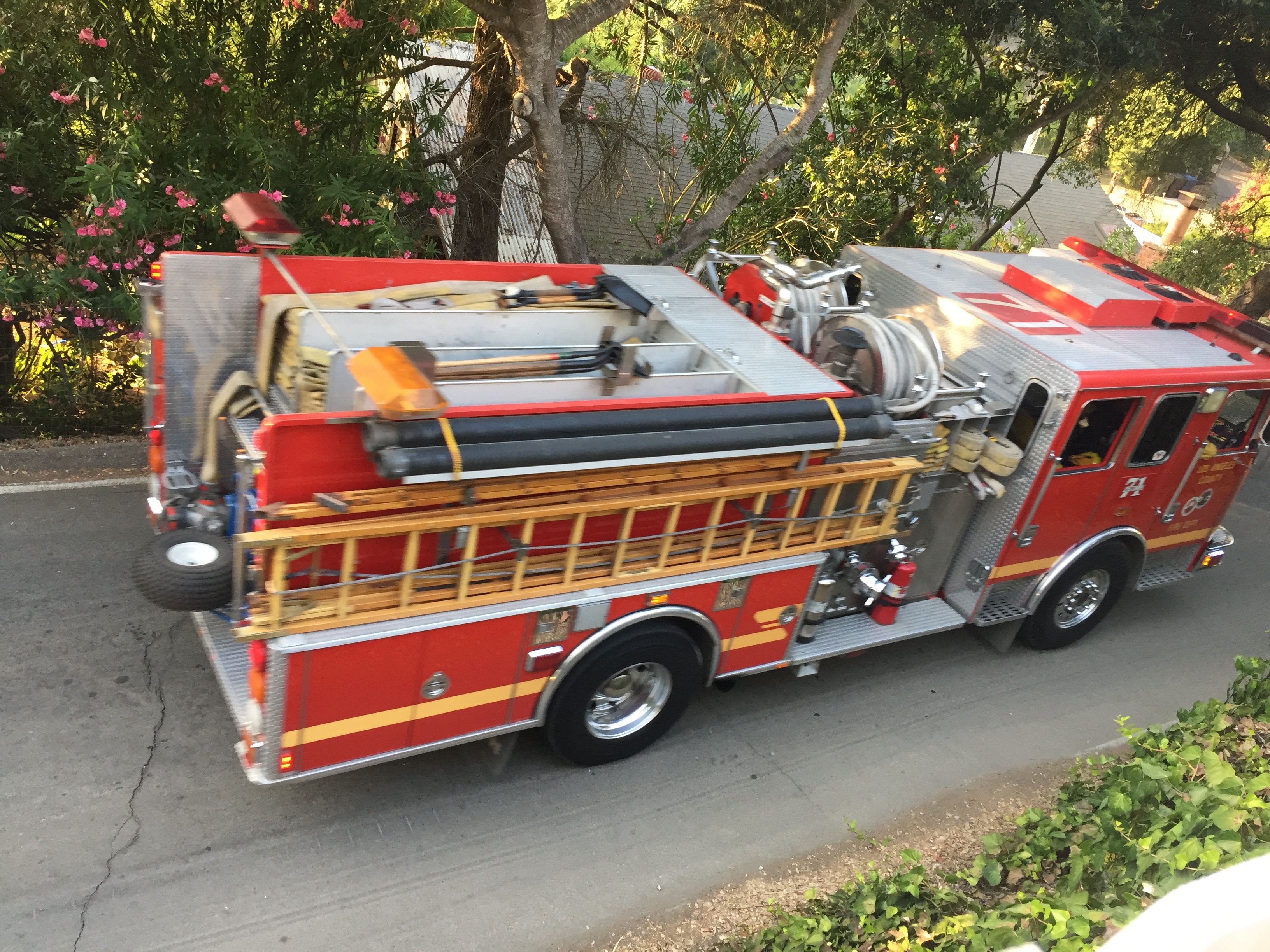
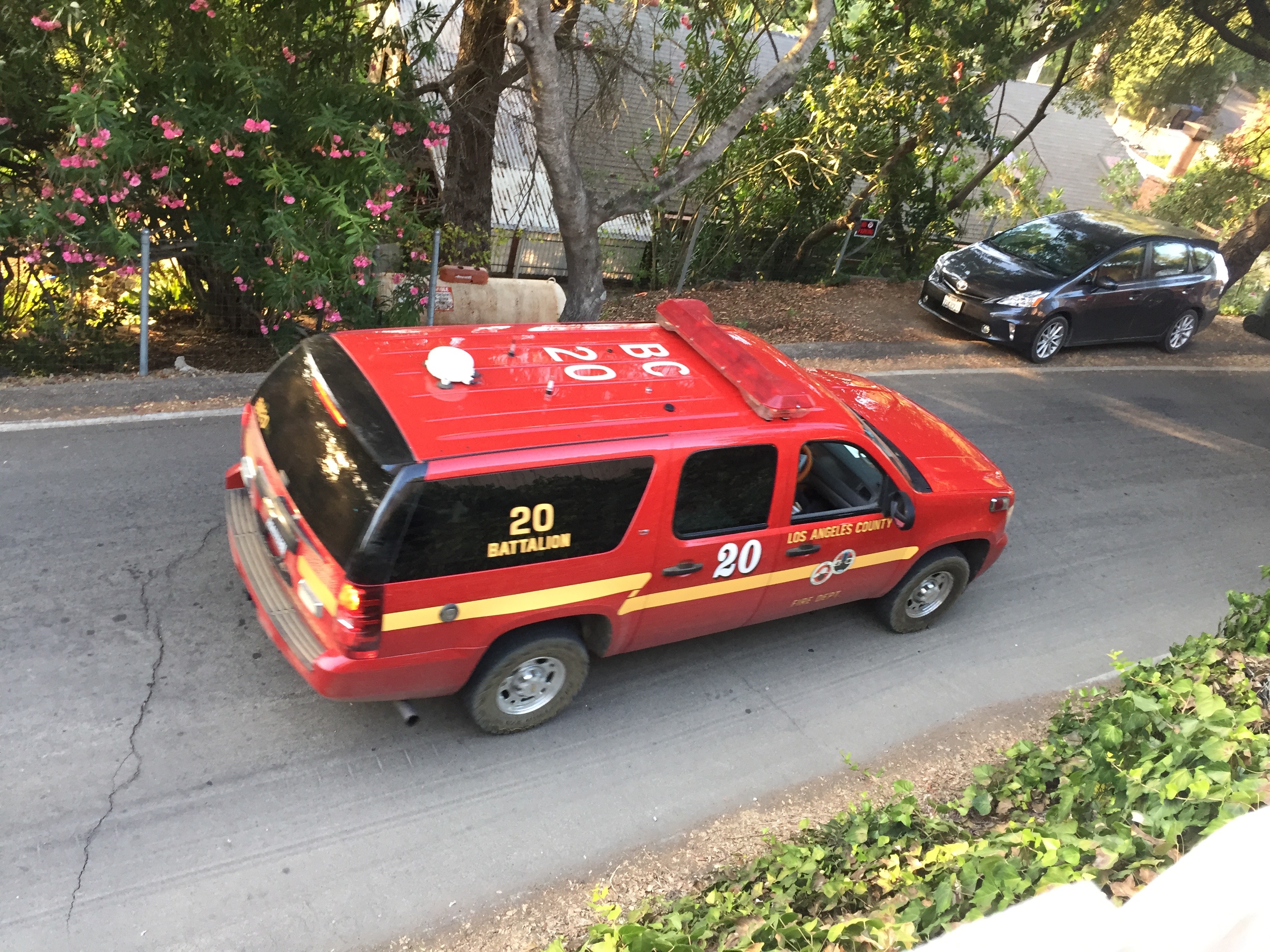
This all happened about a month ago, with my day starting routinely enough. The sun rose, I walked the dogs, and I planted myself in front of the computer to work, periodically getting up to stretch outside on my deck. During one of these breaks, I noticed that something was wrong, very wrong.  The first clue was the smell of smoke—an unmistakable scent of something burning, something far bigger than a burger left on the grill. I peered over my deck and looked down the canyon and saw a thick haze crawling toward me, which in and of itself is not unusual—the marine layer from the Pacific often makes its way up the canyon. But when I put the two together (move over, Sherlock), I realized that there was a fire somewhere near me, a really big fire. That’s when the helicopters started zig-zagging overhead like loud, cumbersome humming birds, and convoys of fire trucks roared up my little streets.

My usual clear view across the canyon was filled with smoke.


The first of the trucks going up my road to set up a defensive position.


Since I have no cable, I turned, naturally, to social media. Sure enough, nextdoor.com and the Topanga Facebook page were lighting up with posts and pictures of a fire down in the lower canyon on the Pacific side.


Good old Facebook provided the first glimpse of the fire.


So began my literal trial by fire in southern California living during the summer season. As I stood in front of the handsome fireman, my first addled thoughts were, “OK. Dogs, computer, car, go.” As I walked away, the logistical side of my brain fired up and attempted to fill in the blanks. Obviously, the first order of business was finding a place to evacuate to, which, if you haven’t done it, is a fantastic tool for truly assessing your erstwhile “great” group of friends. As I was texting, it became startling clear who I would turn to in the event of alien invasion, or for a couple of eggs, for that matter. Good friends are the ones who said, “Come whenever. We’ll leave the sliding glass door to the guestroom open.” Then there were the friends who replied with, “Wow!!!!! Crazy!!!! Duuuuude, the new season of GOT starts soon!” The third group was a surprising one, full of new, local friends who regaled me with fire stories and tips. One new friend, in particular, responded with helpful advice on resources for up-to-date intel and offered up a spare bedroom.


With offers in hand, I turned to the task of packing up. A fire evac is very different from the winter storm decamps I was used to. Decamping is easy—grab the mutts, a change of clothes, top off the cat food, and go. Evacuating for a fire brings with it the real possibility that you may return to nothing, which puts an incredibly tricky spin on packing. I sat in my bedroom and eyed my closet critically, the what-if scenarios getting wilder by the minute. What if I get invited to Europe—I’ll need those new sandals. What if I end up in South America—it’s winter there and I’ll need my ski boots. What if that surf pro calls—I can’t go without a wetsuit. Eventually, I reined it all in and threw a bunch of underwear (considering I wasn’t wearing any at the time, it was a sensible move), several changes of clothes, my computers, important papers, my passport (Europe was still in play at that point), dog food, and about 25 scarves, into the car.


And then I waited. It was an eerie, eerie afternoon and evening. The incessant thrum of the helicopters and rumble of the fire trucks were punctuated by pauses of surreal silence. Nothing moved. No birds (they had flown the coop hours earlier, because they are animals, and much smarter than we are). No cars. No laughing kids. Just smoke and ash, lending an apocalyptic feel.

The sounds of helicopters continued for about five days as firefighters worked to contain the blaze. This photo comes from Fox LA.


A steady stream of fire trucks passed below my deck all afternoon and evening.

By evening, we were told that the fire had been partially contained and that the evacuation had been called off—for the moment. We were warned that the status could change at any time and we would only have minutes. Thankfully, that call never came. This time.


As fire drills go, this was an eye-opening experience on both a logistical and philosophical level. The opportunity it presents, trying to whittle your life down into whatever fits in your car, and discovering whom you can count on, was nothing short of revealing, and oddly entertaining. The revelations were both unsurprising and unforeseen, and, thankfully, more good than bad. The upshot of the experience is that next time, I will surpass a Cub Scout in preparedness, I’ll know immediately whom to call, and I know exactly which scarves best accessorize a fire.

And I am now equipped with an Access Card, which allows me to return after evacuation.


Beyond Help: How Inner Peace Changed Everything

I think I’ve got inner peace (IP). Truth be told, I’ve spent the last few months in denial about my IP, but the symptoms are hard to ignore, and they continue to progress at an alarming rate. Generally, I’m not one for self diagnoses and my on-line research has been inconclusive at best—WebMD has surprisingly scant intel on the condition, but I’m assured by Katy Perry’s website that rather than fighting IP, I should embrace it. And try transcendental meditation.

I’ve asked my friends who have IP about it and they just smile knowingly and respond, “Right on, sister.” It’s frustrating. Either they don’t want to talk about it or it’s become so much a part of them that they don’t even realize they have IP, which is probably why there are no support groups.

So, I’m left to sort through the facts on my own. There is some compelling evidence that points to an absence of IP. Just the other day some girl with peace and vegan bumper stickers all over the back of her car cut me off in her ancient, fossil-fuel-burning Honda, and I let her have it, with both horn and finger. But it wasn’t remotely satisfying. That’s the insidious aspect of IP—it takes the vindictive fun out of those situations.

And then there’s the blatant, hard-to-ignore stuff that supports an IP diagnosis. To wit:

  • I didn’t hit skip when U2 came on and, instead, listened. It wasn’t half bad.
  • I don’t suck in my stomach around cute men.
  • I have been walking away from arguments without the slightest desire to prove I’ve got the right of it.
  • I sometimes wear a t-shirt with “Love” on it, without irony.
  • Someone in yoga class farted next to me. Twice. And I didn’t roll up my mat in horror. Instead, I secretly urged her to really work her pelvic floor muscles.

See? It’s pretty bad. I definitely have it. If you’ve never experienced IP, it’s hard to describe the alien feeling of just being all right with almost everything.

I’m not sure where to go from here and I feel largely unmotivated to try anything proactive or preventive (which, I understand, is one of the subtler side effects of IP). I feel slightly comforted by the fact that there are friends, family, and lovers who are working around the clock to stop the forward progress of my IP, if not cure me of it entirely. So far, however, my IP has been largely unresponsive to these efforts. Sure, they might buy me a remission or two, but I’m fairly certain this condition is chronic.

I have no idea what form my IP will ultimately take—I’m sure it can’t completely overpower my anger or my anxiety, but it sure has stripped them of their teeth. I guess time will tell.

In the meantime, if anyone out there has any advice on how to live with IP, hit me up. Or not. It’s OK either way.

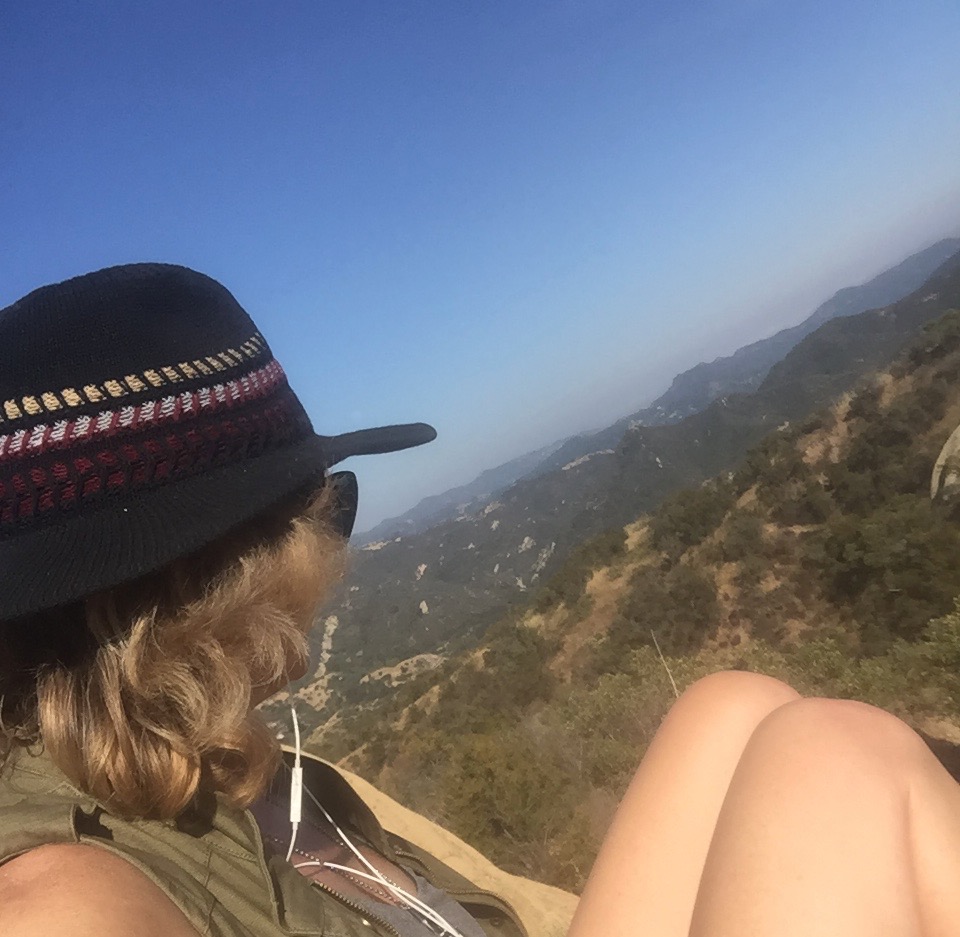
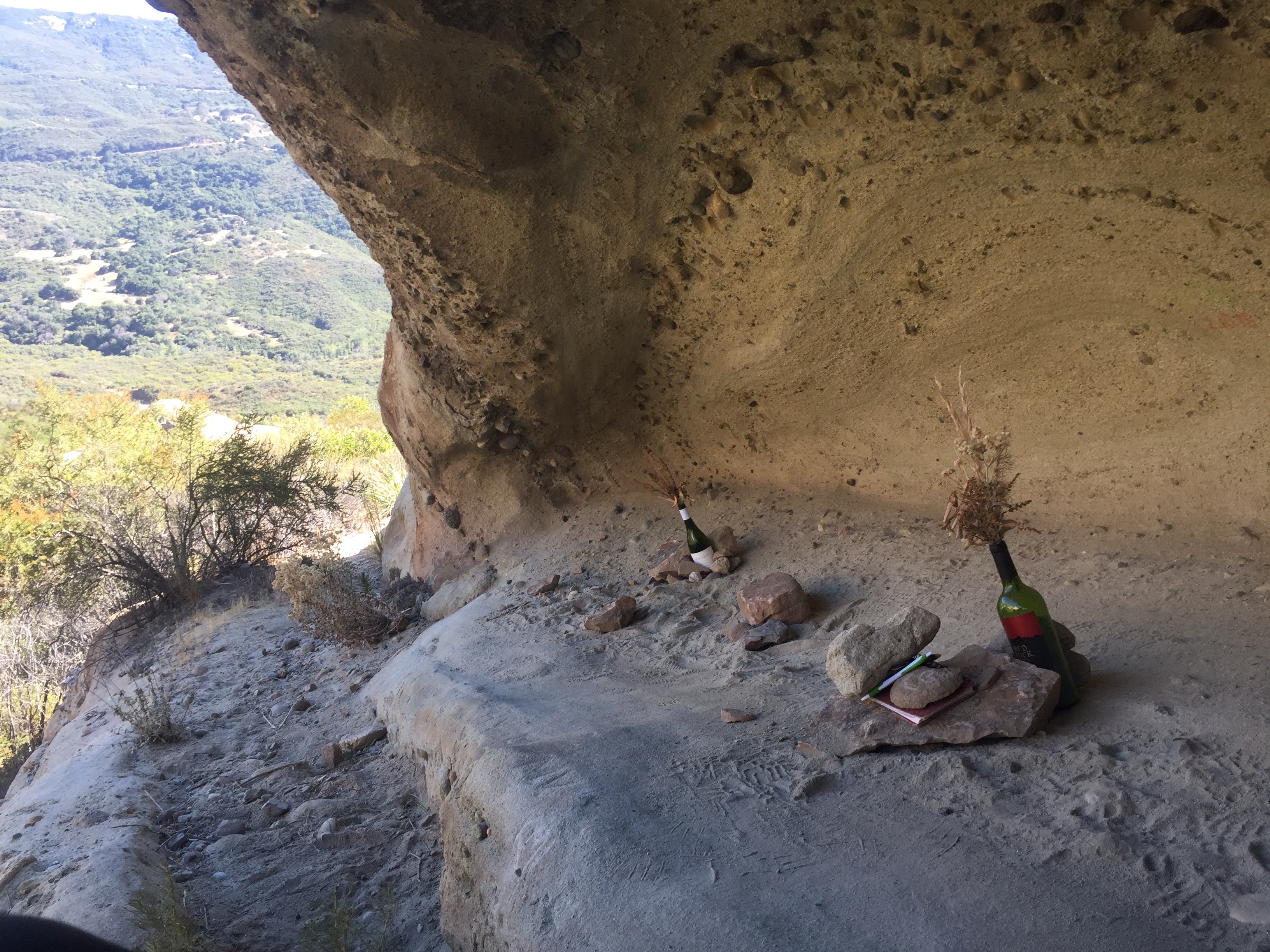
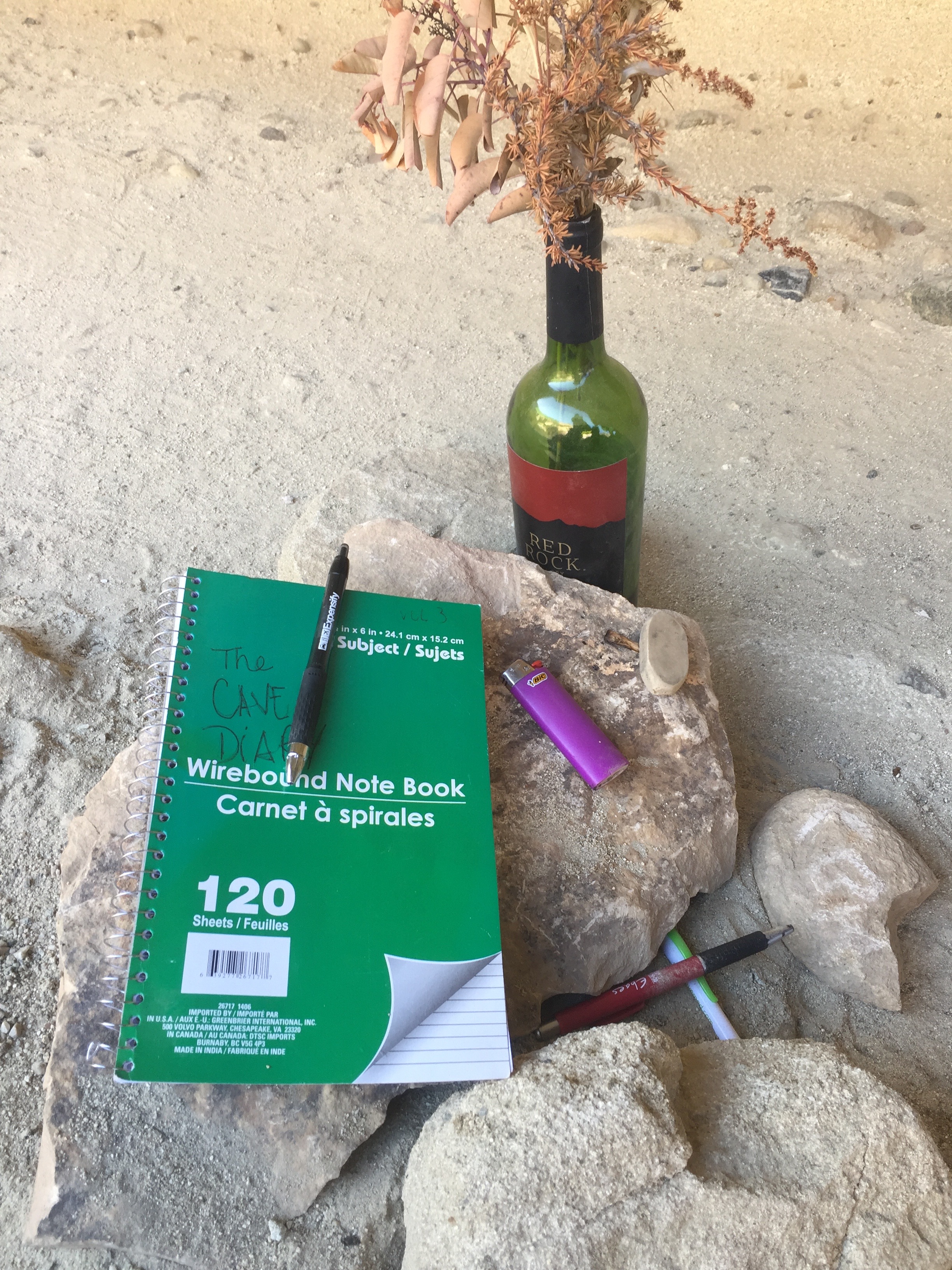
I’ve found that caves are a great place to go if you’ve got inner peace.
Especially those equipped with a diary, a lighter, and some weed.
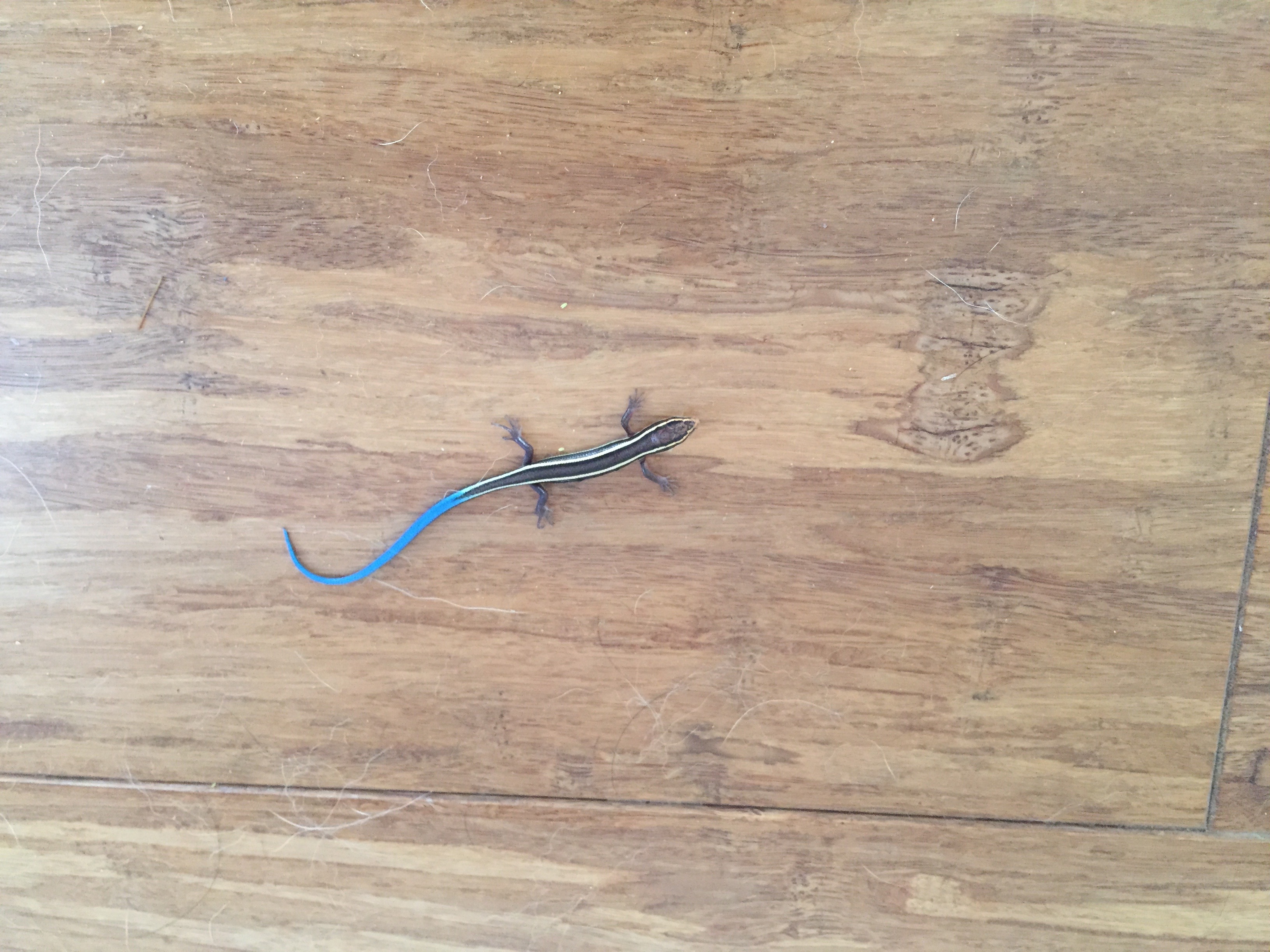
He’s got nothing to do with IP, but he did visit my house the other day and I thought you’d like to see some of the company I keep.
I’m willing to bet that IP flares exponentially the closer you live to the ocean.

After All, Why Not?

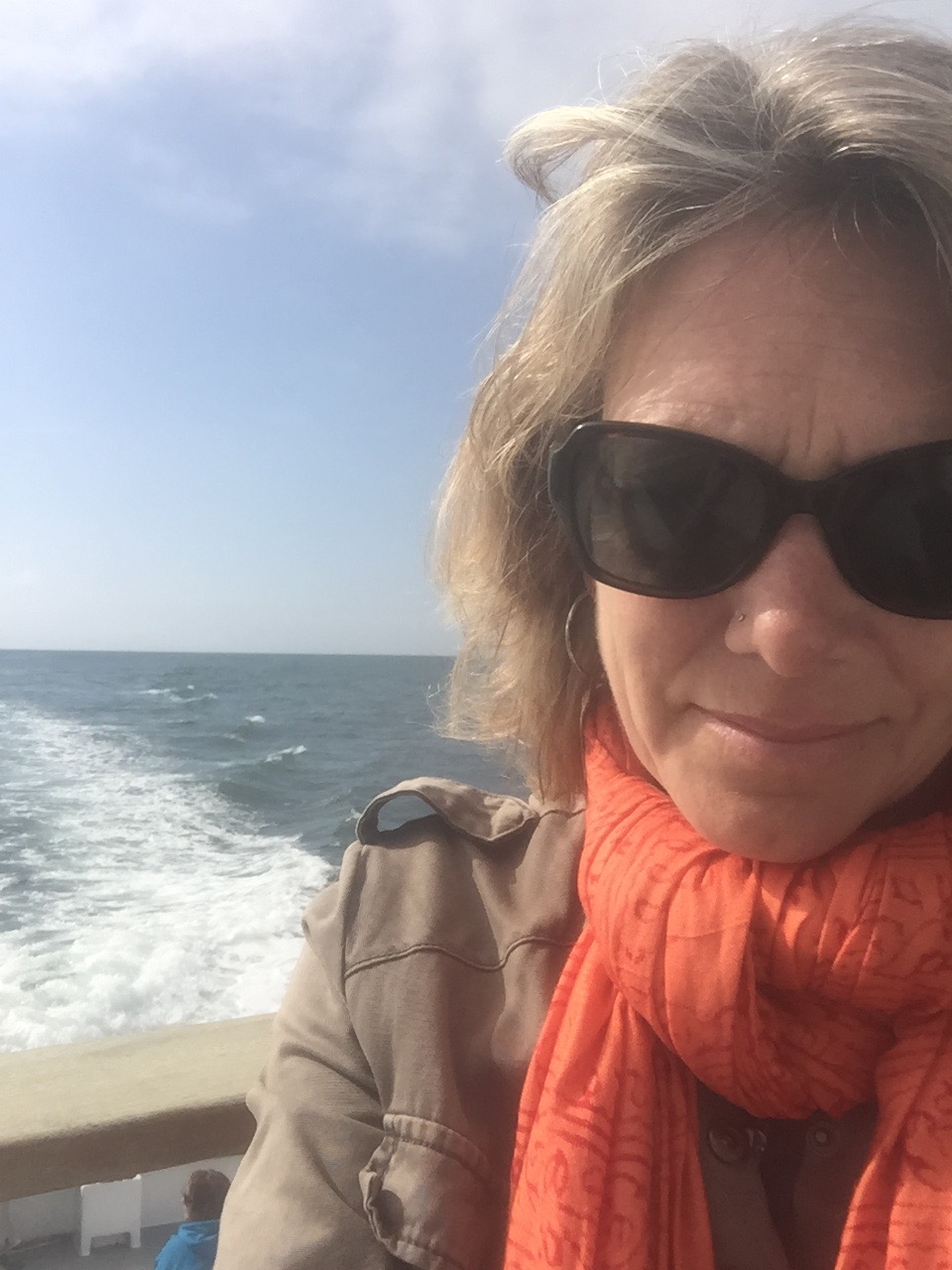
Taking to the high seas in search of whales.

When I jumped into a van almost two years ago and drove 9,000 miles around the West, camping at National Parks, I did not set out to seek some greater truth, some deeper meaning, an epiphany, or a transmogrification. I set out to regain something I had lost.

For many of us, growing up means growing into habits and routines that, for the most part, exist to maintain security and comfort, to safeguard a space where uncertainty, discomfort and fear are not welcome. In a world of mortgages, bills, businesses, families, and relationships, there is little room for risk or, more importantly, inspiration. To make ends meet and ensure that everything runs smoothly, we toe lines, we curb ourselves—I found it to be a passionless and exhausting process. Then, one day, I watched a child venture into the ocean for the first time. When the first small wave tumbled at her feet, she yelped and jumped backward. But curiosity got the best of her and she tottered in, her feet acclimating to the cold, and she spent the next hour pulling things out of the ocean in delight, her cold feet long forgotten. At that, my inner child ceased to be satisfied with reading about or watching other peoples’ adventures—she wanted to get messy, be scared, be delighted, and jump in with both feet.

And that’s exactly what I got on my van adventure. For three months I had no earthly idea what I was doing or where I was going and the rewards were beyond anything I could have imagined, far outweighing the fear and discomfort along the way. My inner child was in heaven.

So, how do you mute that child when the adventure is over? In my case, you don’t—you can’t. That inner child was a sleeping giant all along. I grew up with a father who never lost his childlike wonder, who often answered my questions with, “Why not?” My mother, too, was a fierce adventurer, traveling around the world by herself, moving to Mexico after my father died. They both mixed it up, in short, and were brilliant examples of how to strike a balance between the inner child and the outward adult. Somewhere along the way, I had lost that balance, and the van adventure started to swing it back in the right direction.

Often, while writing during my Whatever Journey, I wondered at the significance my small odyssey would take once it was over and I had to move forward. As it turns out, its significance is playing out in myriad ways, with more likely to come. I have rediscovered that most of the best things lie on the other side of discomfort and fear; and I have come to understand that my van was just a vehicle—and there would be many new vehicles if I figured out where to look.

Do I still have to toe some lines, pay my bills, and meet deadlines? Absolutely! But it doesn’t mean that I can’t jump on my shopping cart for a ride in the grocery store…or move to California and pick up surfing. After all, why not?

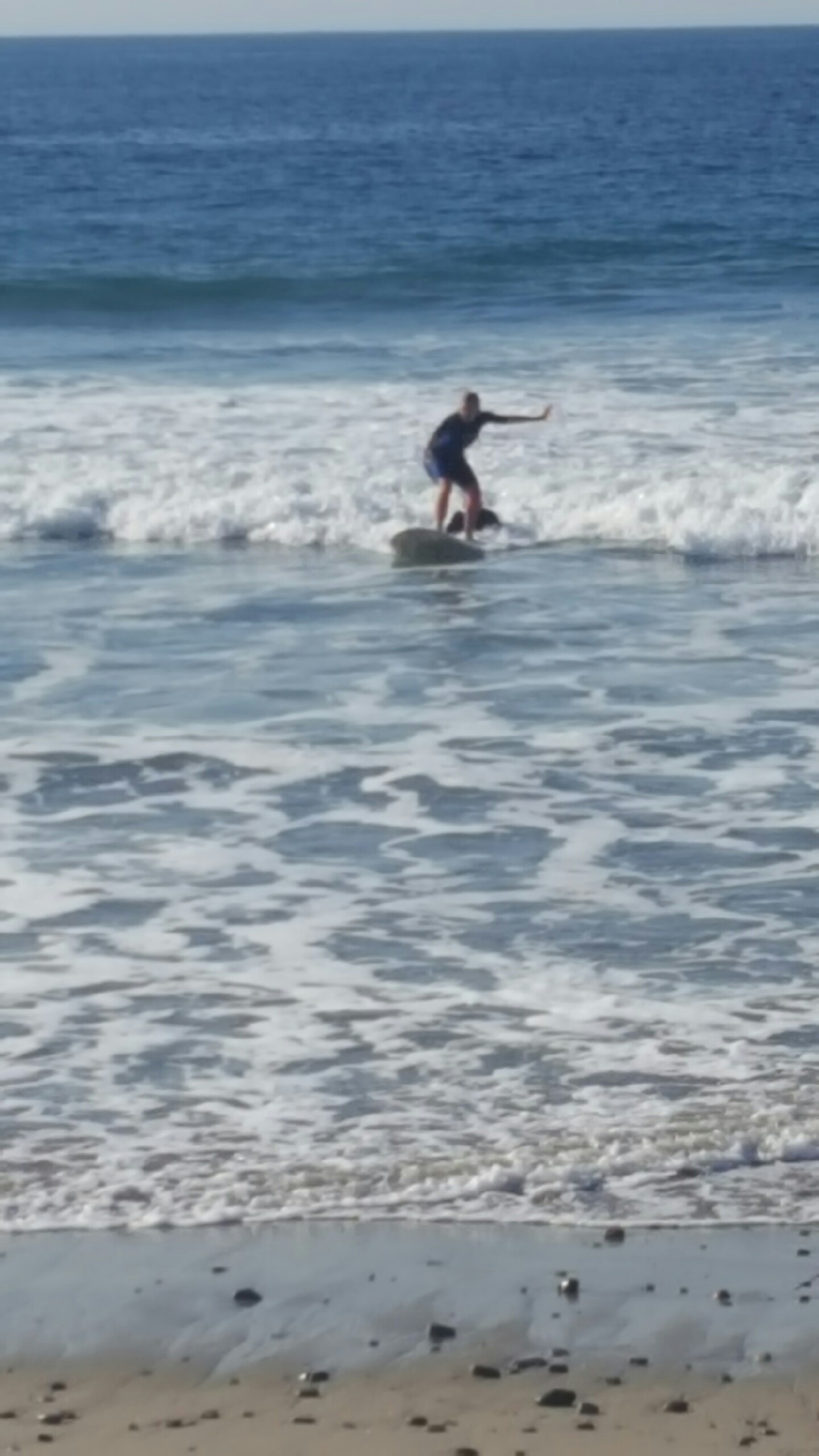
The makings of a surfer? Why not.
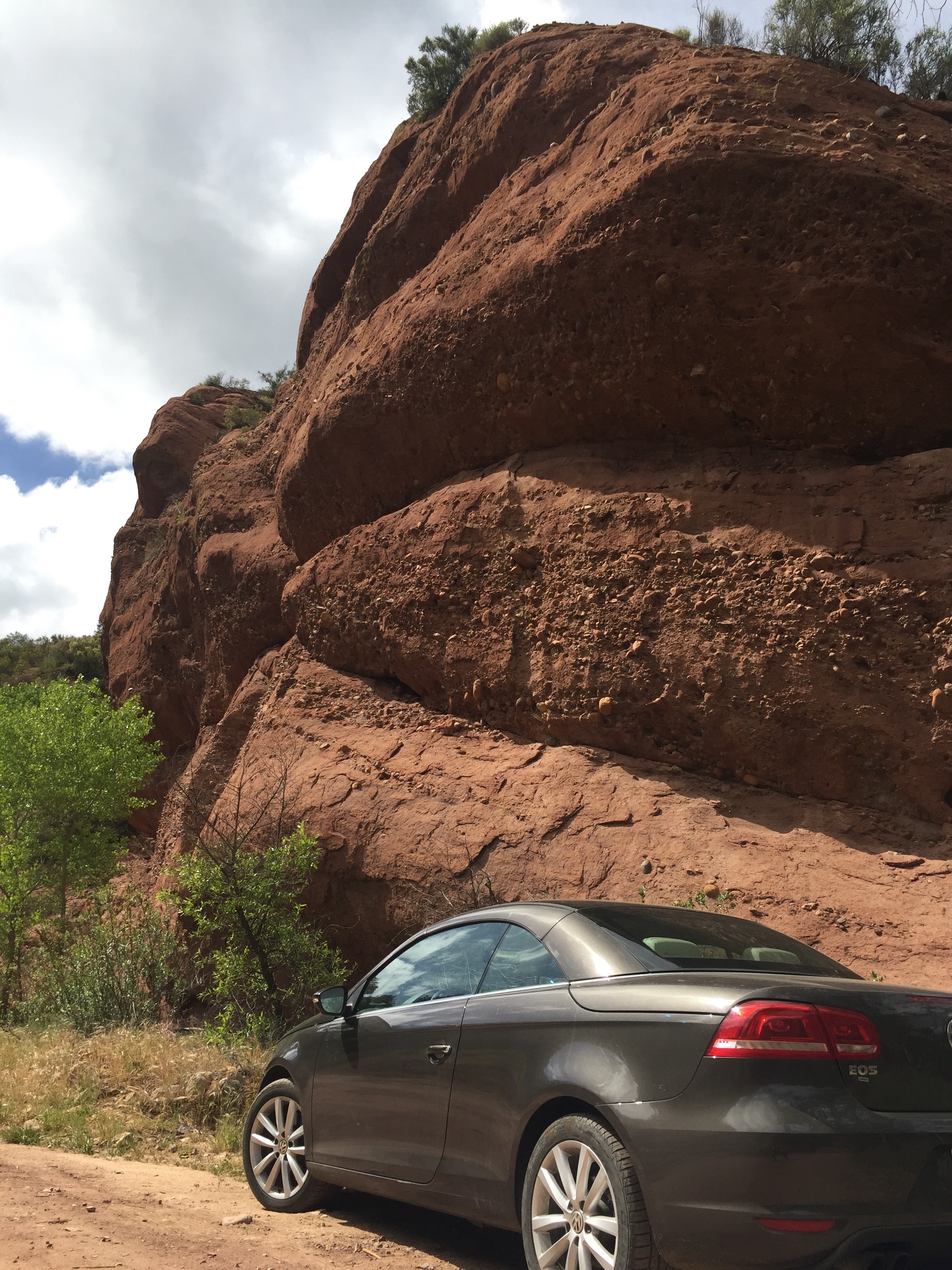
My trusty car has been a spectacular vehicle, ferrying us to magical places—this one just four miles down the road.
An easy bike ride on the beach at sunrise is well worth a 6 a.m. alarm—the ultimate discomfort in my world.
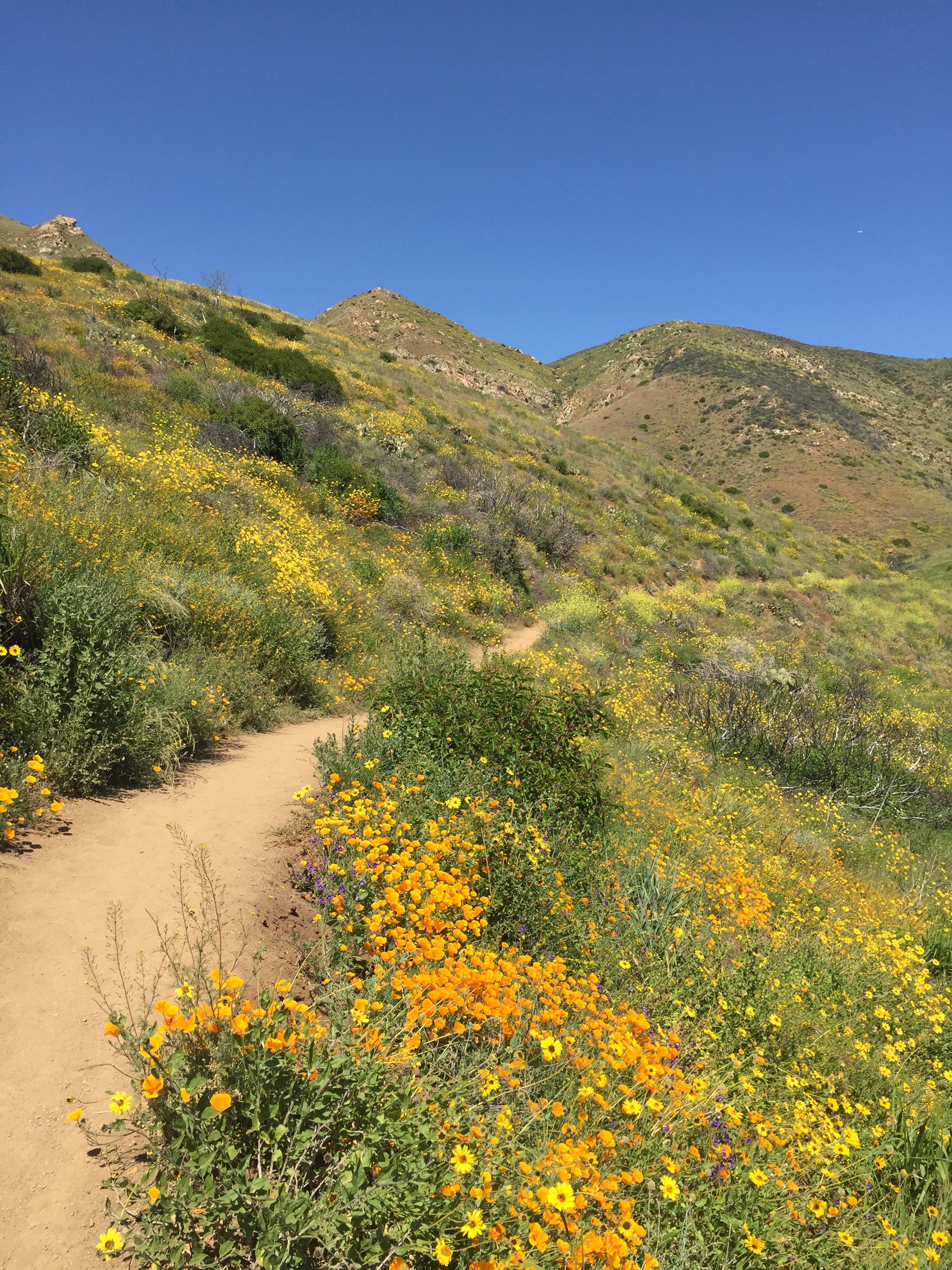
The super bloom in southern California has been nothing short of amazing this year and I spend countless hours chasing down new vantage points. And it’s still going.
And going.
And going.
There’s really no reason for this shot—it just amuses me.


Some Vests Are Meant To Be

Yesterday, on a hike up in Topanga Canyon, I unsnapped the vest pocket that housed my phone for the last time—the snap ripped out rendering the pocket useless. My heart sank. This vest was no ordinary vest—it was my whatever vest, my journey vest, my guardian of snacks and phone and keys. This vest traveled on my back for over 16,000 miles (many were inside a camper van or car, of course), faithfully performing its duties, soaking up sweat and dust, schlepping whatever I needed and bringing back whatever I found (often Kevlar balloons tangled in bushes or discarded water bottles and wrappers on the trails). I’ve mended it many times, tying up torn pockets and stitching rips and tears, but I never washed it. Not once. Every time I put the vest on, I brought the previous miles with me and piled new ones on. Even the dogs understood the vest. The moment I reached for it, they knew a hike was afoot and jumped around in excitement—or maybe the smell emanating from the grubby garment unleashed something primal in them.

I am not terribly nostalgic about things—I tend to seek out collections of adventures and experiences rather than objects—but I was at a loss as to what to do about this particular thing, its usefulness expired. When I returned home, I hung it back on its hook out of habit and wondered vaguely about a replacement.

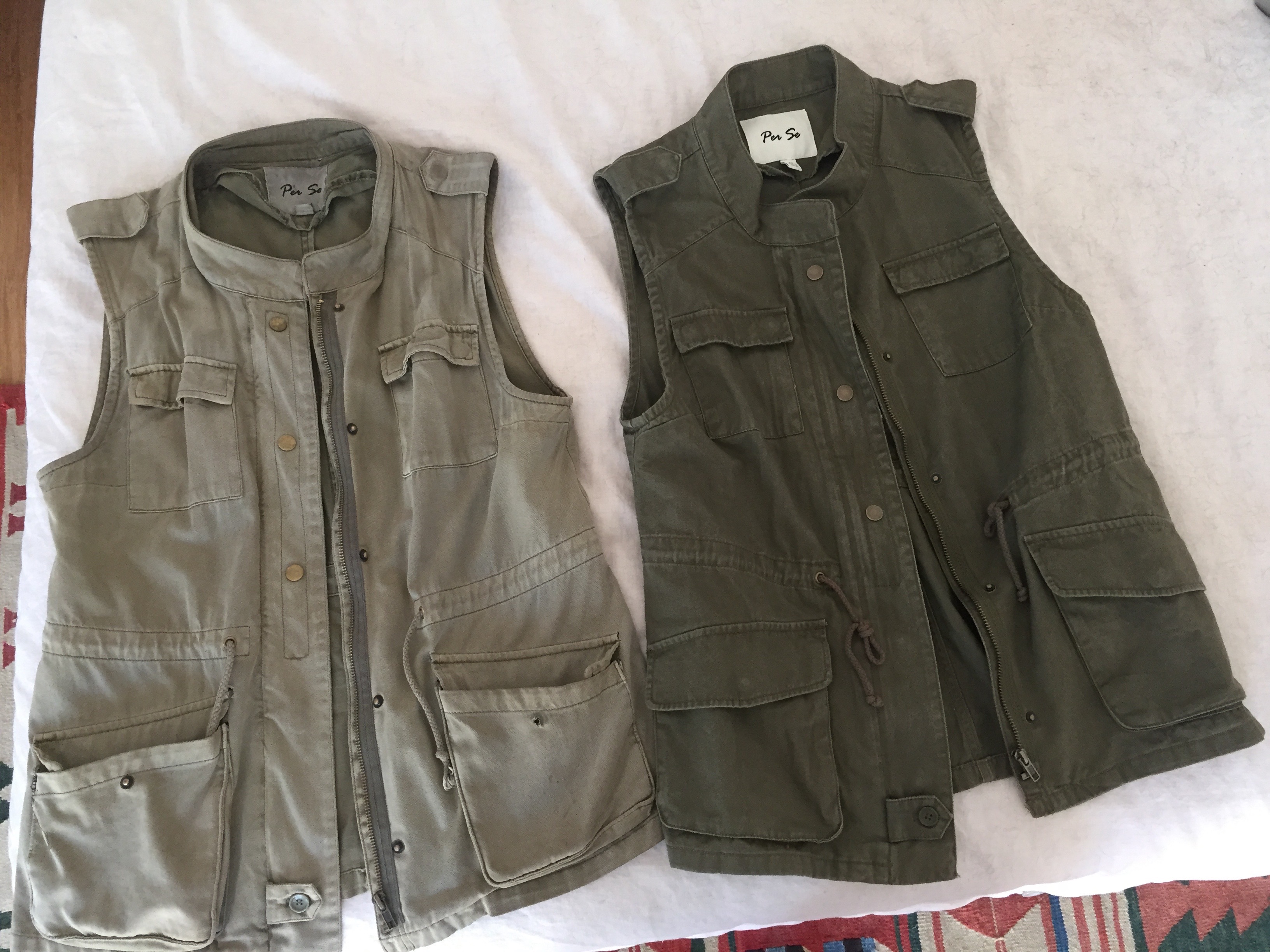
Today, I ran into town to a department store to buy some undergarments and pledged to go straight to the lingerie section and bypass any temptations along the way. I had almost successfully navigated the sea of racks when, out of the corner of my eye, I spotted a vest, which was out of place on a clearance rack full of t-shirts. I stopped dead and turned back. It was my vest—the same color, the same size, the same brand. I yanked it off the hanger and slipped my arms through. Despite its stiffness and that new-clothes smell, it was identical and fit like a glove. And it was only $24, on mark-down, clearly the last of its kind in the store.

See? Identical except the 16,000 dirty, sweaty, sun-bleaching miles that separate the left from the right.

I wore the vest while I shopped for my unmentionables, as if I were ensuring, and claiming, its existence, only taking it off at check-out. When I got back to the house, I threw on some sneakers and lovingly slid my phone into the new left pocket and snapped it shut—vest 2.0 was ready to roll.

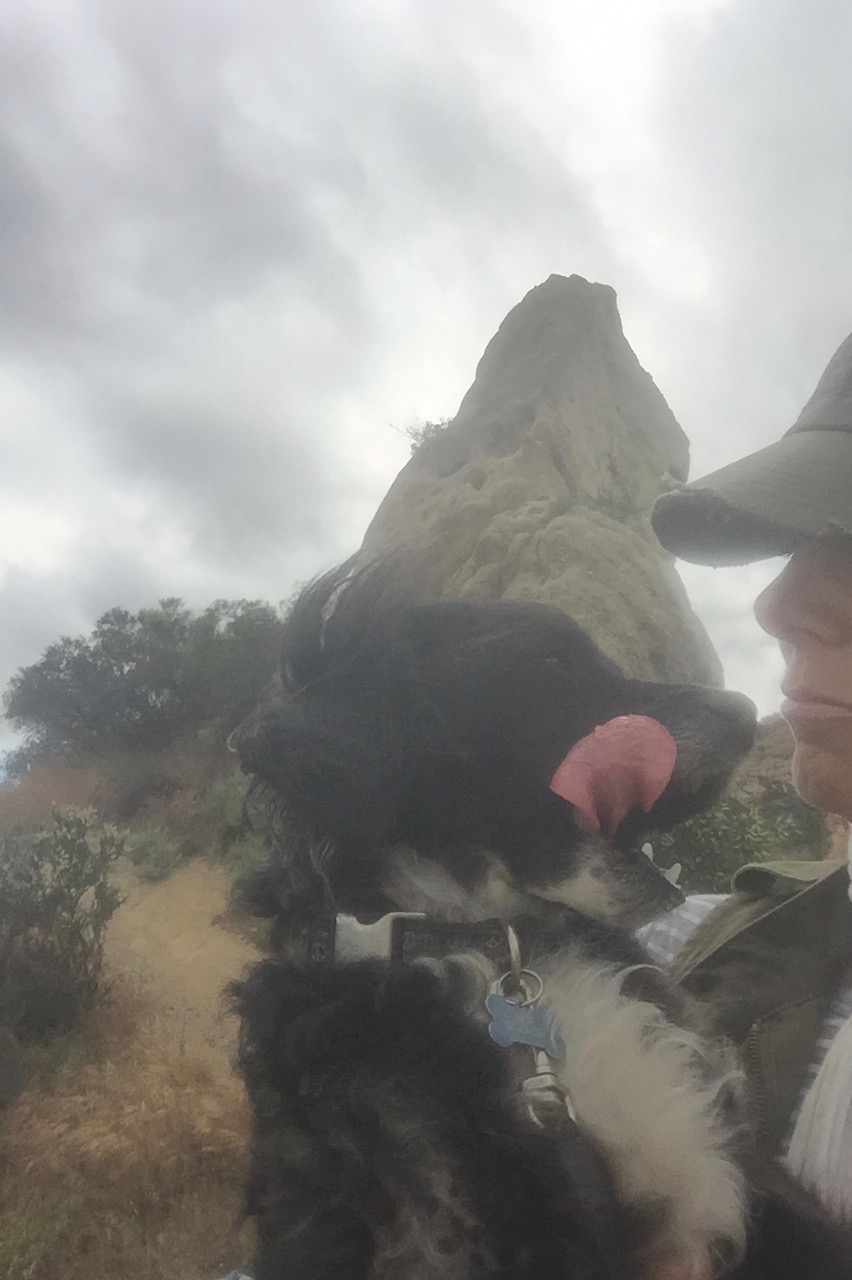
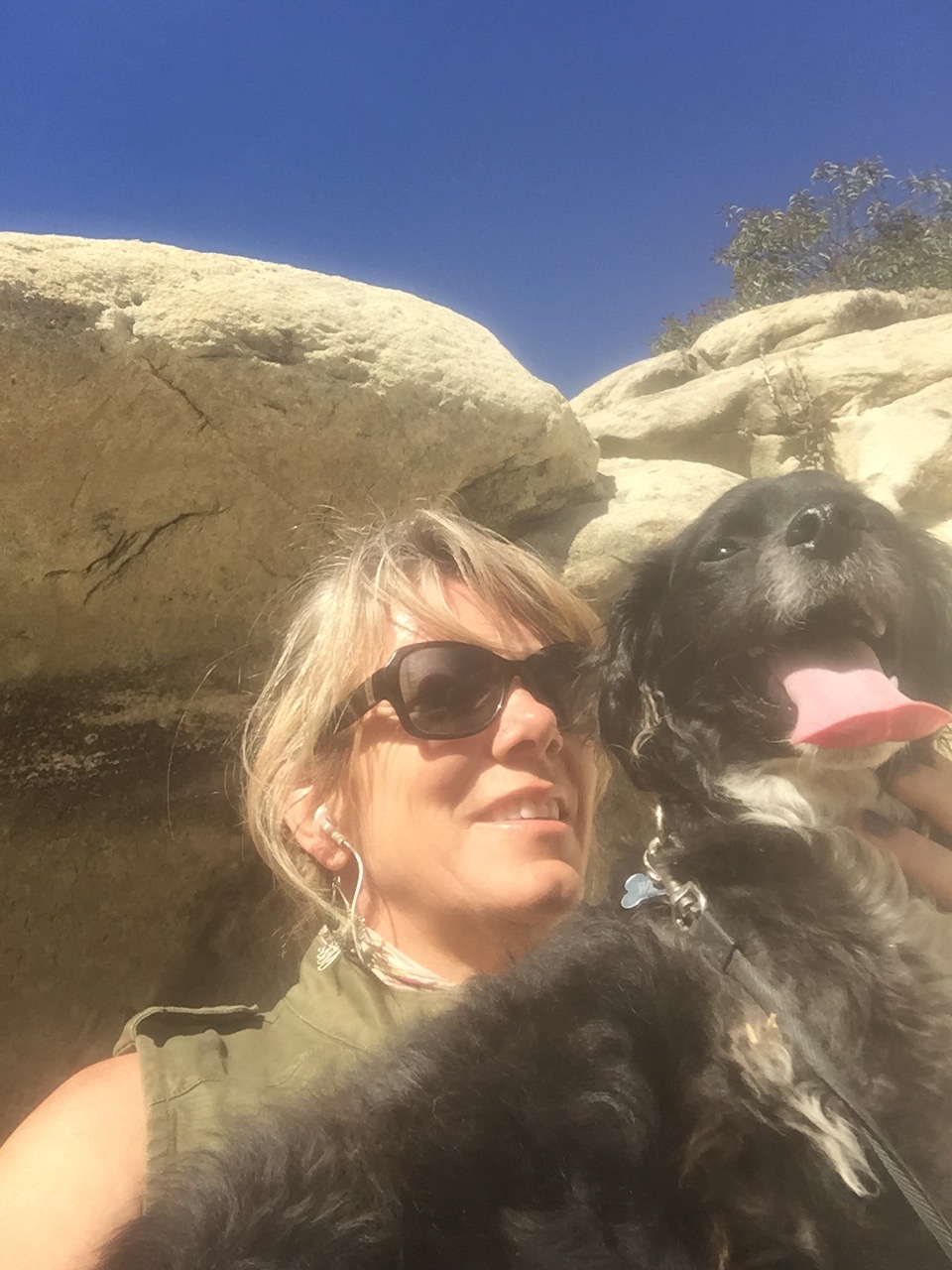
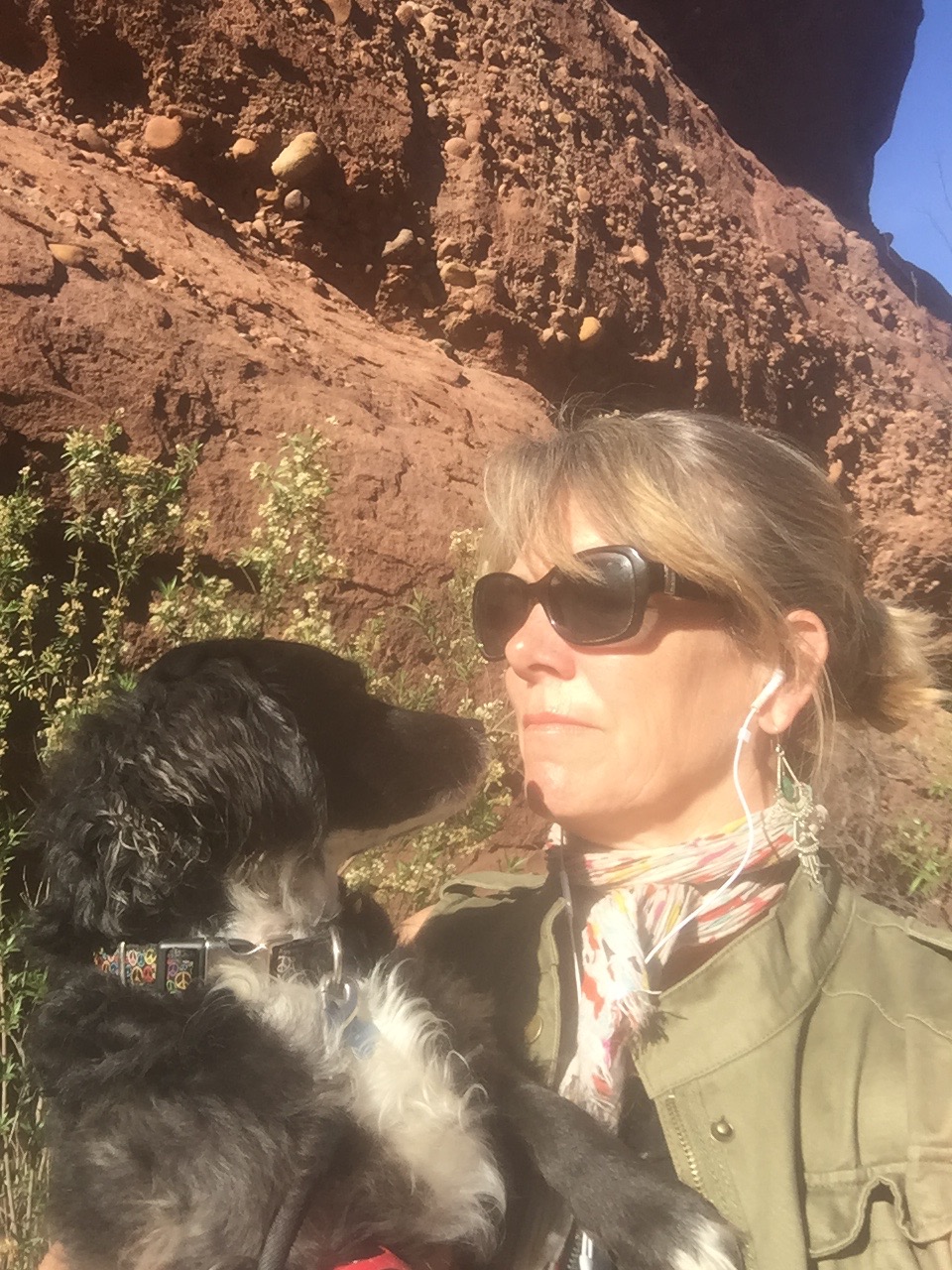
Willy and I take Vest 2.0 for a spin.
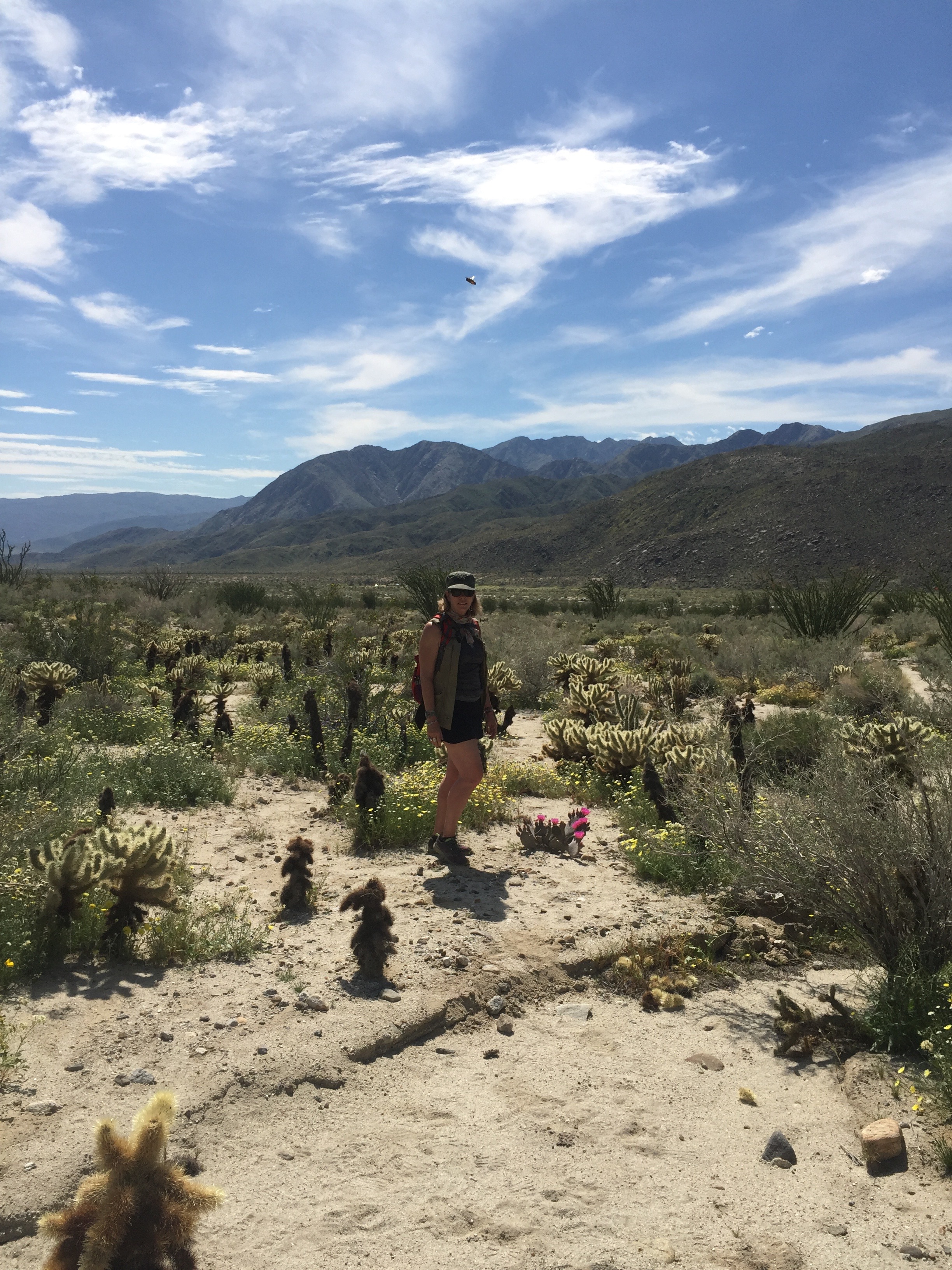
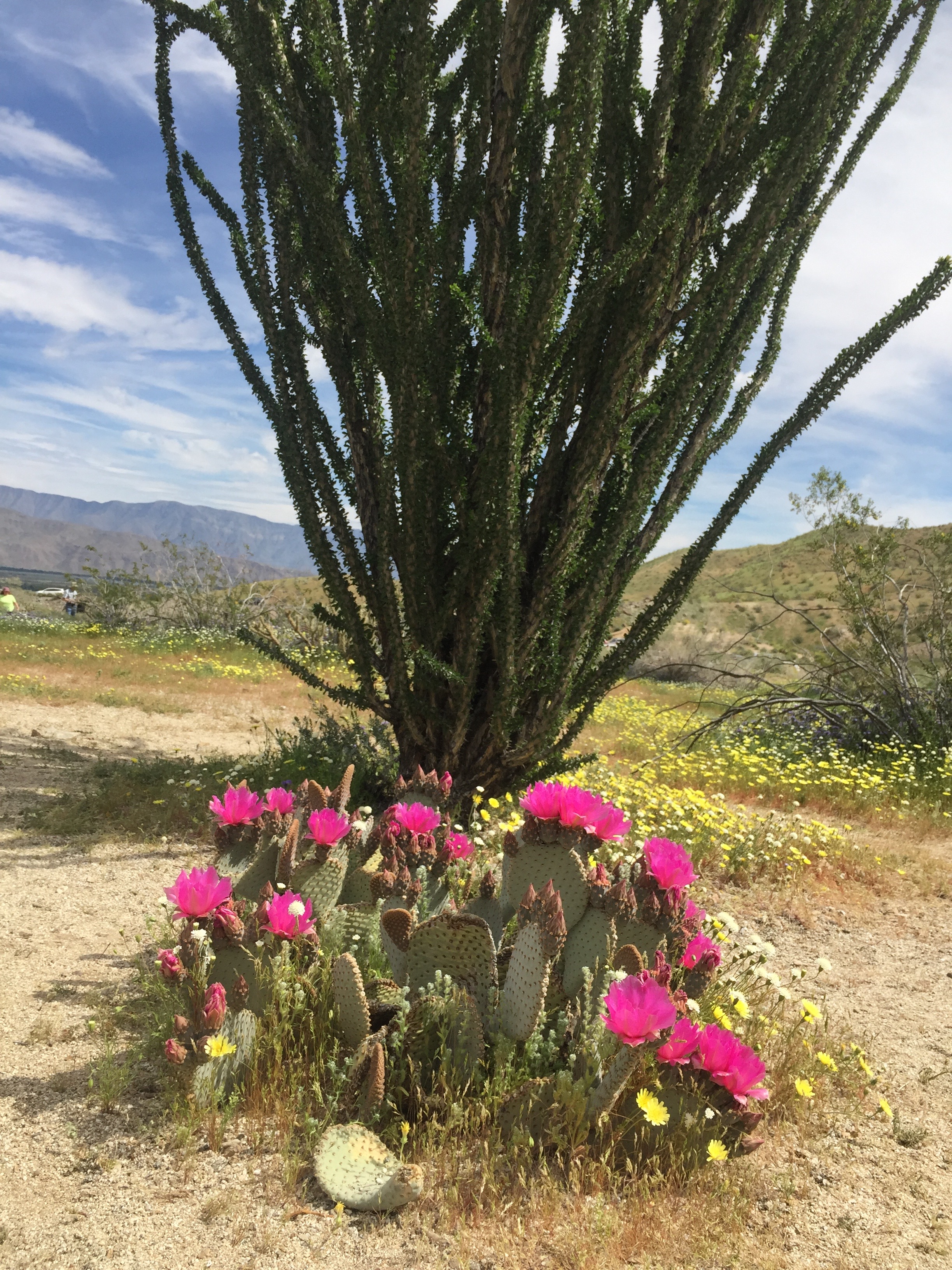
Vest 1.0’s last adventure was witnessing the Super Bloom at Anza Borrega desert.
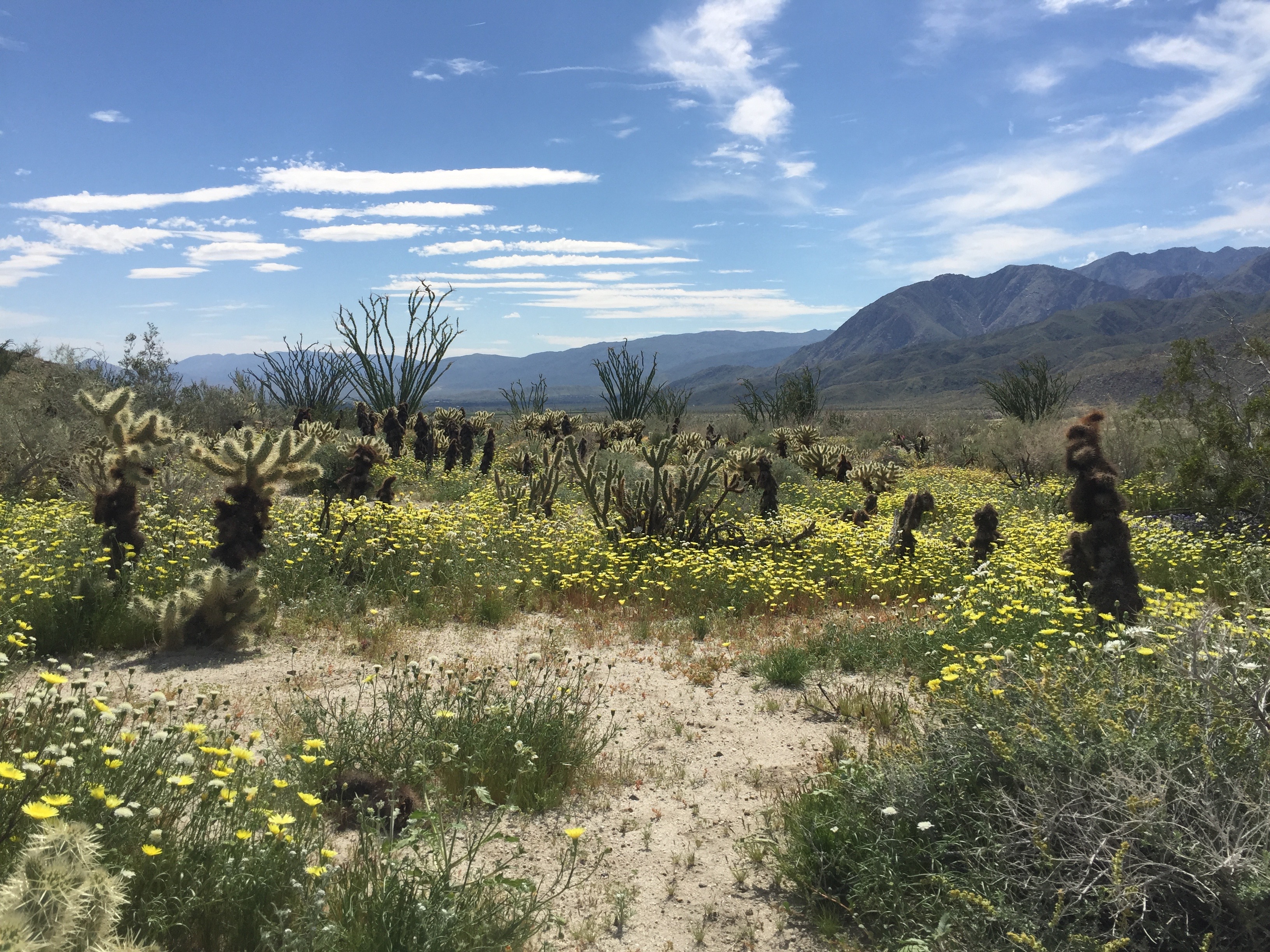
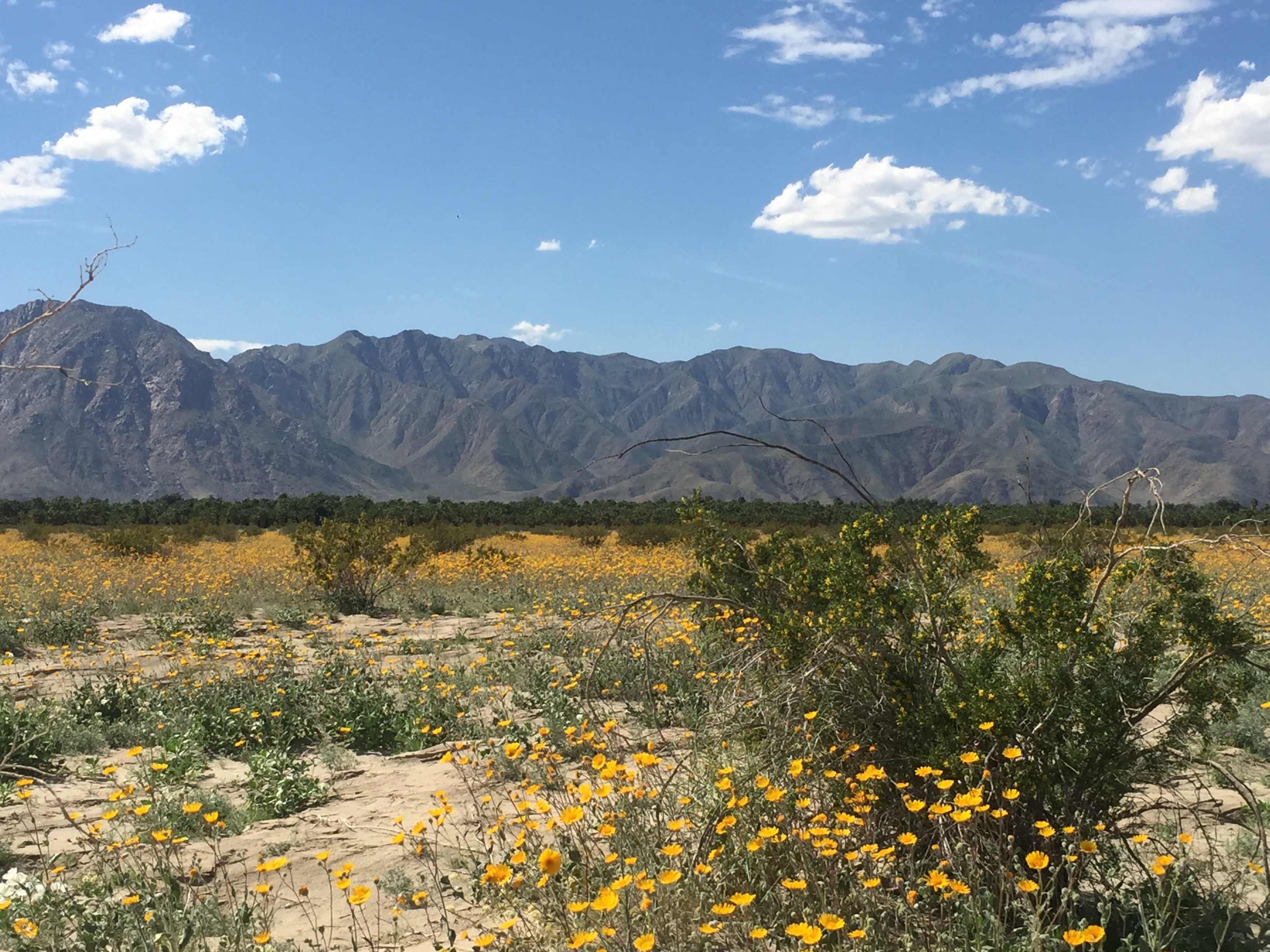
Why not add a few pictures of the bloom?
Carpets of flowers.
As well as Oz-like fields of blooms.
Since it’s too hot for Mika to hike right now, here she is with her buddy Ben.